
 E-Paper



66% rise in sea snakes caught in nets along south Konkan in 3 years: Mangrove cell
A two-third increase in the number of sea snakes caught in fishing nets has been recorded along the south Konkan coastline over the last three years, according to the state mangrove cell.

 Prefer HTon Google


A two-third increase in the number of sea snakes caught in fishing nets has been recorded along the south Konkan coastline over the last three years, according to the state mangrove cell. Front-fanged and highly-venomous marine reptiles, sea snakes or coral reef snakes are protected under schedule IV of the Wildlife Protection Act, 1972.
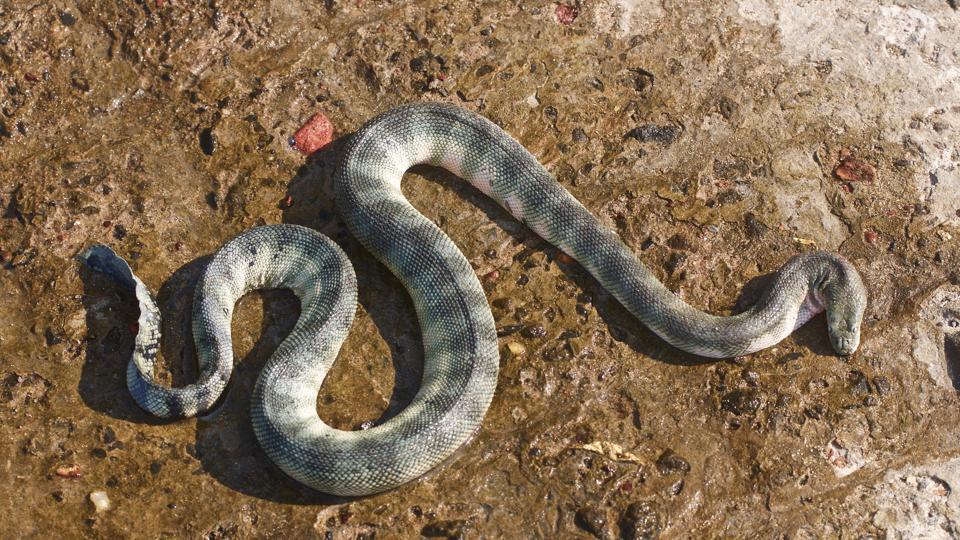
The mangrove cell under the forest department, Mangrove Foundation and Bengaluru-based Dakshin Foundation found that in surveys conducted during 2016 and 2017, 478 sea snakes of three species were caught by trawlers, gill nets and shore seines. There was a 66% rise in 2018 and 2019 when sampling surveys reported the number had increased to 793 of seven different species along Malvan and surrounding areas of Sindhudurg.
“Mass bycatch of sea snakes due to commercial overfishing, mostly unknowingly, has resulted in a major threat to the species. With hardly any research available on the impact to overall numbers, we may be losing countless undiscovered species that are unintentionally caught in trawl and gill nets,” said Virendra Tiwari, additional principal chief conservator of forest, state mangrove cell.
Sea snakes or coral reef snakes are widely distributed in marine habitats such as corals, mangroves, seagrass meadows and shallow waters across the Indian and Pacific oceans. They can be identified based on their flattened, oar-like tail that allows them to move through the water quickly. Their length varies from 20 inches to over six feet. There are about 70 species found across the world with the highest diversity known among marine reptiles. Along Maharashtra, there are nine species while the Sindhudurg coast is home to seven.
Researchers indicated the possibility of species decline for the Shaw’s sea snake (Hydrophis curtus) over the past decade. “Based on studies carried out between 2004 and 2009, and latest sampling studies from 2016 to 2019, we can see a clear change in species composition,” said Shawn Dsouza, research assistant, Dakshin Foundation adding that the Shaw’s sea snake had shown a considerable decline in numbers due to unregulated fishing as a major threat. “We found higher mortalities from large trawlers that scrape the ocean floor bycatch as compared to other fishing gear such as gill nets. As compared to the Shaw’s sea snake, the number of Beaked sea snake (Hydrophis schistosus) has rapidly increased as by catch. We may witness a similar trajectory of suspected decline of the species (similar to the Shaw’s sea snake) if regulations are not strengthened,” said Dsouza.
The most dominant species along the Mumbai coast is the Little file snake (Acrochordus granulatus), said Dsouza, adding the threat to the species has not been assessed due to lack of research.
Member of the Marine Conservation Committee of International Union for Conservation of Nature (IUCN) Species Survival Commission (SSC) Dr Aaron Savio Lobo said harmful fishing practices are being sustained, and if they continue, these may alter species communities. “Fishers are aware about sea snakes but mechanised operations through low quality bulk fishing such as trawls and gill nets submerged for several hours allow these species to drown. There is a need for better fisheries management combined with focused attention to reduce overfishing,” said Dr Lobo.
An alarming rise in overfishing in Maharashtra, particularly of juvenile fish and other protected marine species, led to overall losses exceeding Rs686 crore per year, according to the Central Marine Fisheries Research Institute. “As this continues, what we will see is silent decline where species are lost without even discovering them. We have probably already pushed species into local decline and there is no knowledge about it,” said Dr. Lobo.
The state fisheries department said they were not aware of the impact on the species but with help from the mangrove cell would commence separate awareness activities for the fishing community. “Guidelines have been proposed to curb overfishing but using this time when there is a fishing ban, we will take help from the mangrove cell to build awareness along the Konkan coast and understand how sea snakes are being affected. Such representations have not been made to us so far,” said Rajendra Jadhav, joint commissioner, state fisheries department.


