E-Paper



‘Destruction of forests is weakening later stages of monsoon’
Forests are a source of evapo-transpiration (ET), or recycled precipitation, which adds to rainfall. Trees channel moisture from the soil into the air through a process called transpiration

 Prefer HTon Google


Conversion of forests into agricultural land is weakening India’s monsoon, especially in August and September, reveals a study published in Scientific Reports by Nature Publishing Group on Wednesday.
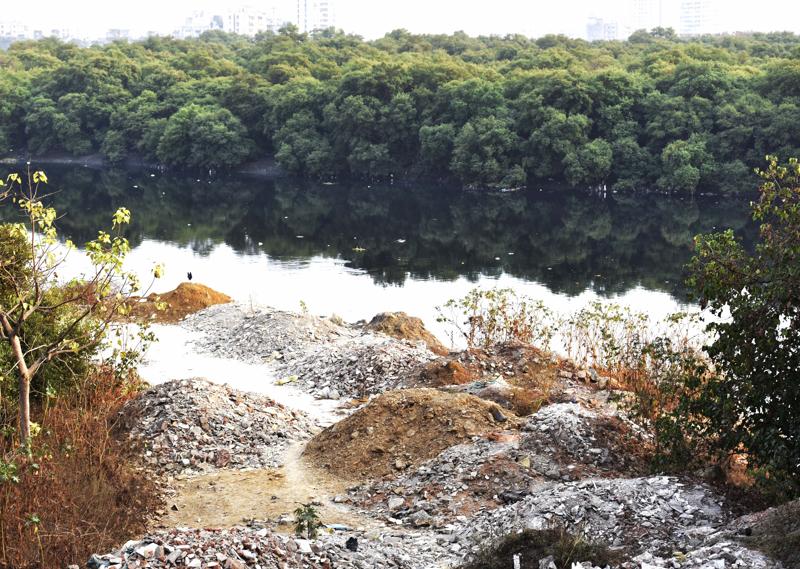
Forests are a source of evapo-transpiration (ET), or recycled precipitation, which adds to rainfall. Trees channel moisture from the soil into the air through a process called transpiration. This contributes to around 25% of total monsoon precipitation in the later stages of the monsoon. Deforestation, however, replaces deep-rooted plants with vegetation that has shallow roots that cannot do the same job, the study says.
“Due to the large scale deforestation, there is a significant reduction in the recycled precipitation and hence in total precipitation,” said professor Subimal Ghosh, Interdisciplinary Program in Climate Studies, Indian Institute of Technology, Bombay (IITB).
The team’s earlier study published in Journal of Hydrometeorology had found the recycled precipitation is quite high in the North East and North-Central India. “Impacts of deforestation are quite prominent in those areas due to reduction in ET and recycled precipitation,” said Supantha Paul, IIT-B.
Previous studies have linked large-scale atmospheric and oceanic circulations (warming of the sea surface temperature in the Arabian Sea) to changes and variability in the Indian monsoon.
Using satellite data, the present study found a significant decrease in leaf area index - a measure of green cover - when the team compared two time periods to anaylse the impact of land use land cover change in rainfall across India.
During the 1980s, the dominant land cover was woody savannah – mostly forest land with 80% evergreen shrub and 20% bare ground – in central India, a majority of peninsular India and northeast India. By the 2000s, land use pattern changed to crop land – 85% crop and 15% bare ground.
For instance, land use land cover in Northeast India changed from woody savanna to evergreen broadleaf because of increased tea plantations.
The study is significant as the Indian summer-monsoon rainfall between June and September contributes to 80% of the annual rainfall in the country, vital for agriculture and economy.
Ghosh said the findings have significant implication in terms of generating rainfall projections for future to be used for climate change adaptation. “Climate models are mostly forced with increasing greenhouse gas emissions, largely ignoring the future possible changes in land use land cover. For Indian monsoon, impacts of change in land use land cover is critical and needs to be considered for regional projections, planning, water management, he said.
With recent studies showing drying of Indian subcontinent due to warming of Western Indian Ocean, the study states the condition will be more critical if the deforestation continues at the present rate. “Impact of deforestation therefore needs to be seriously considered in the development of national policy of regional climate change mitigation,” the study stated.
Apart from IIT-B, the Department of Earth & Atmospheric Sciences, University of Nebraska, Lincoln, USA, and School of Natural Resources, University of Nebraska, Lincoln, NE, USA, were involved in the study.
The team observed large scale deforestation in India based on land use land cover maps derived from Moderate Resolution Imaging Spectro-Radiometer (MODIS) for 2000s and compared it with Advanced Very High Resolution Radiometer (AVHRR) for 1980s.