
 E-Paper



In a first, Indian bison spotted at Maharashtra’s Dnyanganga Wildlife Sanctuary
The Maharashtra forest department has documented the presence of the gaur or Indian bison for the first time at the Dnyanganga Wildlife Sanctuary (DWS) in Buldhana

 Prefer HTon Google


The Maharashtra forest department has documented the presence of the gaur or Indian bison for the first time at the Dnyanganga Wildlife Sanctuary (DWS) in Buldhana district in Vidarbha region.
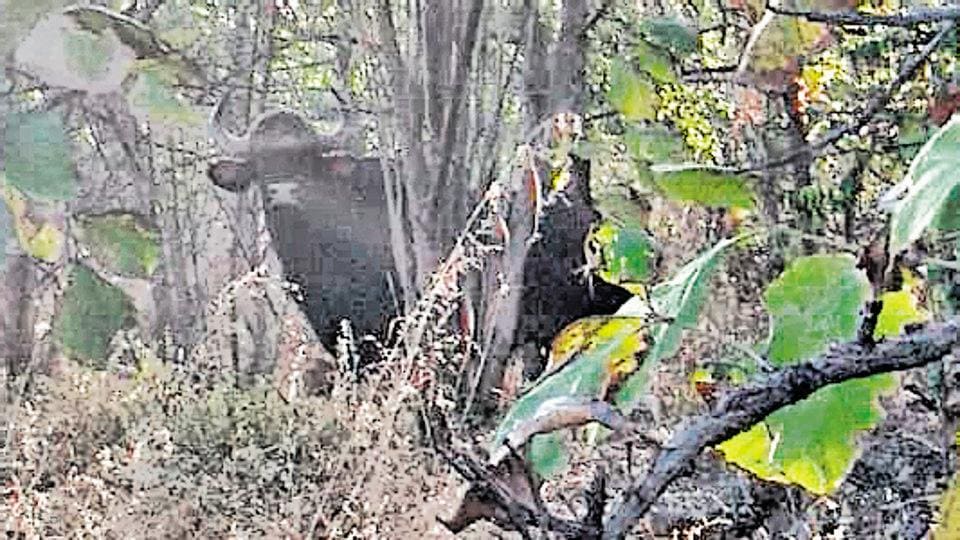
No occurrence of this species was reported or documented from this sanctuary, prior to the animal being photographed by forest guards on Sunday.
“While this animal is regularly spotted across other sanctuaries in Vidarbha, including Tadoba and Melghat, this is the first time we have a record of the gaur from Dnyanganga. It may have come from Melghat and found this area suitable as it seems to have settled here,” said MS Reddy, additional principal chief conservator of forest, and field director, Melghat Tiger Reserve (MTR) in Amravati. DWS is a part of MTR located near the Dnyanganga river, a tributary of the Tapti.
Gaurs are the world’s largest and tallest wild bovines, with 85% of their current population in India. Male gaurs weigh 1,000-1,500kg while females weigh 700g-1,000kg. Their height ranges from 165-220cm (5-7ft). They are listed as Schedule I species under the Wildlife Protection Act, 1972 and are tagged as “vulnerable” in the International Union for Conservation of Nature’s (IUCN) Red List.
The 205-sqkm DWS was notified as a sanctuary in 1997. It is known to have the highest number of sloth bears among sanctuaries in Vidarbha.
Last year, a three-year-old male tiger (T1C1) walked a 3,020-km journey over 13 months from Tipeshwar Wildlife Sanctuary (tracked using his radio-collar), and established his new territory at DWS, making it the longest ever recorded movement of a tiger in India. “A proposal is being considered by the chief wildlife warden’s office about releasing a mate for T1C1 to increase tiger population at DWS,” said Reddy, adding that his arrival has boosted tourism. “By developing around 100 waterholes and stopping grazing, the habitat for wildlife has been improved significantly. From just 10 guides, we now have 30, making it one of the most visited small sanctuaries in Maharashtra,” he added.


