
 E-Paper



Mumbai’s most polluted spots saw cleaner air, SAFAR’s analysis of lockdown period
Bandra Kurla Complex (BKC), Worli, Borivli, Bhandup, and Thane have recorded cleaner air as compared to the rest of the Mumbai Metropolitan Region (MMR), according to a comparative map of air quality before and during the lockdown period published by SAFAR


Areas in Mumbai, some of which were identified as pollution hotspots, have the cleanest air quality during the lockdown period, according to an analysis published by System of Air Quality Weather Forecasting and Research (SAFAR) on Monday.
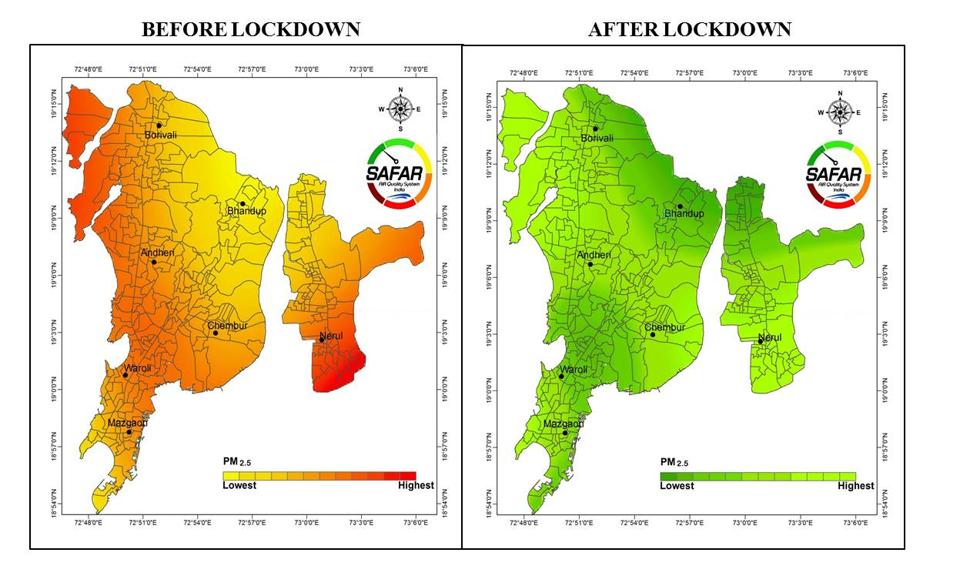
Bandra Kurla Complex (BKC), Worli, Borivli, Bhandup, and Thane have recorded cleaner air as compared to the rest of the Mumbai Metropolitan Region (MMR), according to a comparative map of air quality before and during the lockdown period published by SAFAR. The air quality index (AQI) in these areas have ranged between 28-55, falling under the ‘good’ to ‘satisfactory’ range during the lockdown.
BKC and Worli, which were two of the most polluted sites before the lockdown, and generally witness heavy road traffic, witnessed the highest decline in transport pollution, SAFAR said, adding that presence of green cover across Borivli, Bhandup, and Thane further improved air quality along with a decrease in other human-induced sources.
“The most striking factor from our analysis shows that areas that used to be air pollution hotspots in the MMR have become green zones (air pollution free) after the lockdown began,” said Gufran Beig, director, SAFAR under the Indian Institute of Tropical Meteorology (IITM), Pune. SAFAR analysed pollutant concentration for PM2.5 pollutant – breathable particulate matter 2.5 microns in size or smaller; PM10 (larger coarser particles), and nitrogen dioxide (NO2) emissions from burning coal and oil.
“When major anthropogenic emission sources reduced in Mumbai, our analysis showed a 60% decline in NO2 levels; 49% for PM10, and a 45% drop in PM2.5. With rising temperatures and dust settling closer to the surface, air pollution levels are mostly in the ‘moderate’ to ‘poor’ category during this time of the year, which is not the case during the lockdown,” said Beig.
Prior to the lockdown, pollutant concentration was significantly above the safe limit across northwestern and central suburbs such as Malad, Madh and Andheri; isolated areas across central and south Mumbai such as BKC, Worli and Mazgaon, as well as Nerul, Navi Mumbai, and peripheral areas. AQI levels ranged between 181 and 243, falling under the ‘moderate’ to ‘poor’ categories. Before the lockdown, the AQI was above 300 (very poor) at Nerul, which witnesses high vehicular pollution and industrial production.
On Monday, Mumbai recorded its cleanest air day so far this year, with an overall AQI of 61 (satisfactory). The AQI has been ranging between 62 and 65 between Friday and Sunday. Earlier, the AQI was lowest on March 22 (Janta Curfew) at 65, after which levels ranged between 70 and 85 from March 23 onwards till the first week of April. The AQI on Tuesday was 63, continuing under the ‘satisfactory’ category.


