
 E-Paper



Scholars say some Muslim marriage laws are pre-Islamic
The All India Muslim Personal Law Board, which does not want reforms in existing marriage laws, have said that triple talaq – divorce by uttering the word thrice in one go – and halala are principles of their faith, but religious scholars are of the view that the origins of these practices are dubious.

 Prefer HTon Google


The recent case of a Jaipur resident who used his wife as a pawn in a betting game, and after losing the bet, forced her to undergo ‘Nikah Halala’, has brought focus on this much abused practice. It mandates that if a woman wants to go back to her husband after a divorce, she must wed another man, consummate the marriage and get a divorce, or wait till he dies, before marrying her first husband again.
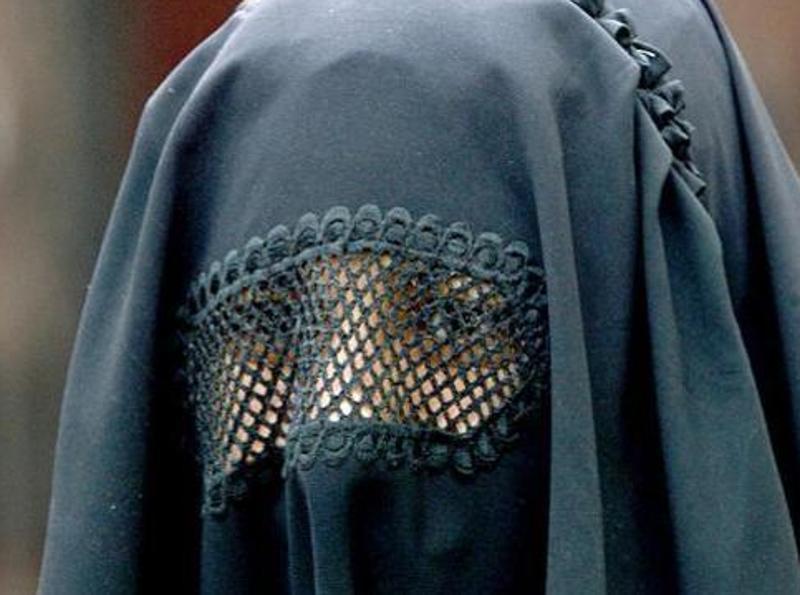
The All India Muslim Personal Law Board, which does not want reforms in existing marriage laws, have said that triple talaq – divorce by uttering the word thrice in one go – and halala are principles of their faith, but religious scholars are of the view that the origins of these practices are dubious.
Though activists campaigning for an end to triple talaq and halala have said that it the customs humiliate women, some religious scholars said that the practice was introduced to save marriages. Maulana Arif Umri, a religious scholar from Mumbai, explained that it was a reformatory idea to stop reckless divorces. “In Arabia, before Islam was established, a man could divorce his wife in the morning and take her back in the evening. There were no rules and no restrictions,” said Umri who added that halala was introduced after the founding of Islam. “According to the new rules if a man announced the word ‘talaq’ twice, he could take back his words and the marriage continued but if he pronounces the word thrice in one go the divorce is irrevocable and the couple can marry again only after halala.”
The divorced woman has to marry another man, live as his wife and can go back to the first husband only if the second husband dies or divorces her. “When this condition is achieved it is called Nikah Halala,” said Umri.
How is this custom, which subjects women to disgrace, a reformation in marriage laws? “No man would like his wife to live with another man; it is a matter of shame for him. So this condition was introduced to prevent divorces,” explained Umri.
Groups like the Bharatiya Muslim Mahila Andolan (BMMA), which recently approached the Supreme Court and the National Commission for Women for a ban on triple talaq, polygamy and halala, said that religious scholars have not been able to explain how halala was a reformatory idea. “The Kazis (scholars) said that a divorced couple cannot stay together without halala,” said Zubeida Khatoon Shaikh of BMMA. “We asked them why women are being punished and the scholars said that halala is a punishment for men. How is it a punishment for men? We do not understand.”
Some scholars are of the opinion that the practice predates Islam. Zeenat Shaukat Ali, former head of the department of Islamic studies at St Xavier’s College, said that the custom was prevalent in pre-Islamic Arab society. “Prophet Mohammad was not born in a vacuum. There was a society and civilisation and halala was part of the custom that existed in the place and era where the prophet was born,” said Ali.
Ali added that halala, along with triple talaq and polygamy, which were all pre-Islamic practices, were abolished – though polygamy was permitted in some conditions. “I know what I am talking about. Triple talaq in one go is unconstitutional and not Islamic. Halala was also abolished as it was a tool to humiliate women,” said Ali.
According to Ali, polygamy, though a pre-Islamic custom, was tolerated in conditions, like war when there are more women than men. She described the current ambiguity about the law as a ‘sword of Damocles’ handing over the Muslim community. “The arguments by the Muslim Personal Law Board are redundant,” said Ali. “There is lack of education generally among Muslims and the people who they go to for advice are also ignorant of the laws. The best option is to wait for the Supreme Court judgment.”


