
 E-Paper



Shiv Sena’s Dussehra rally in Mumbai crossed permissible noise limits, say noise activists
A Mumbai NGO said political speeches, introductory speeches, logistical announcements and fire crackers kept noise levels between 63dB and 92.4dB

 Prefer HTon Google


Shiv Sena’s Dussehra rally held at Shivaji Park on Saturday crossed permissible noise limits, which many saw as the result of the state government’s delay in notifying areas that fall under silence zones.
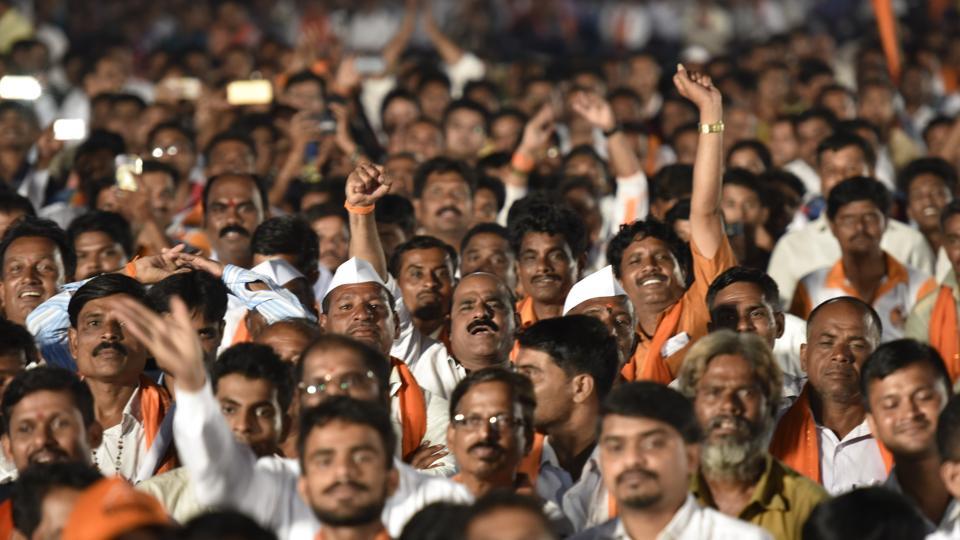
Non-government organisation Awaaz Foundation found noise levels peaked at 92 decibels (dB) — almost as loud as a motorcycle 25 feet away — as against last year’s 98.9dB, which is almost as loud as a discotheque.
According to Noise Pollution (Regulation and Control) Rules, 2000, sound levels within a silence zone cannot exceed 50dB. For a residential zone, they should not exceed 55dB.
On May 5, 2010, the Bombay high court had declared Shivaji Park a silence zone while hearing a petition filed by Wecom, a residents’ trust. It added that any violation of the rule would invite stringent action by the state.
However, early this month the Supreme Court placed an interim stay on the Bombay high court’s stay on the Centre’s notification amending Noise Pollution (Regulations and Control) Rules, 2000, through which the Maharashtra government had done away with silence zones.
This means there are currently no silence zones in the state, including Shivaji Park.
“Though the peak noise level was lower than last year, this year, sound levels were consistently high. Unlike last year, when instruments contributed to higher noise levels, only speeches raised noise levels this year,” said Sumaira Abdulali, convener, Awaaz Foundation.
Noise levels were neck and neck during speeches made by Shiv Sena leaders Vishwanath Mahadeshwar and Nitin Banugade Patil at 92dB, followed by the introductory speech at 90.3dB.
Shiv Sena chief Uddhav Thackeray’s speech started at 87.2dB, toned down between 65db and 70dB, then peaked at 87.5dB. Rajya Sabha member Sanjay Raut’s speech was 86.6dB.
Awaaz Foundation said that from 6pm to 9pm, political speeches, introductory speeches, logistical announcements and fire crackers kept noise levels between 63dB and 92.4dB.
In 2016, the maximum sound level from the announcer’s speeches was recorded at 94.7dB, Thackeray’s speech was 85.4dB and Subhash Desai’s peaked at 97.6dB.
“Even if silence zones don’t exist anymore, the noise levels we recorded today were beyond permissible limits even for a residential area,” said Abdulali, who said she will submit the readings to the high court.
The Supreme Court’s guidelines on noise pollution prohibited the use of loudspeakers at places within 100m of hospital, school, court, or a religious place, known as silence zones.
The NGO said the Shiv Sena had sought the high court’s permission to use loudspeakers this year.


