The Supreme Court (SC) on October 17 unanimously rejected the argument that there is a constitutional right to same-sex marriage. However, the court’s decision on civil unions and adoption was a mixed bag. While the minority recognised and sought to operationalise the right to adoption and a civil union, the majority did not go as far and stopped short of generally recognising the right to a relationship and the discriminatory impact of the existing legal framework governing adoption on queer couples.
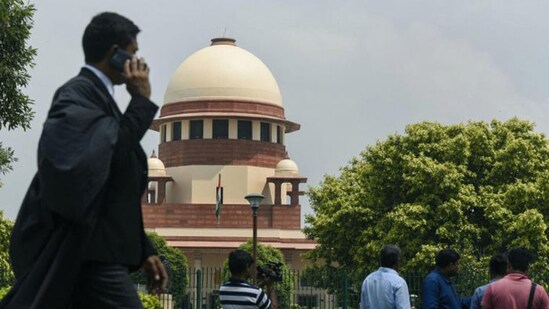
The Supreme Court (SC) on October 17 unanimously rejected the argument that there is a constitutional right to same-sex marriage. However, the court’s decision on civil unions and adoption was a mixed bag. While the minority recognised and sought to operationalise the right to adoption and a civil union, the majority did not go as far and stopped short of generally recognising the right to a relationship and the discriminatory impact of the existing legal framework governing adoption on queer couples.
This landmark case sheds light on the complex and challenging terrain of cause lawyering and offers valuable lessons for those who seek to champion social change through the legal system. The judgment has now been challenged in a review petition on behalf of one Udit Sood, led by advocate Saurabh Kirpal. It assails the majority judgment on the grounds of being self-contradictory and for failing to grant any relief to the petitioners.
The strategy behind the litigation, with a primary focus on marriage equality, was well-intentioned and made intuitive sense. Marriage, after all, serves as the gateway to a plethora of rights and entitlements, including insurance, succession, and inheritance. However, what this strategy misses is that courts, by their very nature, are cautious institutions that primarily interpret specific legal provisions and test their constitutional validity. Therefore, expecting them to engineer social change through wide-ranging legal reforms, as was sought to be done in this case, is often a hollow hope.
A more pragmatic approach for cause lawyers, especially in cases that challenge deeply ingrained societal norms, would be to target specific entitlements that queer couples, or any deprived group, is denied access to. In his judgment, Chief Justice of India (CJI) DY Chandrachud groups such benefits into six categories: Matrimonial and childcare-related benefits, property benefits, monetary benefits, evidentiary privilege, civic benefits and miscellaneous benefits. Under the approach I am advocating, specific provisions in insurance and succession laws, for instance, could be individually picked up and challenged as being unconstitutional due to their unreasonable classification between heterosexual and homosexual couples.
The value of this narrow, focused approach is also evident from remarks made by CJI Chandrachud at a recent event at the Georgetown Law Center in the United States. In response to a question about the court’s reluctance to recognise the right to same-sex marriage, he drew the distinction between State action that makes an unreasonable classification between a deprived group and a majority group on the one hand and State inaction, which is sought to be rectified through judicial intervention on the other. He stated that, in the former case, progressive-minded courts can and do interfere — he cited the example of regulations denying permanent commission to women in the Army (Lt. Col. Nitisha and Ors v. Union of India, 2021) and abortion regulations restricting the right to abortion between 20 to 24 weeks of the pregnancy to married women alone and thus, discriminating against unmarried women (X. v. Principal Secretary, 2022). It is in the latter category, he stated, that courts consider themselves powerless to act.
To be sure, it is not as though courts are completely powerless in the latter situation. Indeed, the postulation of the concept of a civil union, with a consequential set of entitlements by the minority opinion in the same-sex marriage opinion itself is a pointer to what courts can do. Other remedies such as a suspended declaration of invalidity or continuing mandamus could have also been issued by the court. That said, the broader point remains that courts can only go so far in such situations.
Relatedly, a crucial aspect that becomes evident from this verdict is the importance of having a specific person who is directly affected, a specific violation of their rights, and a narrowly tailored, practically implementable relief. Broad and sweeping directions, as sought in this case, are often met with scepticism and resistance. It is easier for the judiciary to work with concrete cases and address specific violations.
This case underscores the need for a step-by-step approach to cause lawyering. While such a method may not yield immediate results, it can lead to real, lasting change over time. Incremental progress, as frustrating as it may seem, is often the most effective way to shift deeply ingrained societal norms and prejudices. This approach also gives society the time to adapt and embrace change, reducing resistance and backlash. In this event, the modest change that comes, albeit slow, and the product of a long slog, has much greater staying power.
In conclusion, the SC’s verdict on same-sex marriage is indeed a cautionary tale for cause lawyers. It highlights the complexities and challenges inherent in bringing about social change through the legal system. A silver lining from the verdict, though, is that it provides us with a very clear account of the institutional strengths and limitations of courts. It is for those of us who look to the courts to pursue social change to now modulate our strategies to unleash the full potential of judicial interventions in correcting social wrongs.
Rahul Bajaj is a lawyer. The views expressed are personal. Disclaimer: Bajaj was a former judicial law clerk to the Chief Justice of India, DY Chandrachud
One Subscription.
Get 360° coverage—from daily headlines
to 100 year archives.
Archives
HT App & Website