Three observations on the Bombay high court judgment which on Thursday overturned the earlier acquittal of editor Tarun Tejpal on rape charges.
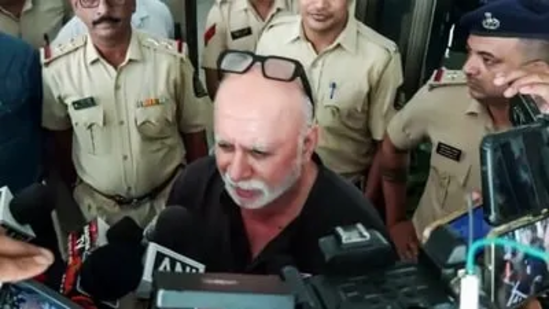
The first: justice for rape survivors should not take over a decade. It’s been 13 years since a young woman journalist accused Tejpal, her then editor, of rape and sexual assault in a hotel elevator during a conference organised by Tehelka in Goa in 2013.
Given that this was amongst the first high-profile rape trials after amendments to the criminal law following the 2012 gang-rape and brutalization of a medical student, this should have been a test case. Instead, it took six years for the trial to even begin. Tejpal has now said he will appeal against his conviction and 10-year jail term, so we have not heard the last of this, yet.
The second: the high court judgment is unequivocal in castigating what it calls a ‘perverse’ earlier judgment. It begins with the words: “This Appeal assails the Judgment and Order dated 21 May, 2021…”. High court justices Neela Gokhale and Amit Jamsandekar are setting right an egregious wrong.
The earlier 527-page judgment by additional sessions judge Kshama Joshi is a textbook case of how not to write a rape judgement.
[I had written on the utterly regressive mindset on that judgment in May 2021 here]
{{/usCountry}}[I had written on the utterly regressive mindset on that judgment in May 2021 here]
{{/usCountry}}It resorts to stereotypes about how a rape survivor ought to behave. It focuses more on the woman journalist than on the person on trial. During the trial, the court allowed Tejpal’s defense lawyers to grill the woman on her views on smoking, drinking and consensual sex, none of which were relevant to the facts of her complaint.
The Bombay high court judgment is a step forward in righting a terrible wrong. It emphatically rejects the notion of a perfect victim. “Expecting a survivor to be constantly miserable, meek or visibly broken, the Trial Court has ignored the reality of human coping mechanisms,” the judgment notes. “However, these concepts of a perfect victim are a myth. Credibility must be evaluated on facts, not on whether a survivor fits a narrow cultural mould.”
Third observation: Again and again when talking about sexual assault we come back to the question of the price women pay for speaking up. There is a series of cautionary tales that end with a warning to women to remain silent.
Another cautionary tale
The acquittal of Brij Bhushan Sharan Singh, the former Wrestling Federation of India (WFI) head could be another cautionary tale.
Brij Bhushan’s apparent invincibility became clear early on. As a six-time member of Parliament from Gonda, Uttar Pradesh, he is said to hold sway over six crucial seats in Uttar Pradesh, a state where assembly elections are scheduled for 2027.
It took an unprecedented public protest in January 2023 by India’s leading wrestlers to even be heard. When the government’s assurances of an oversight committee turned out to be a joke, the wrestlers were forced to return to the streets again.
To get a first information report (FIR) registered, the women had to approach the Supreme Court for an order. Then, in June 2023, when the Delhi police finally filed a chargesheet under various provisions, including sexual harassment, stalking and criminal intimidation, there was one major omission: the 17-year-old minor had withdrawn her allegations during the investigation.
Why the minor withdrew her complaint remains a mystery. So, too does the subsequent collapse of the testimony of two other women who turned hostile. Of the four women remaining, one found that her security detail was withdrawn a day before she deposed in court.
Outside the court, the BJP decided to deny Brij Bhushan a ticket to contest the 2024 general elections but then gave it to his son, Karan Bhushan Singh instead who won by a margin of 148,843 votes.
Under international pressure, Brij Bhushan had been forced to step down as WFI head. Fresh elections were held and a man called Sanjay Singh won. Brij Bhushan didn’t bother to hide the fact that Sanjay Singh was his proxy. In photographs of the victory celebrations, it’s hard to tell who the real victor is; the garlands around Brij Bhushan far outnumber those around Sanjay Singh.
After his acquittal, Brij Bhushan made a trip to Ayodhya and Gonda where he received a hero’s welcome.
Bad girls
If courtrooms can sit in judgment over how sexually assaulted women ought to behave, then outside the courts, a right-wing lynch mob was threatening women and girls with rape, acid attacks and death threats for their serious swearing and cussing at the student protest.
How strange that this ire was directed only at women and girls and not men and boys who might have used similar language to vent their frustration at the protest.
On social media, The Jaipur Dialogues, a handle run by Sanjay Dixit, a former IAS officer, tweeted a photograph of a person who he claimed was a 25-year-old protestor called Ruchika from Noida. Ruchika, it turned out, is a 15-year-old child.
Even after the error was revealed, the girl and her widowed mother continued to be hounded with death threats and worse. Thrice in three days the mother and daughter were forced to move house. The girl apologized on video. Her mother begged for a truce.
Despite prime minister Narendra Modi’s declaration that he forgave those ‘daughters’ who have abused, the attacks continued.
She was not the only one. A 23-year-old yoga instructor talked of the sustained abuse with questions like “What’s your rate”?
This was not stray abuse had the hallmarks of an orchestrated campaign by a troll army as described by journalist Swati Chaturvedi in her book, I am a Troll.
And still we rise
Violence against women is often systemic and targeted. The powerful exercise control over who they perceive to be weak. The head of a sporting federation believes he gets a free pass to prey on young athletes whose careers he can make or break. A dominant caste man knows he can rape a Dalit woman with no consequences. A judge asks a junior court employee for sexual favours. The editor of a publication preys on younger journalists. An anonymous lynch mob punishes women and girls who cross a line with threats of sexual violence.
Mainly this has to do with an imbalance in the structure of power. But it also reflects social attitudes to women where sexual assault is not considered a serious offence and those accused of sexual offences are easily forgiven, celebrated even at litfests, book launches and drawing rooms.
Editor-turned-minister M.J. Akbar was named by 20 women during the 2018 MeToo movement. He then filed a defamation case against one of those women, journalist Priya Ramani, and lost. When he launched his book following his defeat, ministers and bureaucrats were in attendance.
Dastangoi artist Mahmood Farooqui wrote a book about his time in jail after his rape conviction by a trial court. He was then acquitted by the high court that deemed that the woman’s ‘no’ was far too feeble to be taken seriously. It was an acquittal widely criticized by women’s groups. And, yet, Farooqui’s book has blurbs by actor Naseeruddin Shah, writer Aakar Patel and editor Mrinal Pande.
Patriarchy has a very clear definition of who is an adarsh nari, an ideal woman. She is the one who studies until graduation and then quietly marries the man her father chooses for her, (from the same caste and faith obviously). After marriage, she remains confined to her house, ensures everybody is fed before she eats the left-overs. She never complains but constantly ‘adjusts’. There is no question of talking back to elders, forget about abusing the male patriarch.
The message women receive is unmistakable. Speak softly, obey, adjust and remain invisible. Step outside that script—as a wrestler accusing the head of a federation, a student shouting at a protest, or a poor woman seeking justice—and the system closes ranks. Courts may decide individual cases, but impunity is built far beyond the courtroom. It is sustained by politics, by institutions that look away, by mobs that enforce obedience, and by a culture that still believes a woman’s greatest virtue is silence.
Fortunately, we have a new generation of women. Articulate, clear about priorities, loud and, yes, even abusive, they are not about to be frightened into silence. They don’t believe in compromise or cautionary tales and they have the support of an older generation of women who are watching and learning from them.
The mother of the 15-year-old has said she will stand by her daughter as the family deals with the fallout of her actions. Yes, her daughter was wrong to make the remarks, but did that really warrant the level of abuse and threats made against her? She wants her daughter to learn from the episode but not fear protesting or speaking up.
Wrestler Vinesh Phogat is not staying silent either. Expressing her deep disappointment with the court verdict, she says she will challenge Brij Bhushan’s acquittal in court. “We have not given up hope,” she said.