Given that it is a project over seven decades in the making and a core promise of the Bharatiya Janata Party’s (BJP) manifesto, you would imagine that post-Independence India’s first Uniform Civil Code (UCC) would be breathtaking in the scale of its imagination — or at least reflective of Constitutional values of equality and dignity.
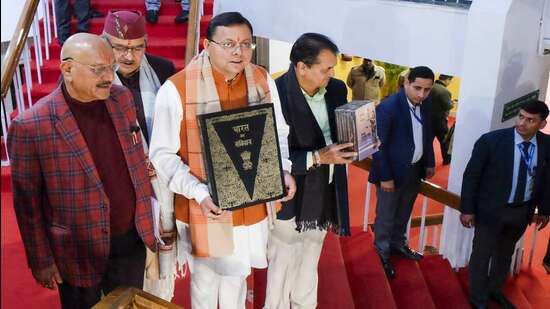
Uttarakhand’s UCC is neither. It does little to promote equality or inclusion, goes against the grain of more progressive judicial pronouncements such as the right to privacy, and fails to reflect a modern society’s changing social mores including the rising aspiration and desire for autonomy among women.
Perhaps its greatest flaw, when it kicks in by October, is that it infantilises adult women and seeks to curb their independence.
Among its more outrageous features is one that mandates the registration of live-in relationships (breakups in such relationships must also be registered). Under its provisions, parents of adults aged between 18 and 21 must be kept in the loop. Of course, it is anybody’s guess how such couples will approach the police in a state where adolescent boys get arrested for going on a date with their minor girlfriends, based on the complaints filed by their girlfriends’ parents, as highlighted by the Uttarakhand high court in a recent order.
In state assemblies from Maharashtra to Gujarat, the fear that young women will break social, faith and caste barriers to marry men of their choice is so strong that elected legislators are debating on the need for parental consent for love marriages.
{{/usCountry}}In state assemblies from Maharashtra to Gujarat, the fear that young women will break social, faith and caste barriers to marry men of their choice is so strong that elected legislators are debating on the need for parental consent for love marriages.
{{/usCountry}}“Gender is often the entry point when we talk about reform in family law. But, very quickly, the goal of gender is overtaken by talk of national integration and a political party’s positions,” said Saumya Saxena, a law professor at OP Jindal University.
A common law for all citizens for marriage, divorce, adoption and inheritance has, from the inception of the Constitution, been a desirable goal. But, it’s not as if personal laws have remained static. Since the Hindu code amendments of the 1950s, court rulings have made sweeping changes in personal laws to align them closer to the Constitution.
Muslim personal law has not been exempt. Last week, the Supreme Court (SC) reiterated that Muslim women, no matter what their personal laws state, are entitled to maintenance after divorce. Triple talaq was banned by the courts two years before Parliament criminalised the practice in 2019.
The Juvenile Justice Act makes it possible for Christian women to adopt. In Shabnam Hashmi vs Union of India (2014), the SC ruled that adoption was a fundamental right available to all. Elsewhere, the SC granted a Zoroastrian woman, barred from entering Parsi temples for marrying outside the community, the right to enter a fire temple. Everywhere, mutinies against archaic customs continue to brew.
Can we imagine family beyond just biological ties? How do we promote gender justice and the inclusion of minorities, including sexual minorities? Can we do better to protect the right of adult women to love?
Uttarakhand’s UCC could have been a blueprint for a modern nation. Instead, what we have is an opportunity lost.
Namita Bhandare writes on gender. The views expressed are personal