Early in August, an Air India A320 aircraft flying from Phuket, Thailand, to Delhi, with 145 persons on board, including crew members, experienced an incident that led to several passengers and crew members getting injured, with at least one case that could be classified as a severe injury (a cabin crew member suffered a cervical fracture). Initial reports claimed that the aircraft faced bad weather and severe turbulence — the seat belt signs, however, were off — resulting in a sudden drop of 300 feet from the cruising altitude. The pilots involved were tested for psychoactive substances post the incident.
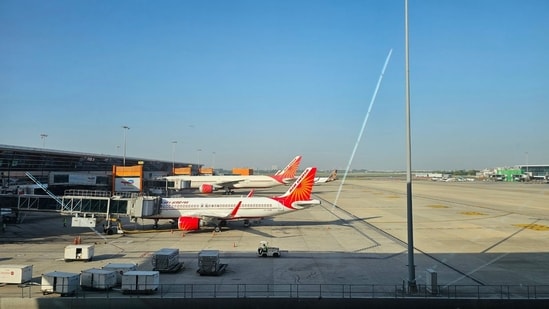
The Aircraft Accident Investigation Bureau (AAIB)’s preliminary report, recently made public, classified the incident as an accident and stated that recovered data confirms the aircraft in question (A320, narrowbody) experienced a failure of all three hydraulic systems — a rarest-of-the-rare occurrence — from which it subsequently (almost miraculously) recovered within seconds and the crew decided to continue to Delhi.
While the preliminary report did not recommend any action for Airbus to take, it recommended that the Directorate General of Civil Aviation take appropriate action against the pilot in command (PIC) who tested “non-negative for psychoactive substances.” The airline terminated his service.
A few things have emerged after the episode, all of which merit attention from different stakeholders.
{{/usCountry}}A few things have emerged after the episode, all of which merit attention from different stakeholders.
{{/usCountry}}To begin with, the Air India management should note that this is the second time within a short span that the phrase “rarest of the rare” has been brought up in connection with its aircraft. The first was the AI171 Dreamliner crash in June 2025 that killed 260 people. There are striking similarities between the two incidents. In the June 2025 incident, the dual engine failures were described by experts as “virtually impossible”. The simultaneous failure of all three hydraulic systems in the latest incident was also termed as such.
In February 2026, another Air India Dreamliner was temporarily grounded after the pilots complained of faulty fuel control switches. Globally, there are over 1,100 Dreamliners and over 11,000 A320s in operation, but it is Air India’s aircraft that seem to be achieving the virtually impossible repeatedly.
Two, some industry experts say that though the PIC testing positive for psychoactive substances deserves condemnation, this was incidental to the accident given the more serious hydraulic failure identified in the AAIB report: Had the systems not recovered, this would have been a tragedy of the magnitude of the June 2025 crash.
That said, several actions (and failure to act) by the PIC and his first officer have also spurred an allegation that is doing the rounds of the civil aviation sector: The PIC may have taken some unnecessary risks while demonstrating to his first officer how the aircraft should be handled in case there was a problem in the hydraulic systems, and inadvertently triggered the sudden loss of altitude the aircraft encountered. The fact that the seat-belt signs were not on — they would have been on had the aircraft been experiencing turbulence — lends some credence to this hypothesis. The AAIB report clearly states that the aircraft faced no adverse weather or turbulence that could explain such a drop in altitude.
Also Read | Incoming CEO Tewolde Gebremariam vows to ‘Make Air India Great Again’
Senior commanders also point at the PIC’s decision to continue towards the terminating destination (Delhi) instead of landing at the closest runway to argue that the drop in altitude did not alarm the crew as much as it normally should have. Had the cockpit crew suspected that the sharp fall was on account of some kind of unprecedented hydraulic failure, they would have landed at the first and closest opportunity — in this case, Kolkata airport — rather than continuing towards Delhi. This alone, many argue, is incontrovertible evidence that what occurred might have been triggered by pilot action rather than other factors.
While the AAIB report refrains from laying the blame entirely on the PIC in this case, sources in DGCA and the airline say that — unlike in the AI171 case, where they are very sceptical of the cockpit crew’s culpability — in this particular case, all indications point towards the now-terminated PIC. Many industry experts argue termination is not punishment enough, if indeed it is proven that the injuries and altitude drop resulted from his actions.
The other — far more alarming — possibility, that the hydraulic failure was driven by an electrical, mechanical or some other technical malfunction, has fewer takers given that the AAIB did not suggest grounding all A320s until it reached its final conclusion. Neither has the global media descended on Air India and the flight in question, which would be likely if there were even the faintest hint that some kind of technical (electrical, mechanical or software) glitch was to blame, since over 11,000 A320s are in operation globally. Air India’s rivals such as IndiGo — whose fleet almost entirely consists of A320s — continuing with the aircraft in a business-as-usual manner also suggests that the possibility of pilot action having led to the sudden drop is the highest.
With the final AAIB report pending, the Air India management and the airline’s new CEO must introspect on why these apparently impossible occurrences have happened with their aircraft and whether crew members are involved.