
 E-Paper



Bolster the US-India vaccine collaboration
India-US have a history of important and successful collaboration in vaccines and a changing world seeks world leaders to move beyond grandiose announcements

 Prefer HTon Google


As India and the United States (US) look to step up their strategic technology partnership, the former is in an advantageous position in the shifting collaborative paradigm — a confident democracy with a robust and resilient research and development ecosystem. It is, therefore, natural that the India-US partnership in science and technology is fostered on an equal footing. The well-established Indian vaccine industry, the largest in the world, stamped its authority during the pandemic, administering nearly two billion doses (1.7 billion Covishield and 300 million Covaxin) to the Indian population in record time. Not only did it cater to the Indian population but it also supplied many developing countries with shots. Well supported by globally competitive academic research organisations such as the Indian Council for Medical Research (ICMR)- National Institute of Virology, Department of Biotechnology (DBT)-Translational Health Science and Technology Institute (THSTI), IISERs, IITs and IISc, public-private partnerships saw the development of many safe and effective vaccines in India.
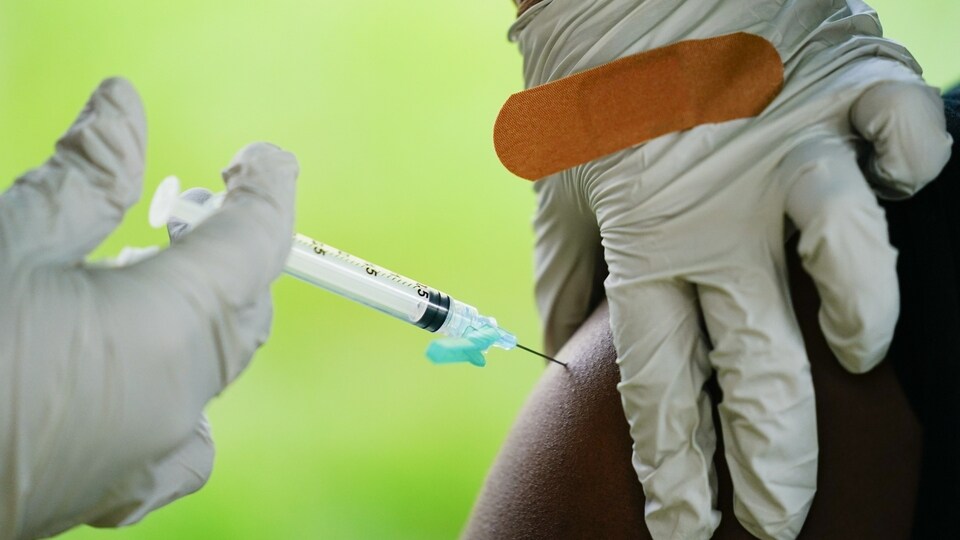
India and the US have a history of important and successful collaboration in vaccines; the India-US Vaccine Action Programme — anchored by DBT, Ministry of Science and Technology in India and the National Institute of Allergy and Infectious Diseases (NIAID) and National Institutes of Health, US — has been instrumental in spurring the nascent vaccine industry in India.
This partnership seeded the development of the first Make in India vaccine, Rotovac (rotavirus vaccine), introduced in the National Immunisation Programme in 2015. The success of Rotovac put in place a vaccine development system, which was both accessible and affordable, and was leveraged for the rapid development of Covaxin by Bharat Biotech International.
The vaccine industry in India has boomed with plasmid DNA-based ZyCoV-D vaccine from Zydus Cadila and mRNA vaccine from Gennova Biopharmaceuticals. This — along with the mega-manufacturing capacity of Serum Institute of India, the world’s largest vaccine maker and supplier that produces 1.6 billion vaccine doses a year — makes India a vaccine powerhouse.
The Indian vaccine research and development community is able to meet the world’s most innovative initiatives as equal partners. It is in this context that the two governments must look at revitalising the vaccine partnership, giving it new direction and dimension.
This rejuvenated partnership should be able to address the technology needs of the Global South and consider establishing a new-age health research development centre with India and the US as the hubs, with a network of sub-centres or nodes from across the Global South. Globally, the vaccine sector is highly research and capital-intensive, and so, shifting the focus to R&D in academia-industry partnership mode would be critical. The centre should be able to nurture global capacity in R&D for vaccines, innovatively. The health R&D centre could have a four-pronged focus — affordable and accessible vaccine development technology against existing and emerging threats; developing a harmonised and equitable regulatory regime independent of corporate and government influence; capacity building in technology advancements for low- and middle-income countries; and elevating the sector’s ancillary industry and creating pockets and nodes for reliable global supply chains.
Such a centre would serve to bolster the world leader role the US plays, one that has seen diminishing influence over the years, while allowing India to be the effective voice of the Global South, with which she is more culturally attuned. A changing world seeks world leaders to move beyond grandiose announcements, to more grounded and doable initiatives, which will impact the world equitably, effectively and efficiently.
Shailja Vaidya Gupta is former adviser, department of biotechnology, Government of India The views expressed are personal


