While India’s Covid-19 vaccination drive has picked up pace, it has also brought into focus the barriers that the marginalised face in accessing the vaccine. Among these are women, people with disabilities, and those on the absolute periphery of the marginalised — the transgender community.
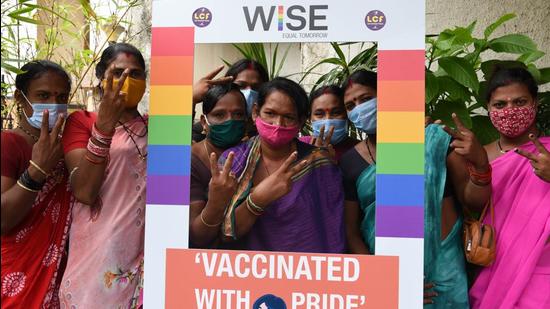
As of the end of June, only 11.45% of the transgender population has been partially vaccinated — their population as per the last Census is estimated at 490,000. Those from the community, however, put the figure closer to 1.8 million.
These vaccination numbers are partly due to vaccine hesitancy. They are partly due to distrust in the public health system due to experiences of exclusion and discrimination. They are partly due to meagre sources of income, possibly eroded further by the pandemic. The numbers are also due to the digital divide; many are unable to register themselves as they don’t have smart devices. And they are partly a result of high illiteracy levels of the community.
Amrita Sarkar of the India HIV/AIDS Alliance in Delhi told me that transgender persons have a higher rate of morbidities, making them more susceptible to Covid-19. They have higher rates of sexually transmitted infections (STIs) and HIV/Aids-related infections. This leads to compromised immunity. Several require hormones after gender reassignment surgeries.
“The lack of hormones, which many cannot access or the lack of access to treatment for infections given that the health system is presently geared towards Covid-19, has resulted in mental stress. We are also afraid of going to vaccination centres for fear of being shooed away as many have been,” says Sarkar. The ministry of social justice and empowerment has set up a free helpline for transgender people who need support, but it is unclear how effective it is.
{{/usCountry}}“The lack of hormones, which many cannot access or the lack of access to treatment for infections given that the health system is presently geared towards Covid-19, has resulted in mental stress. We are also afraid of going to vaccination centres for fear of being shooed away as many have been,” says Sarkar. The ministry of social justice and empowerment has set up a free helpline for transgender people who need support, but it is unclear how effective it is.
{{/usCountry}}The only sustained help that they get are from NGOs. The government must engage with leaders from the community to find out how best they can be helped. The one-time subsistence allowance of ₹1,500 per transperson during the second wave isn’t enough.
There has to be a concerted effort by state governments to set up camps for transpeople where they can at least be guided through the registration process. Campaigns in clusters where they live can educate them on the effectiveness of vaccines and guide them on how to reach vaccine centres. Setting up separate booths for the vaccine will help instil a sense of safety. Immediate steps can also be taken to institute home vaccinations wherever possible.
Speaking on various news platforms, Aqsa Shaikh, India’s first transgender nodal officer of a Covid-19 vaccination centre at the Hamdard Institute of Medical Sciences and Research, says that her community deserves the same rights as others.
In the long-term, one solution to improve conditions for the community is through financial inclusion. Recognising this, the Joint United Nations Programme on HIV/AIDS (UNAIDS) plans to launch pilot projects in several countries, including India, to fund transgender-led social enterprises; a small but necessary step that can help encourage entrepreneurship, create community networks to other social and economic empowerment activities.
The government must also conduct sensitisation sessions on trans issues to address several blind spots.
“Talk to us, ask us about our needs, no vaccination drive can be effective unless the most vulnerable are reached,” says Sarkar. Let us hope someone is listening.
lalita.panicker@hindustantimes.com
The views expressed are personal