China's recovery from the depth of the Covid-19 slump is impressive, and the country will almost certainly be the only major economic power to end 2020 in positive territory. Another world-beating expansion is expected this year. But for all the superlatives, Beijing is years away from becoming a global economic leader.
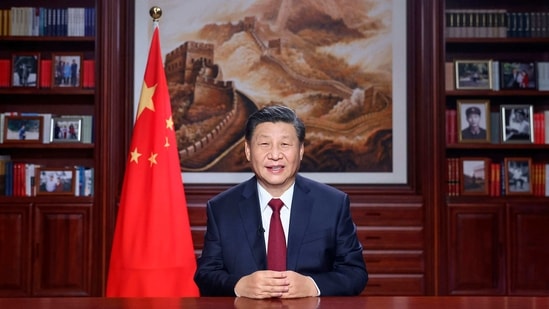
Gross domestic product rose 6.5% in the fourth quarter from a year earlier, the government said Monday, better than anticipated and a faster pace than recorded immediately before the pandemic. The performance brought the expansion for the year to 2.3%. That’s a result few thought possible when the economy shut down in early 2020 to contain the coronavirus.
Growth may approach 8% this year, reckons the International Monetary Fund, outstripping America, Europe and Japan. The Communist state will supplant the U.S. as the world's largest economy in dollar terms in 2028, five years earlier than forecast a year ago, according to the Centre for Economics and Business Research, a London consulting firm. Beneath the strong numbers are significant challenges. China's growth was slowing before the pandemic. Authorities had adopted an accommodative stance, deploying fiscal and monetary loosening while the Federal Reserve was still tightening in 2018. Renewed large outbreaks of Covid-19 aside, one of the biggest risks facing China is a premature step back from this official support, the IMF said in concluding its annual review earlier this month. “Let's avoid a macroeconomic support cliff, let's make sure that we don't prematurely withdraw fiscal policy support, and that means, you know, some continuing support and for monetary policy, it means remaining accommodative,” Helge Berger, the IMF’s mission chief for China, told reporters Jan. 8. This issue isn’t academic. China’s central bank Friday withdrew cash from the financial system for the first time in six months, after excess liquidity had pushed an interbank borrowing rate to an all-time low. The unexpected move signaled that the monetary easing of the past two months may be ending. While that stance has helped repair sentiment in China’s credit and government bond markets, injecting too much cash risks further stoking leverage in the financial system.Beijing’s loosening in the coronavirus era has been mild compared with the Federal Reserve’s approach and the pump-priming passed by Congress. Fiscal measures deployed by President Xi Jinping amount to about 4.7% of GDP, the IMF estimates. In the U.S., it’s more than 10%, and Japan has pledged multiples of that.
There are good reasons for Beijing’s hesitancy. Huge stimulus undertaken during the global financial crisis helped propel recovery, but left Chinese businesses with a big overhang of debt. Too much exuberance now risks a borrowing binge that might end badly; a wave of high profile corporate defaults rippled through markets at the end of last year.China can be thankful that the Fed has taken the lead in supporting monetary expansion around the world, slashing interest rates to zero, resuming quantitative easing, opening up access to dollars abroad and making it clear that a tightening may be years away. This raw power is both a huge advantage to the U.S. and a burden for the Fed. Like the rest of the global economy, China gets the benefit of buoyant markets and easy financial conditions, without doing much of the heavy lifting. The extent of America’s responsibility was an undercurrent in a webinar Fed Chair Jerome Powell conducted last week with Princeton University economist Markus Brunnermeier. Powell acknowledged that the scope of the Fed’s response to the coronavirus “comes with [the dollar] being the global reserve currency and a good economic citizen of the world.”When the conversation turned to the Fed’s timeline for backing away, Powell put on the brakes. It's far too soon to talk about it, he cautioned. “We’ll let the world know.” The PBOC doesn’t come close to getting this level of scrutiny. Nobody beyond the Asia region talks about a Chinese taper tantrum.China rightly deserves praise for its performance, and the world economy would be in a far worse place without its resilience. The country may well overtake the U.S. soon, but it will be leadership in minor key. A booming GDP won’t change that.
{{/usCountry}}There are good reasons for Beijing’s hesitancy. Huge stimulus undertaken during the global financial crisis helped propel recovery, but left Chinese businesses with a big overhang of debt. Too much exuberance now risks a borrowing binge that might end badly; a wave of high profile corporate defaults rippled through markets at the end of last year.China can be thankful that the Fed has taken the lead in supporting monetary expansion around the world, slashing interest rates to zero, resuming quantitative easing, opening up access to dollars abroad and making it clear that a tightening may be years away. This raw power is both a huge advantage to the U.S. and a burden for the Fed. Like the rest of the global economy, China gets the benefit of buoyant markets and easy financial conditions, without doing much of the heavy lifting. The extent of America’s responsibility was an undercurrent in a webinar Fed Chair Jerome Powell conducted last week with Princeton University economist Markus Brunnermeier. Powell acknowledged that the scope of the Fed’s response to the coronavirus “comes with [the dollar] being the global reserve currency and a good economic citizen of the world.”When the conversation turned to the Fed’s timeline for backing away, Powell put on the brakes. It's far too soon to talk about it, he cautioned. “We’ll let the world know.” The PBOC doesn’t come close to getting this level of scrutiny. Nobody beyond the Asia region talks about a Chinese taper tantrum.China rightly deserves praise for its performance, and the world economy would be in a far worse place without its resilience. The country may well overtake the U.S. soon, but it will be leadership in minor key. A booming GDP won’t change that.
{{/usCountry}}This column does not necessarily reflect the opinion of the editorial board or Bloomberg LP and its owners.
Daniel Moss is a Bloomberg Opinion columnist covering Asian economies. Previously he was executive editor of Bloomberg News for global economics, and has led teams in Asia, Europe and North America.
For more articles like this, please visit us at bloomberg.com/opinion
©2021 Bloomberg L.P.