Many Indian cities have been grappling with polluted air. When the air quality index (AQI) deteriorates, under the Graded Action Response Plan (GRAP), a host of measures come into effect depending on the level of pollution. The higher levels of GRAP include stringent measures, including halting private and public construction in affected areas, given construction activities are a key source of particulate matter (PM2.5 and PM10) pollution across urban India.
While pollution reduction measures are welcome, a blanket ban on
Many Indian cities have been grappling with polluted air. When the air quality index (AQI) deteriorates, under the Graded Action Response Plan (GRAP), a host of measures come into effect depending on the level of pollution. The higher levels of GRAP include stringent measures, including halting private and public construction in affected areas, given construction activities are a key source of particulate matter (PM2.5 and PM10) pollution across urban India.
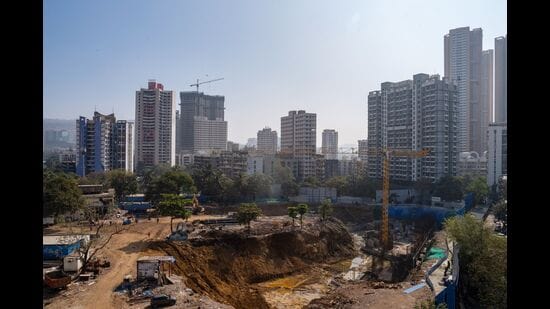
While pollution reduction measures are welcome, a blanket ban on construction adversely impacts the economy as well as lives and livelihoods. The construction industry is the second-largest contributor to India’s Gross Domestic Product (GDP), after agriculture. India is also expected to become the third-largest construction market worldwide this year. There is an urgent need for a balanced approach — one that ensures economic growth without compromising on livelihoods or quality of life. Many cities stipulate regulations for mitigating air pollution at construction sites but lack the necessary intent to address the sources of emissions. Efforts tend to focus more on the optics of compliance. To truly address pollution from construction, the industry must consider the following practices.
Effective site enclosure: The commonly used green safety net is designed to prevent accidents and does not capture fine dust particles. To better contain dust, the structure should ideally be covered with opaque tarpaulin sheets when internal work is ongoing.
Mechanical ventilation: Enclosed construction areas must have mechanical ventilation systems featuring high-quality filters. These systems effectively capture dust particles while maintaining optimal air quality for on-site workers.
Controlledactivities: Conducting all dust-emitting activities — such as cutting, shaping, and welding — within designated mechanically ventilated rooms can ensure better dust control. It is best to avoid doing these in open spaces.
Dust-control tools: Shifting to mechanical tools equipped with built-in vacuum systems could effectively help in managing dust at construction sites. By directly extracting dust, as it is generated, these systems can significantly reduce airborne particles and reduce the spread of dust to surrounding areas.
Batching plants: To avoid the adverse impact of cement dust arising from batching plants, it is essential to have proper containment. These facilities should be housed in fully enclosed and mechanically ventilated structures.
Excavation management: Covering excavated earth with a durable tarpaulin sheet prevents loose soil particles from being carried away by the wind. Additionally, the tarpaulin must be firmly secured to withstand weather conditions. For uncovered construction material and while transporting, applying surface-settling compounds such as magnesium chloride or calcium chloride can be effective in suppressing the resuspension of dust.
Vehicle dust control: The movement of vehicles at sites causes resuspension of dust. This can be minimised by ensuring that all construction vehicles operate exclusively on paved or stabilised surfaces.
Real-time monitoring: Real-time monitoring of air quality by installing advanced sensors could provide valuable insights. Such measures help track pollution levels and enable timely adjustments to existing control strategies.
Worker training and dedicated pollution control staff: To foster a culture of environmental responsibility, site engineers, project managers, and labourers must be trained in clean construction practices. Unfortunately, pollution control is not a core subject in many civil engineering and architecture programmes, which highlights the need for continuous on-site education. This gap can be addressed by hiring dedicated personnel to monitor and ensure compliance with air quality standards throughout the project.
Many of the processes mentioned above are not yet widely adopted in the construction industry, however, they are available and can be scaled up with sufficient investment and commitment. Their adoption requires changes to existing construction workflows, along with financial support for procurement and implementation. Promoting innovation and entrepreneurship to develop and supply dust-free construction products and services can strengthen the future of the clean construction transition. This will also encourage the mass production of alternative products and systems that make clean construction more accessible and cheaper.
A shift towards dust-free construction will prevent job losses, support economic growth and build long-term resilience in the industry. Additionally, developers and homebuyers could explore using precast construction products that are manufactured in factories rather than made on-site. Since these are created in controlled environments, the process generates less dust compared to traditional methods. Contractors, developers and policymakers must collaborate to create an ecosystem where clean construction becomes the norm.
Sree Kumar Kumaraswamy is programme director, Clean Air Action, WRI India. The views are personal
One Subscription.
Get 360° coverage—from daily headlines
to 100 year archives.
Archives
HT App & Website