
 E-Paper



Cyclone secrets beneath the surface of the ocean
Tropical cyclone predictions are getting better but there is always room for further improvement considering the havoc cyclones wreak on lives, socioeconomics

 Prefer HTon Google


As we approach the cyclone season across the world, we have to prepare for the worst and hope for the best. Tropical cyclone predictions are getting better but there is always room for further improvement considering the havoc cyclones wreak on lives, livelihoods, and socioeconomics.
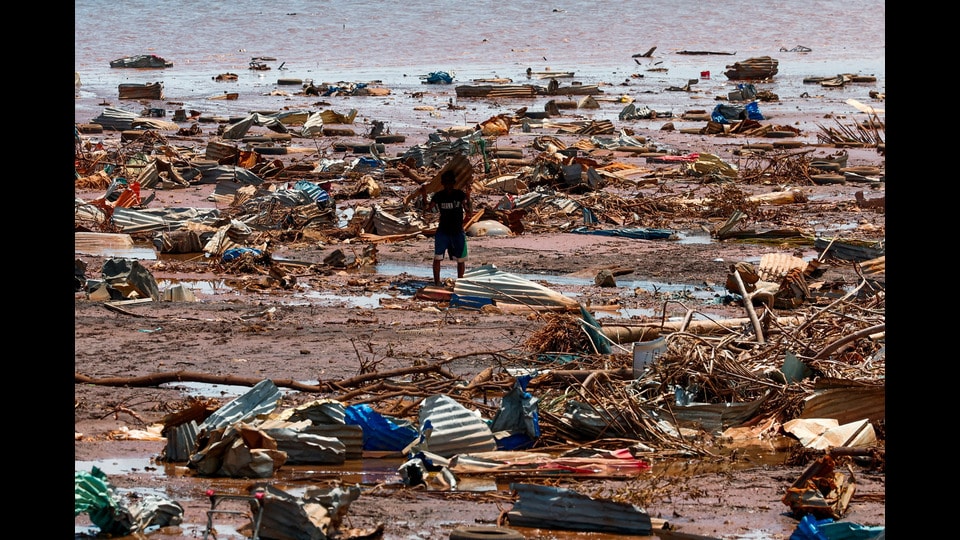
Researchers try relentlessly to understand the processes that lead to the birth of cyclones. While there are many indicators for cyclone genesis, i.e., conditions favourable for the seeds of cyclones, we do not have a complete understanding of how these seeds germinate into full-blown cyclones.
A new study, of which this writer is a co-author, reports that the subsurface ocean holds some secrets to whether a cyclone seed will germinate and grow into a cyclone. This is a critical insight since it points to the data needed to further improve cyclone predictions.
Cyclone genesis is the process where seeds for cyclones are thrown onto the ocean surface. These seeds are borne out of a confluence of factors. The most important factors are warm sea surface temperatures (SSTs), the circulatory tendency in the horizontal variations of wind fields called vorticity, moisture in the middle atmosphere since condensing moisture releases energy for cyclones, and weak variations in winds from the surface into the atmosphere. Strong wind variations with altitude, called vertical shear, can chop off the cyclones and prevent them from growing. Vertical shear is precisely what prevents cyclone formation during the monsoon, thus relegating the cyclone seasons to the pre-and post-monsoon months when the vertical shear is weak. Or so it has been assumed thus far. Does the dark ocean have something to say about that?
For decades, the focus has been on these cyclone genesis factors to estimate the number of cyclones expected to be born during the season. These background conditions for cyclone genesis are also modified by the El Niños and La Niñas via their impact on winds and moisture loading as well as ocean conditions.
How does a cyclone seed grow into a cyclone?
It has been known for decades that warm SSTs are critical for cyclones to be born. For the cyclones to grow, the ocean heat content called the Hurricane Potential is the energy source. Oceans serve up the moisture which condenses to produce battering rains and also to release the condensation heat to keep the cyclone persist and intensifying. It is this lack of ocean energy and moisture that tends to deconstruct cyclones once they make landfall.
Hurricane potential is the amount of heat contained in the oceans above the 26-degree Celsisus threshold. Hurricane potential is available and favourable in all the known cyclone genesis regions around the equator in the tropical oceans.
A cyclone is born when the wind speeds cross the threshold of 18 m/s. It has generally been assumed that the winds are not too strong to affect the ocean heat content prior to reaching this strength. As it turns out, SSTs are closely related to the depth of the 26-degree Celsius temperature level. Because the depth of this isotherm determines the inertia of the ocean heat, i.e., the speed with which SSTs warm up or cool down because of the winds and evaporation.
If this temperature isotherm is deeper, then ocean heat inertia is higher, and the SSTs tend to be warm and favour cyclone genesis and cyclone growth. If this temperature line is shallower, then the inertia is weaker, and SSTs tend to be cooler and that can suppress cyclone genesis or the transition to a cyclone. It then becomes critical to understand how the pre-cyclone winds affect the depth of the 26-degree Celsius isotherm.
How do pre-cyclone winds affect the hurricane potential and the birth of a cyclone?
The role of the dark subsurface ocean and the associated hurricane potential is well known in terms of the lifespan and the intensity of a cyclone, but only after the cyclone is born. The role of the dark ocean in the transition from a seed into a cyclone has remained a secret. A study of over 23,000 cyclones before they reached the official status of a cyclone was analysed to understand their variability in winds and the spinning tendency in them.
Wind strength can be expected to cool SSTs through evaporation and also affect the depth of the isotherm. This intuition has been used to assume that the winds are weaker prior to the birth of a cyclone and thus not important for the variations in the hurricane potential. The focus has hence been only on SSTs prior to the pre-cyclone stage and not on the depth of the 26-degree Celsius isotherm.
As it turns out, the horizontal variations in winds can create a circulatory motion in the ocean. If the circulation is clockwise in the Northern Hemisphere or anticyclonic, then waters converge into the middle and push the isotherm down, increasing the hurricane potential. If the winds push the surface waters in an anticlockwise or cyclonic direction, then the surface waters diverge from the centre, and cooler waters are pulled up. The 26-degree Celsius isotherm shoals, in this case, and the hurricane potential are diminished.
Winds are clearly weaker in the pre-cyclone stage but their horizontal variations and their tendency to produce cyclones and anticyclones in the ocean are quite ubiquitous. Thus, winds render the hurricane potential to be more or less favourable for a cyclone to be born out of the seeds that are strewn around the already-known cyclone genesis regions.
This raises some interesting questions about the differences in the number of cyclones in each warm region and their seasonality. It is also essential to determine how the winds, oceans, and cyclones may respond to continued global warming in this new understanding. The dark ocean has some secrets that must be monitored carefully to improve hurricane simulations, predictions, and projections for the future.
Raghu Murtugudde is professor of climate studies, IIT-Bombay, and emeritus professor at the University of Maryland. The views expressed are personal


