The Cabinet on Wednesday approved the scrapping of the no-detention policy in schools till Class VIII. An enabling provision will be made in the Right of Children for Free and Compulsory Education amendment Bill to will allow states to hold back students if they fail in the year-end exam. The bill will now be placed in the Parliament for approval.
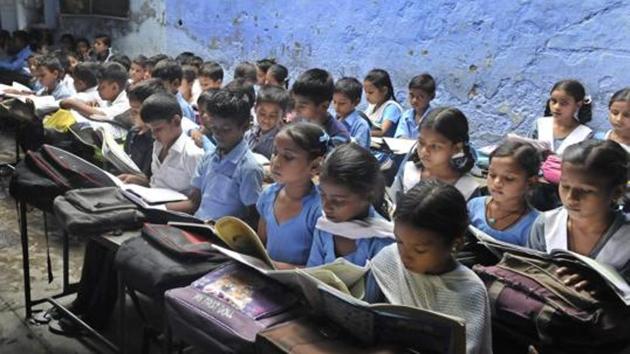
Introducing detention at the end of classes 5 and 8 on the basis of a year-end examination is a retrogressive step that will have a far-reaching deleterious effect on reforms to improving equitable learning in the school system. The effects of detention on a child’s self-esteem and motivation are obvious. Proponents of detention argue that this is necessary to improve student learning and without detention children are reaching higher classes without even basic learning levels. This is a specious argument.
Most of you will agree with the statement that ‘there is no teaching if there is no learning’.
The only purpose of teaching is for learning to happen. If teaching is not resulting in learning, does it make sense to add more years of schooling by making a child repeat a class? Going through another year of ‘more of the same’ inappropriate teaching-learning process is extra punishment for the child. There is enough research evidence to show that repeating a class does not improve learning. This is a clear example of a ‘blame the victim’ approach. While the education system and the school tried their best, the child and her parents or community were not responsible enough and, therefore, the child deserves to be punished by detention.
There are many questions that will be left unanswered even after the detention policy is implemented. What are the reasons for poor learning outcomes of a large proportion of children studying in primary and elementary classes in India? Why are almost 40% children not learning to read with full understanding at the end of class 3? Will all of them be detained because being able to read with understanding is the most basic skill without which very little learning can happen in future? What about children with some mental disability? When will all middle schools (classes 6 to 8) have subject teachers for Math, Science and English? These will all be forgotten for the next decade in the hope that the policy of detention based on failure in one exam will improve quality. We will wait for many years before realizing the problems lay elsewhere and no-detention was wrongly made the scapegoat for the larger problem of poor learning.
{{/usCountry}}There are many questions that will be left unanswered even after the detention policy is implemented. What are the reasons for poor learning outcomes of a large proportion of children studying in primary and elementary classes in India? Why are almost 40% children not learning to read with full understanding at the end of class 3? Will all of them be detained because being able to read with understanding is the most basic skill without which very little learning can happen in future? What about children with some mental disability? When will all middle schools (classes 6 to 8) have subject teachers for Math, Science and English? These will all be forgotten for the next decade in the hope that the policy of detention based on failure in one exam will improve quality. We will wait for many years before realizing the problems lay elsewhere and no-detention was wrongly made the scapegoat for the larger problem of poor learning.
{{/usCountry}}The exclusive emphasis on an end of the year examination will bring its own harmful effects. Such an examination pronounces judgment on the child based on performance on one day. It undermines the importance of regular assessment throughout the year to identify students’ learning difficulties and taking corrective action to improve learning as an ongoing process.
Instead of introducing detention, the focus has to be strongly on ensuring learning and that almost all students acquire the key skills and concepts required for progressing to a higher class. This requires strong systemic and pedagogic reform, and a lot of hard work!
In addition, arrangements like extra time and attention in the class to students who lag behind, special assessments in classes 3, 5 and 7 followed by structured bridging and coaching inputs for children who have high learning gaps at the beginning and end of the school year and during school holidays to help children acquire basic concepts and skills before they progress to the next class will be required.
Dhir Jhingran is director, Language and Learning Foundation and a former IAS officer
The views expressed are personal