
 E-Paper



Distantly Close | In Pakistan’s democracy of discord, Imran Khan rises again
Devalued legislatures and feuding leaders might push the country to early polls that its sinking economy cannot afford


Much of Imran Khan’s popularity in Pakistan is about people lapping up his disdain for traditional political parties and the institutions of the state which haven’t exactly covered themselves with glory. In the zeal to be an “honest man wronged”, he hasn’t been shy of dragging in the ubiquitous establishment — another name for the Army.
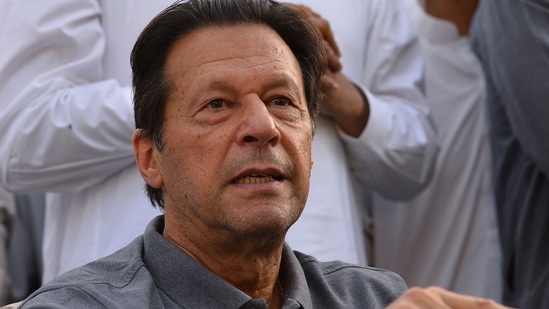
His maverick appeal drew massive crowds at the many public meetings he addressed across the country on losing a Supreme Court-dictated confidence vote on April 10 in the national assembly. It took the Pakistan Tehreek-e-Insaaf (PTI) chief a little over three months to bounce back in the electoral game.
On July 17, his party won 15 of the 20 seats to which elections were held due to the disqualification of PTI’s Punjab legislators who defected to the Pakistan Muslim League (Nawaz)-led front. This had brought down his government in the key province close on the heels of his parliamentary defeat.
A PTI win the army didn’t father
In getting the turncoats punished in the people’s court, Khan won twice over the war of perception against the Sharif family in the latter’s citadel of Punjab, which, in politico-legislative terms, is Pakistan’s Uttar Pradesh. The results were evidence as much of his political clout without the Army’s patronage, a charge that haunted him all through his truncated term as Prime Minister.
Being on the same page as the Army was at that time a “recipe” for good governance, a privilege beyond the reach of his rivals, notably the PML(N) of Nawaz and Shehbaz Sharif and the Pakistan People’s Party (PPP) of Asif Ali Zardari and his son Bilawal Bhutto. The PML-N-helmed formation’s third major ally is the Jamiat-ulema-e-Pakistan of Maulana Fazlur Rehman, whom Khan’s supporters mock as “Maulana Diesel” for his controversial decisions as petroleum minister in the Benazir Bhutto regime of 1990s.
Khan used his association with the army to the hilt till the odd-marriage turned sour. There were myriad issues behind the breakup, the foremost among them being the appointment of the new chief of the Inter-Services Intelligence (ISI) and the foreign policy choices the PTI regime made against the United States and the European Union to veer towards the China-Russia axis in the aftermath of Moscow’s invasion of Ukraine. In the latter instance, he seemed to be walking away from a time-honoured arrangement where the civilian regimes allowed the Army’s primacy in the US-Pak, Af-Pak and India-Pak affairs.
In the middle of that tussle, Khan crafted himself as the poster boy of Pakistani self-respect and pride whom the Americans booted out in a conspiracy to install a pliable dispensation that the PTI spin doctors branded as an “imported regime”. The play of words bordering on hyperbole worked wonders for Khan. It showed Shehbaz, his successor, as being vulnerable to external diktat while obfuscating his own failures that many among Khan’s critics believe had put the country’s economy in deep crisis.
The by-elections have vindicated and cemented that narrative, turning the tables on Shehbaz and his powerful backers in Rawalpindi. As the leader of the national assembly, where the PTI legislators haven’t sat since their government’s ouster, the PML-N leader stands vastly devalued as the country’s Prime Minister. Khan’s rise on his own steam, unlike in the 2018 general elections where he fought with the military’s support, is proportional to the decline of the family–run Nawaz League and the PPP. Albeit with a cautionary note, the scenario is comparable with what’s being seen in India in the loss of strength and credibility of older forces and the rise of personality cult based populist formations.
Imran’s nemesis amid poll victory
The wheel moved full circle after the by-elections which gave the PTI the majority to anoint its ally, Pervez Ilahi of the PML(Q) as the chief minister of Punjab in place of Shehbaz’s son, Humza Shehbaz. On the strength of a letter by Ilahi’s elder brother, Chaudhary Shujaat, who is the party chief, the deputy speaker in the assembly discounted the Q-League’s 10 votes to declare Humza elected as CM.
In more ways than one, it was a repeat-run of what the PTI’s deputy speaker did in the national assembly by rejecting the Opposition’s no-trust motion to help Khan dissolve the parliament through a notification by a handpicked Presidency.
That had set the stage for the Supreme Court to step in to restore the assembly for the confidence vote which the PTI lost.
The earlier, sorry chapter of the court sitting in judgement on an issue that should have been resolved in the legislature is on display now in Punjab. The judiciary has to decree whether a party’s vote in the assembly is driven by its floor leader or its organisational president who, in the instant case, isn’t a member of the House.
If Khan had sought to be an adventurist against the constitution to save his federal government, the PML-N-PPP front acquitted itself no better in its desperation to retain power in Punjab. The letter that the deputy speaker used to manipulate the vote was the result of Asif Zardari’s backroom manoeuvrings. In a television address, Khan later called the PPP leader a daku (dacoit) who “looted the peoples’ mandate with the money he looted from the people”.
Adding insult to the legislative pillar’s injury, the Supreme Court asked the deputy speaker to depose and educate it on a court judgement on which he placed reliance to accord precedence to the party leader’s directive over that of the floor leader (as mandated by law). The deputy speaker didn’t show up, having himself represented by a lawyer. Yet, the damage was done.
Even the PTI which critiqued the apex court in the national assembly case has had to eat its words in Punjab. This is because only a favourable judicial order can push forward its agenda of early general elections which the Sharif dispensation at the centre will be under duress to follow if the PML-PPP lose power in Punjab. In such an eventuality, Shehbaz will be a “lame duck” Premier; his party out in the cold in all the four provinces with the PTI gaining control of two, Punjab and Kyber Pakhtoonkhwa (where it has a government). Of the remaining states, the PPP rules in Sindh and Balochistan has a rag-tag regime.
The crisis of credibility in Punjab and by implication at the federal level is bound to weigh heavy on the Sharifs. No matter which way the court decides, the damage to their image and acceptability is difficult to repair. Going by the head count, the PTI-PML-Q are clear winners in the Punjab House with 186 votes against 179.
Army will have to be the referee
Certain pro-Sharif analysts have come up with an ingenious argument in the face of the unending bad blood between politicos and General Qamar Javed Bajwa’s reported hands off approach: “Can the army steer clear of siyasat (politics) if it comes to impact riyasat (governance)?” The point sought to be made is whether the country can be pushed into general elections amid an economic emergency not dissimilar to that of Sri Lanka.
If at all, the call for bringing forward the polls due in end-2023 will have to be taken in conjunction with the GHQ (General Headquarters). Whether they like it or not, the gumboots will also have to play their part in the alternative option of a consensus stop-gap regime to address the country’s dipping foreign exchange reserves, the free fall of the Pakistani rupee and galloping inflation. That will require a dialogue and a degree of political reconciliation which only the Army can broker in the deeply fractured polity.
In the lead-up to the by-elections, Khan, who earlier went all guns booming against all institutions, be it the election commission, the judiciary or the fauj, had somewhat softened his position on Sharif’s backers in Rawalpindi to co-opt them in his political plans. An Islamabad-based political analyst said: “Bar Gen. Bajwa and his close advisors, Khan is rated higher than other political players by retired and serving officers and men.”
The big question that remains is about Khan’s acceptability among the external forces that he has incessantly accused of having orchestrated his government’s fall. There are no permanent friends or enemies in public life. But, to be sure, Khan cannot reverse before the general elections the narrative he has woven around the mass distrust of Uncle Sam’s agenda to undermine Pakistan’s sovereignty. The reality he has overlooked in his unbridled offensive is that Islamabad needs these global powers on its side to shore up the sinking economy.
HT’s veteran political editor, Vinod Sharma, brings together his four-decade-long experience of closely tracking Indian politics, his intimate knowledge of the actors who dominate the political theatre, and his keen eye which can juxtapose the past and the present in his weekly column, Distantly Close
vinodsharma@hindustantimes.com
The views expressed are personal


