
 E-Paper



Eliminating Pakistani intrusions in the Valley
The latest manifestation of Pakistan’s policies and actions are the targeted killings. The State must act decisively to protect the people of the region

 Prefer HTon Google


As the Narendra Modi government confronts the challenge of targeted killings in the Kashmir Valley, it would be prudent to accept that Pakistan’s intrusive capacities have not greatly eroded in Jammu and Kashmir (J&K) despite the constitutional changes of August 2019. These capabilities have enabled it to continue to seek to manipulate events through the calibration of terror.
The latest manifestation of Pakistan’s policies and actions are these killings. It has also to be admitted that there is now, as in the past, a sense of alienation among sections of Kashmiri opinion which enables Pakistan to implement its designs. Some of these sections are in the grip of Islamism which make them particularly easy prey for Pakistani terrorist groups, which are virtually an arm of the Pakistani State. As long as the contaminant continues to flow from Pakistan, it will not be easy to stanch the feeling of alienation, and consequently, there will be a reservoir of local youth willing to do Pakistan’s bidding.
There is an obvious convergence of interests between Pakistan and the Valley’s alienated opinion to show that the Union Territory, especially the Kashmir Valley, has not returned to normalcy. To demonstrate this, they have, even while retaining the willingness to carry out major terrorist attacks, adopted a subtler policy of attacks carried out by individuals and small groups with small arms. This is subtle for it is not seriously impacting tourism, which is very important for the economic interests of the Valley, yet. More than a million tourists visited Kashmir between January and May this year.
At the same time, it is not enraging India to break the February 2021 ceasefire along the Line of Control (LoC) and the International Border in J&K. Pakistan desperately needs peace along the LoC in view of its grave economic situation and political turbulence. Its army’s attention is on Afghanistan and inwards and it does not want tensions to currently rise with India.
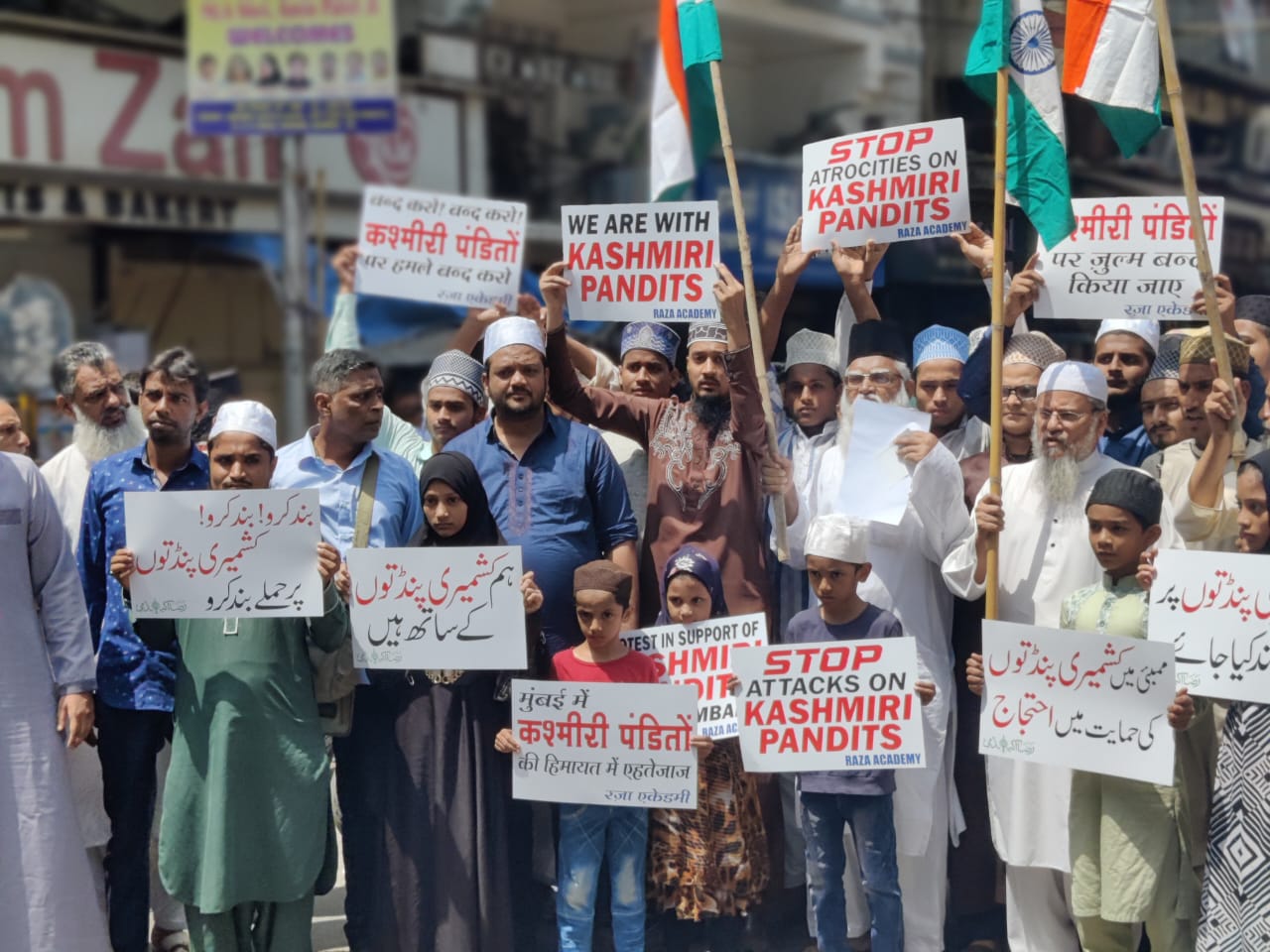
The targeted killings now being undertaken are of Kashmiri Pandits, including those who are working under the government’s special schemes, other Hindus who are in the Valley on assignments or labour from outside the Valley and Kashmiri Muslims who are unwilling to follow the social and political diktats of Pakistan and its terrorist proxies. These proxies in the Valley may have morphed over the years with the waning influence of the older separatist leadership, but it would be wrong to believe that they have atomised and become independent actors, outside the pale of Pakistani influence. Pakistan’s policy to bring to heel recalcitrant elements in J&K continues. It has never hesitated to use violence, when needed, to achieve this objective.
The targeted killings have naturally caused fear, especially among Kashmiri Pandits, who retain strong memories of the causes of the 1990 exodus. The Modi government is taking action to ensure that they feel secure and is determined that a second Hindu exodus does not happen. This is fine in principle, but will it prevent Kashmiri Pandits and others from moving to Jammu if targeted killings continue? Besides, other Indians too will be reluctant to go to the Valley on assignments even if the flow of tourists does not reduce substantially. Indeed, the rise of tourists is projected by the government as the Valley’s return to normalcy, but ironically it is helping Pakistan and its collaborators in the Valley too for it ensures that those who depend on tourism will not seek at all to curtail current anti-India forces.
While Pakistan wants the constitutional changes to be reversed, it is likely aware that this will not happen. There is no appetite in India to restore J&K’s special status though the Modi government has indicated that statehood will be restored to J&K at an appropriate time. Pakistan is concerned that the process of demographic change in the Kashmir Valley has begun. This fear is unfounded even if the Modi government’s laudable desire to attract investments across a range of sectors in the UT fructifies. That will not result in the Kashmir Valley becoming swamped with people from outside the UT. Nevertheless, the targeted killings will serve the purpose of raising doubts among investors.
Even in these times of fierce ideological contestation, it is essential that Indian institutions, especially the judiciary, fulfil their constitutional obligations towards all the people of the UT, including the Valley. This will not be a magic wand in changing popular emotions, but it is an inherent obligation towards the people of an integral part of the Union. This obligation needs to be fulfilled even when separatism and violence continue, for it will display the strength and resilience of the Indian Republic. Naturally, this does not connote that jihadi violence does not need to be combatted with sufficient force.
The ultimate objective of the Indian State has to be to eliminate Pakistani intrusions in J&K. That is a challenge which requires the need to foster an array of instrumentalities which the Indian State is capable of developing but has always refrained from doing so. These options would certainly not be of the violent kind adopted by Pakistan, but will make it pay a price. A State cannot rely only on defensive means to safeguard its interests.
Vivek Katju is a retired diplomat
The views expressed are personal


