
 E-Paper



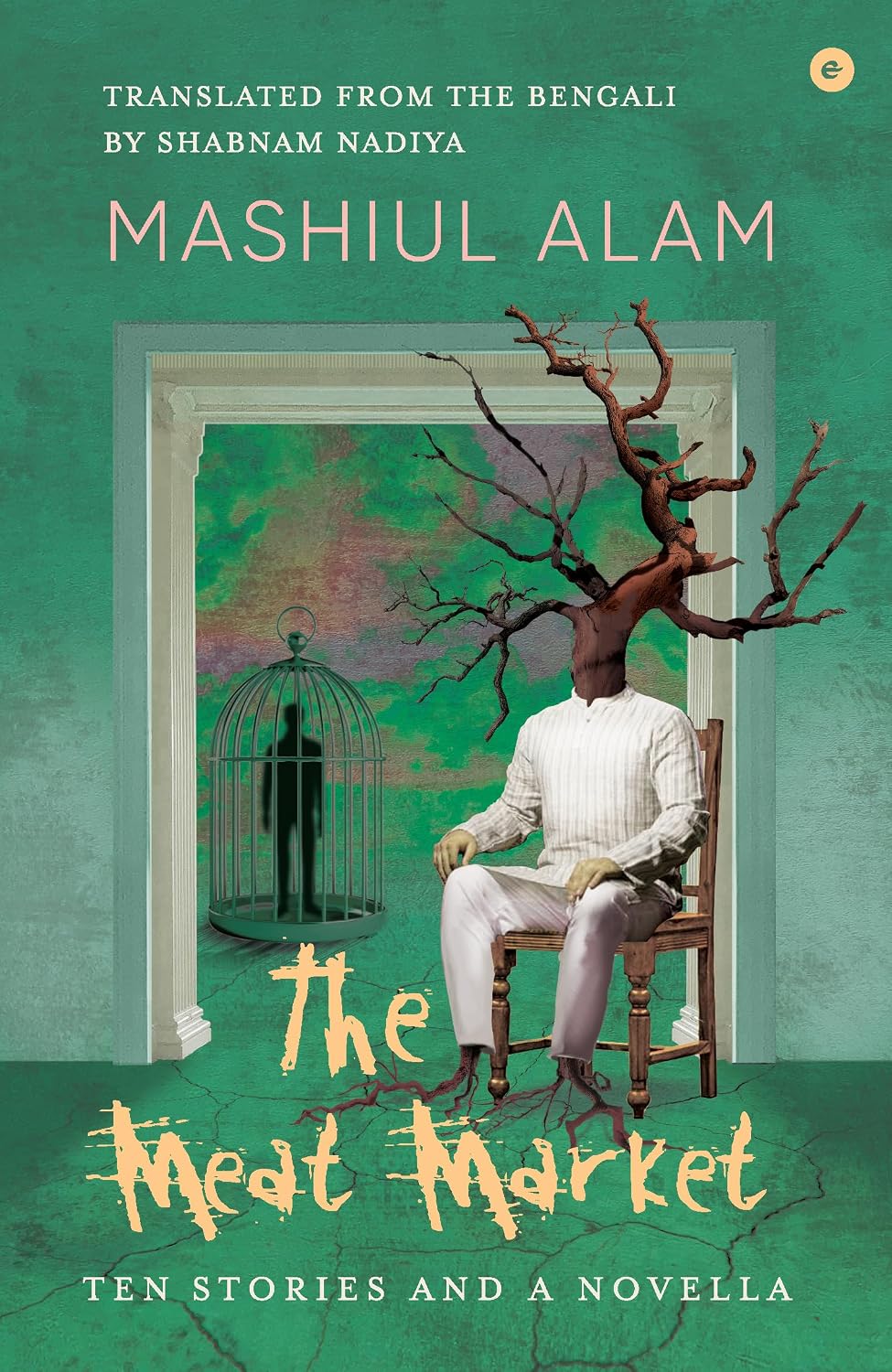
Review: The Meat Market by Mashiul Alam
Translated from the Bengali by Shabnam Nadiya, these macabre and hyperreal works of short fiction convey a larger picture of a classist society

 Prefer HTon Google


Bangladeshi writer Mashiul Alam’s short stories, translated from Bengali by Shabnam Nadiya, are intensely political. Often macabre, these hyperreal stories hit hard, and seem strangely within the realm of possibility.
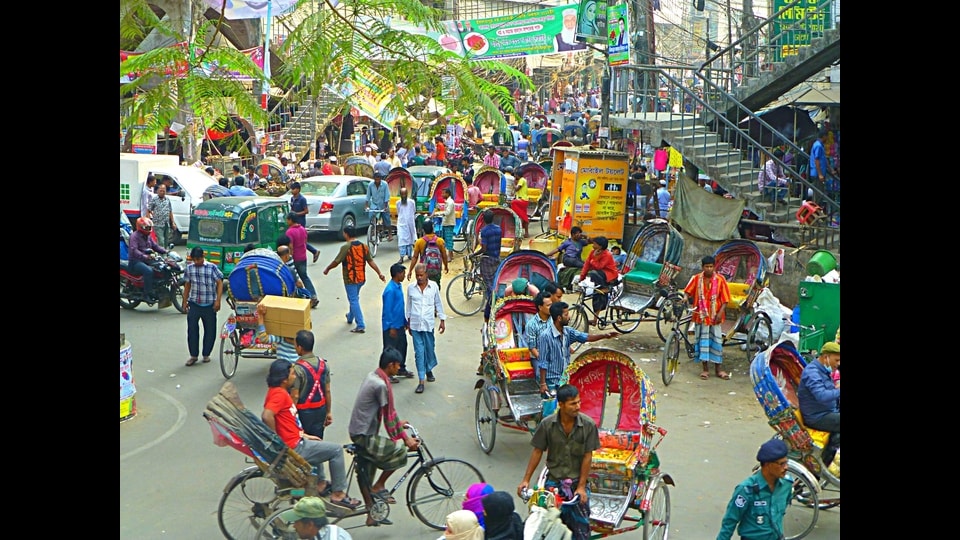
The opening story, The Milk, prepares readers for what is to follow in the next 10 stories, and the novella. Barely two months after 24-year-old Julekha, a bonded labourer, has her baby, her milk dries up. She is in utter distress, yet her boy continues to grow on a diet of rice-water and dirt in the company of baby goats and lambs, as his humans who work day and night have no time for him. The boy starts crawling, and then, one day, drags himself towards a mother dog, whose new born pups were devoured by male dogs. The mother dog has her paws raised towards the sky. She is in a conversation with God. When she sees the little boy, she sniffs him, wags her tail happily, stretches out and feeds him. This creates a furore in Modhupur village.
In the titular story, The Meat Market, first published in 2019, the narrator is Aminul Islam, who, on his wife’s insistence, has to reluctantly visit the market to buy mutton a week ahead of Eid as the prices will shoot up before the mega festival. When Islam catches the butcher spiking mutton with other types of meat, he objects. This leads to a brawl, and Islam is slaughtered in front of other people lined up outside the shop to buy meat. No one protests. After Islam is killed, he thinks to himself, “Not only the meat trade, they weren’t troubled or dissatisfied or in turmoil over any issue related to society or the world… Had this country become an anarchy?”
Alam is a veteran journalist. He presents versions of all parties in an unbiased way, and it is up to the readers to decide which side they want to be on.
The question of identity and the ridiculousness of man-made borders is emphasised in a fascinating story titled An Indian Citizen Came to our Town. Nabin Chandra Chowdhury, 73, returns to his land of birth to die. He is on a 15-day visit visa and has to die within that stipulated period. He assures everyone “by then his lifespan would have also expired”.
However, the most interesting read for me was Jamila, a story about a starving cow who escapes from her uncaring owner’s yard to graze and spots a green patch near the Prime Minister’s residence. At the barricade, she pleads with the sentries to let her pass. She tells them she has to quickly fill her tummy and rush back to feed Mofiz, her sick newborn calf. When a stick lands on her skull, she lowers her head and jerks it up, killing a member of the law enforcement agency. Jamila is arrested and the news is splashed in the media. The Speaker of Parliament is on air condoling the death, a one-member investigative committee is appointed to probe the incident, and an environmental organisation blames the law enforcement agency for being overly aggressive and denying Jamila her right to eat grass.
One of the longest stories in this collection, it is a fine example of how nothing escapes Alam’s attention or imagination. He articulates the littlest details, often morbid, to convey the big picture of a classist society, recording both human and animal stories in a matter-of-fact way and with equal passion. His unemotional and stark writing unsettles, unnerves and changes the way one thinks – how long before the hyperreal becomes real? The probability of the impossible becoming possible is what Alam is drawing the reader’s attention to, story upon story.
Unfortunately, the hyperreal of some of Alam’s stories has already been seen and experienced. In Field Report from Roop Nagar, the description of a woman being gang-raped and murdered in broad daylight is bone-chilling, as is the mystery surrounding this town which is totally cut off. The goriest details of what was inflicted on this woman of “bad character” and the subsequent feast are inserted in this gruesome story. And while this is going on, the entire city sleeps.
Sleep, here, is a metaphor for a passive people, who refuse to react to anything. Pony Masud, the novella in this collection, is narrated collectively by the people of Roop Nagar. Everyone has their own version of Pony Masud’s life and times. There is a rumour that the local goon has died in a crossfire with the Rapid Action Battalion, and that his mother Laili Begum had dreamt of it hours before it appeared on television channels and in the Dhaka newspapers. Laili Begum had left Majed-the-Principal, Pony Masud’s father, to marry Brickly Mukhles.

Alam’s dark humour comes through when Brickly Mukhles – afraid that the news of Pony Masud’s death “was bringing her (Laili Begum) and the father of that child (Majed-the-Principal) back together again” – promises to bring back Pony Masud. Meanwhile, when the two fathers are seen together by Laili Begum’s side, the people of Roop Nagar think, “…that those men seemed like brothers in that moment, as if Laili Begum was their only sister.” Or when Alam praises Pony Masud for bringing order among the extortionists of Roop Nagar.
It is easy to get lost in this meandering story, even though the reader can see that Alam is in experimental mode here. He has even put out a silent disclaimer in the subtitle – Pony Masud: An Account of the Tangled Stories and Gossip about him as Narrated by the People of Roop Nagar.
Alam is a master of the short story form. He is counted among leading Bengali writers, and this brilliant translation of his short stories by Shabnam Nadiya is a treat for English language readers. Disclaimer: These stories are bloody and not for the faint-hearted, especially those who adore animals.
Lamat R Hasan is an independent journalist. She lives in New Delhi.


