Economic growth and energy consumption are inextricably linked. As per the 2017 NITI Aayog Report, the Indian economy aims to grow at 8.5% of CAGR from 2012 to 2047. Achieving this estimated growth rate in a sustainable fashion requires an aggressive reduction of carbon emissions, while keeping efficiency, equity, fairness and behavioural aspects intact in the policy design.
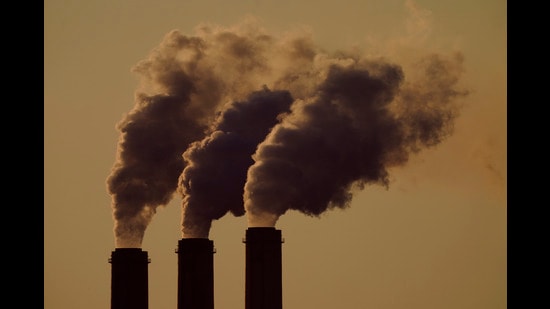
As per the India Energy Outlook 2021 Report, India’s energy system has certain peculiarities.
First, the country is highly dependent on fossil fuels (coal and oil) and bioenergy.
Second, about 38% of primary energy is consumed for power generation, implying that electrification is still low in the country.
Third, power generation is highly dependent on coal as a fuel (78%).
And, fourth, industry consumes energy mostly in form of coal, electricity and oil; buildings in the form of electricity, oil and bioenergy (cooking/heating); and transportation, almost all in the form of oil.
This implies that India’s sources and consumption pattern of energy are highly carbon-intensive.
The above peculiarities of the Indian energy ecosystem will require the large-scale substitution of fossil-fuel-based energy by green energy systems. But, despite a steep fall in the green power (solar and wind, 85%, and 56% respectively between 2010 to 2020), these have not become easy substitutes for coal and oil.
The prominent challenges facing substitutability are:
{{/usCountry}}The prominent challenges facing substitutability are:
{{/usCountry}}The variable and intermittent nature of renewable energy; oil is still the most convenient auto fuel due to its high-energy density and easy transportability; heavy industry processes like steel and cement require intense heat, which can be currently obtained efficiently by burning fossil fuels only; long-distance and heavy transportation will largely remain dependent on oil in near future; and, that the majority of the existing energy infrastructure stock is dominated by fossil fuels requiring huge investments for transition to green.
Market Failure
There is a consensus that the climate crisis is a feature of market failure. The economic activities by consumers (like driving or air-conditioning) and producers (like electricity generation and manufacturing) cause emissions, leading to pollution and global warming. These are negative externalities not accounted for in the private costs, leading to outcomes that are not efficient. As a result, actual costs to the consumers, producers, and society are not reflected in the market interactions leading to an uncontrolled rise in emissions.
The solution to the problem of market failure calls for government intervention.
The 2006 Stern Review on the Economics of Climate Change argues that carbon pricing options through taxation, trading of emissions, regulations, technology adoption, and energy-efficiency measures can be the critical drivers for emissions reduction.
The most common option of government intervention for reducing emissions is fixing emissions limits through regulation, considering the policy targets set by the country like the Nationally Determined Contributions under the Paris agreement.
But there is a flip side to this.
Smith, S. et al (2008) has analysed that the wrong setting of emission levels may lead to cost-inefficient outcomes, as the information about the abatement-cost and damage-cost schedules of each firm would not be possible to obtain in advance.
This will make it impossible to know that with a given amount of investment which firm will reduce maximum emissions and hence provide the highest benefit to society. It may be understood with the premise that if the emissions are reduced, then, the damage they would have caused would be the benefit gained by the society. Accordingly, setting and regulating emissions through command-and-control may be suitable only for the initial phase of the mitigation strategy.
The carbon tax is an option better than regulating the pre-fixed emissions levels. This is because the cost of abatement for the firm rises as the firm keeps on reducing the emissions further, and the firm will stop reducing emissions and choose to pay tax at the point when the cost of abatement becomes higher than the rate of tax. This option will lead to near-efficient outcomes.
But, the carbon tax option is also laden with the vice of the possibility of levying a too high or a too-low rate of tax. This problem can be addressed by introducing the auction-based carbon trading scheme. The trading scheme will bring in higher efficiency as the price of certificates will be determined by the free market, allowing the low abatement-cost and high abatement-cost firms to compete in the market as per their abatement and damage cost schedules.
Policy Design
An effective policy framework for emissions reduction has to be based on the above-discussed characterisation of the three factors — the Indian energy ecosystem, the substitutability challenges and the features of market failure.
Following are the guiding principles for the proposed policy design:
First, huge investments are needed for the transition of the economy to a green economy, and market-based instruments are the most-efficient tools for achieving this. These market instruments may be a mix of emissions trading schemes and carbon tax.
The trading scheme will determine the most optimal and cost-efficient levels of emissions reduction by providing a choice to the firms to either mitigate or trade, which when totted up will lead to a net reduction in emissions. The low abatement-cost firms will keep reducing emissions as they would make a profit by trading them, giving a signal to the market for efficient capital flows and allocation for green-tech adoption.
Second, to reduce the share of fossil fuels and traditional bioenergy in the primary energy sources, alternative energy resources like solar, wind, tidal, and nuclear must be aggressively harnessed. Incentives may be designed for the extensive adoption of renewable energy technologies.
Third, regulation for renewable purchase obligations and investments in grid infrastructure and storage technologies must be aggressively promoted for seamless integration of renewable energy into the electric grid.
Fourth, electrification of the Indian economy must be taken up aggressively and the transportation sector (electric vehicles) must be the focus of this intervention.
Fifth, for heat-intensive sectors that are difficult to shift to renewable energy like steel, cement, glass, and heavy and long-distance transportation — the adoption of carbon capture and storage, biofuels, carbon dioxide removal, and hydrogen technologies must be promoted as part of horizontal industrial policy.
Sixth, codification and standardisation of energy conservation & efficiency parameters and incentives for them must be broad-based for industry, agriculture and buildings sectors.
Seventh, the demand-side response strategies must be adopted for individual and social behaviour change for the promotion of energy efficiency and renewable energy transition.
Eighth, the issue of equity in energy access must be addressed by pursuing the concept of recycling the revenues generated from the carbon tax. The new revenue may be used for granting incentives and lump-sum transfers to households that are directly indirectly impacted by the carbon tax or trade.
Lastly, policy evaluation for impact assessment and feedback must be carried out by independent institutions for further policy refinement.
Policy effectiveness, costs, distributional effects, the socio-economic impact of decarbonising the economy and the way humans live would be the criteria determining the priorities for implementation of the above suggestions. Priorities would be crucial as the time is short and investments are constrained.
Ajitabh Sharma is principal secretary, Government of Rajasthan. Has served as chairman, Rajasthan Renewable Energy Corporation.
The views expressed are personal