
 E-Paper



EV startups need State support more than Tesla
Our entrepreneurs and innovators are our most valuable resources, and they deserve our first pick.

 Prefer HTon Google


Tesla chief Elon Musk recently congratulated Prime Minister Narendra Modi for his coalition’s electoral victory and said he looked forward to his companies “doing exciting work in India”. The message comes a couple of months after Musk postponed his visit to India. What the postponed visit must teach us is the importance of balancing incentives for global players like Tesla with support for local firms. Musk’s trip was intended to include announcements about Tesla’s entry into the South Asian market. India tried to woo Tesla and other foreign electric vehicle (EV) makers with import duty waivers against a minimum investment commitment of $500 million. As Tesla is seeing falling sales and rising competition from Chinese EV makers, all expansion plans seem to be on hold. It is time to give equal attention to nurturing Indian startups.
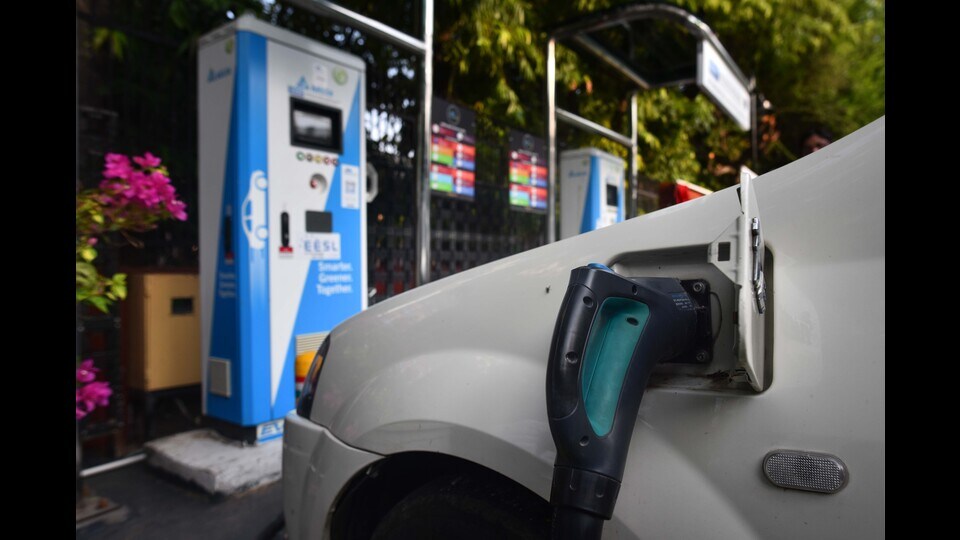
Startups, among the early movers in the country’s EV ecosystem, display an impressive ability to innovate. For example, GPS-Renewables, a Bangalore based startup, created a biogas-powered EV charging station, aiming to make EVs green end-to-end. Similarly, Exponent Energy, claims to rapidly charge an EV from 0% to 100% within 15 minutes. There’s a need to offer well-deserving startups the same incentives as larger firms, as well as policy predictability.
India’s performance linked incentives (PLI) for automobiles show how startups are inadvertently hobbled by policies designed for larger firms. The PLI Auto Champion OEM Scheme invites companies with a minimum global group revenue of ₹10,000 crore and a prior investment of ₹3,000 crore in fixed assets. India could expand the reach and impact of such PLI schemes by lowering eligibility thresholds to include smaller companies and innovative startups. Smaller indigenous players like Ather, Ola, Torq, Okinawa, Altigreen and Greaves Electric Mobility played a significant role in expanding EV adoption in India, especially in the two- and three-wheeler vehicle segment. But manufacturers must invest at least ₹ 1,000 crore over the next five years after the commissioning of manufacturing facilities, making scale a key determinant of eligibility for the PLI.
India can also learn from the US and China, where startups can participate based on criteria other than investment thresholds to access manufacturing incentives. The two countries contribute around two-thirds of global EV production, with China itself accounting for half. Beijing supports manufacturers based on the number of EVs produced, and offers exemptions from consumption tax — which producers pay for luxury and environmentally unfriendly goods, including cars — to reduce production costs for EV manufacturers, provided they manufacture EVs in China using Chinese batteries. China also introduced a dual-credit scheme in 2018 to encourage manufacturers to produce more new energy vehicles, including EVs based on criteria such as range per cycle and average fuel consumption.
America’s Inflation Reduction Act 2022 includes tax incentives for automobile manufacturers and customers to boost EV production. The law features a clean vehicle tax credit with conditions such as the production of half the value of battery components, procuring 40% of the value of critical minerals from countries it has a free trade agreement with, and final assembly of vehicles in North America. Importantly, there is no cap on the number of EVs a manufacturer must sell to avail tax credits making conditions agnostic of pre-existing business revenue.
India has a long way to go on policy predictability. Policy stability and government financial commitment influence tech innovation. Longer-term support leads to more significant outcomes. Additionally, policies pertaining to technology commercialisation also determine an innovation’s success. Incremental, predictable, and credible government expenditure is essential for facilitating green transition, but “boom-bust” or volatile support almost always fails to achieve policy goals. India initiated the Faster Adoption and Manufacturing of (Hybrid &) Electric Vehicles (FAME) Scheme in 2015 to boost the adoption of electric and hybrid vehicles, implemented in two phases: FAME I, which ran from 2015 to 2019, followed by the second phase, which ended last month with no indication of what would follow in the longer run.
The need for lower eligibility criteria and policy stability and predictability is evident not only in the EV sector but also in other specialised sectors like electronics. While scale is undoubtedly important, so are incentives for building in and working in India. Our entrepreneurs and innovators are our most valuable resources, and they deserve our first pick.
Vivan Sharan and Divya Guha are policy experts at Koan Advisory, New Delhi. The views expressed are personal


