Prime Minister Modi, on his visit to the United States to meet with President Joseph Biden, prioritized pathways for both countries to work together on advancing the goals of energy transition. On this visit, Prime Minister Modi announced that India will join the United States-led Mineral Security Partnership (MSP) as part of a multi-country platform to support critical mineral supply chains. This has created a dynamic of creating collaborative pathways around critical mineral production, processing and recycling with an overall objective of maximizing economic development and leveraging geological resources accessible to different countries. By adhering to the highest standards of environmental, social, and governance practices, the MSP seeks to stimulate both governmental and private sector investments in strategic opportunities throughout the entire value chain. India joining this platform hold significant implication for India and for the global supply chain of critical minerals.
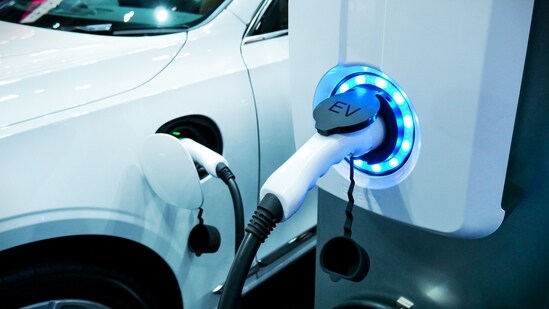
Within India’s energy transition goals, a significant priority for India has been put on expanding manufacturing and access to electric vehicles (EVs). This is an area in which India’s participation in the MSP can have a strong and positive impact. Critical minerals serve as a driving force in expediting the availability of electric vehicles. An electric car necessitates six times the mineral resources compared to a conventional internal combustion engine (ICE) vehicle. The performance, longevity and energy density of batteries are intrinsically linked to minerals such as lithium, nickel, cobalt, manganese and graphite.
The EV supply chain faces significant challenges due to the consolidation of extraction and processing activities in specific geographical regions, especially when critical minerals contribute to 50-70% of the cost of the battery. As it stands today, mining for critical minerals is predominantly based in a select few countries, with Australia (lithium), Chile (copper and lithium), China (graphite, rare-earth elements), the Democratic Republic of Congo (cobalt), and Indonesia (nickel) holding key positions.
This concentration becomes even more pronounced during the refining phase, where China has emerged as the exclusive provider of natural graphite, and a major provider of manganese, cobalt and lithium. Establishing new projects of mining, refining, and processing capabilities can take a significantly long periods, which in itself is a substantial impediment to the expansion of the EV industry. India's significant dependence on imported lithium is steadily growing given the escalating demand for EVs as well as for powering electronic hardware. This was clear in last year’s trade data that India's imports of Lithium-Ion cells amounted to $2.8 billion, surpassing the incentives extended by the production-linked incentive (PLI) scheme designed to foster advanced chemistry cell manufacturing.
{{/usCountry}}This concentration becomes even more pronounced during the refining phase, where China has emerged as the exclusive provider of natural graphite, and a major provider of manganese, cobalt and lithium. Establishing new projects of mining, refining, and processing capabilities can take a significantly long periods, which in itself is a substantial impediment to the expansion of the EV industry. India's significant dependence on imported lithium is steadily growing given the escalating demand for EVs as well as for powering electronic hardware. This was clear in last year’s trade data that India's imports of Lithium-Ion cells amounted to $2.8 billion, surpassing the incentives extended by the production-linked incentive (PLI) scheme designed to foster advanced chemistry cell manufacturing.
{{/usCountry}}In this case, the MSP can be a dynamic instrument to support the expansion of the collaborations across the EV ecosystem around the world. India has the opportunity to explore avenues for safeguarding its critical mineral supply chains by engaging with partners like the United States and Australia – a prominent global player in lithium production. The extraction techniques for lithium from diverse sources such as brines, rocks, and seawater hold potential areas of exploration for India. This could significantly enhance India's domestic EV production capabilities and capacities, aligning with the broader objectives of the MSP.
The collaboration between the United States and India, and other partners, will extend beyond their joint efforts in Lithium production and recycling.
The US and India, and other partners can explore cooperative ventures aimed at investing in mining operations within countries like the Democratic Republic of Congo, Indonesia, and Peru, which represent significant production of cobalt, nickel, and copper respectively. India also stands to gain from the transfer of mining technologies. Additionally, India has recently allowed private enterprises to engage in lithium mining. Although the timeline for these projects will be significant, this positions India as a pivotal partner for certain sectors like EV and renewable and clean energy. India has the potential to focus efforts on bolstering its upstream capabilities, including refining, within its borders through productive collaborations with member nations.
The MSP can also open up new skilling and employment opportunities in mining, in addition to potential joint research and development in critical minerals, innovative storage materials, production, extraction, and recycling. This can be developed across sectors which require different critical minerals. There is significant space to evaluate critical mineral supply chain data and monitoring, to ensure sustainable use and movement of supplies. India's proactive approach should extend towards cultivating avenues for collaborative research and development with fellow members. This initiative is crucial for devising product design strategies that mitigate dependence on critical minerals, amplify capabilities for reuse and recycling, diversify efforts and consequently alleviate strain on primary mineral sources.
A potential area of collaboration can include the extraction of critical minerals from the seabed, an area where both the United States and India can participate. A focus of India’s National Deep Oceans Mission is the development of submersible technologies, which can also play a critical role here. The seabed contains minerals such as lithium, cobalt, manganese, and graphite, which have been presented as critical in lists outlined by India’s ministry of mines, and the US Department of the Interior through the US Geological Survey.
India’s participation in MSP can be a boost for all partners. International cooperation will be the key to robust global supply chains and the mitigation of geopolitical uncertainties in this area. India's strategic move should involve harnessing the MSP as a platform to forecast supply and demand trends over the long term. This includes fostering innovation in recycling and technologies with lower critical mineral reliance, and promoting the establishment of supply chains that are both responsible and sustainable. This equilibrium will have to be delicately harmonized with economic imperatives, environmental considerations, and the well-being of local communities. India stands to not only fortify domestic manufacturing in critical sectors, but be a world leader in the development of long-term, resilient, global critical mineral supply chains.
Pradeep Karuturi is senior manager, policy advocacy and research - electric vehicles, OMI Foundation and Sameer Guduru, director, digital economy and aerospace and defence, US-India Business Council. The views expressed are personal.