The Women’s Premier League (WPL) has found a place in the history books. The enthusiasm, stamina and athleticism of players, the reception from viewers and sponsors, and the momentum it gave for women’s participation in sports are tremendous.
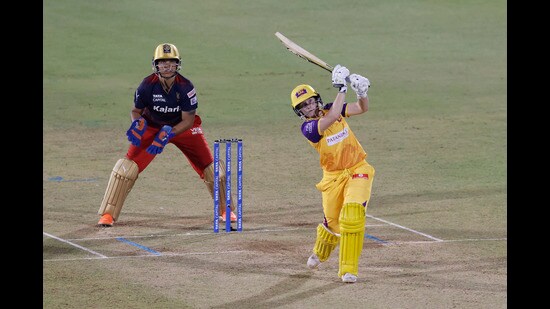
The inaugural edition of the WPL player auction saw 87 players getting sold, and the five franchises — Mumbai Indians, Delhi Capitals, Gujarat Giants, UP Warriors and Royal Challengers Bangalore --- spending ₹59.5 crore collectively in the auction.
Reports say the
The Women’s Premier League (WPL) has found a place in the history books. The enthusiasm, stamina and athleticism of players, the reception from viewers and sponsors, and the momentum it gave for women’s participation in sports are tremendous.
The inaugural edition of the WPL player auction saw 87 players getting sold, and the five franchises — Mumbai Indians, Delhi Capitals, Gujarat Giants, UP Warriors and Royal Challengers Bangalore --- spending ₹59.5 crore collectively in the auction.
Reports say the Board of Control for Cricket in India (BCCI) raised a total of ₹4,669.99 crore by selling WPL franchise rights for five years. The individual franchise values range from ₹757 crore to ₹1,289 crore.
Dedicated Fan Base: What Does It Mean For Society?
The fact that the franchises had a dedicated fan base has given the tournament and the players an even greater exposure than the country games.
These franchises, which also own the men’s teams, were tweeting and sharing glimpses of the games through their handles — needless to say, they already have millions of followers. That kind of a dedicated fan base is important, says Radha, who introduces herself as “obsessed with women’s sports” on Twitter.
The event was a big success, so much so that the BCCI is mulling the possibility of scheduling the next edition of WPL in the Diwali window. The cricketing body acknowledged that the tournament had a dedicated audience base which will only keep growing in the coming years.
Women’s cricket in India started gaining attention as late as 2017 when the team finished second in the ICC World Cup. But, five years on, the BCCI not only spoke about pay parity among players, but also introduced it. As a result, India became only the second country in world cricket after New Zealand to bring in pay parity. But, this was only the beginning. The WPL auctions saw some of the franchises’ strongest bids for players like Smriti Mandhana, Jemimah Rodrigues and Harmanpreet Kaur.
The event was also well-advertised, with giant posters of the players coming up at several prominent places in and around Mumbai. Reports said official attendance during the games breached 30,000, with average turnouts ranging from 9,000-13,000 for most games on weekdays, too.
What could this mean from a broader perspective? While athletes like Karnam Malleshwari, Sania Mirza and Saina Nehwal have inspired girls to choose sports, the WPL has raised the bar.
The upliftment of women not only comes in terms of the sport but also whenever we have had women champions, they have played a key role in breaking the glass ceiling, former tennis player Manisha Malhotra said. The true power of women being successful in sports, Malhotra says, is that they bring an element of empathy no one else in sports can.
Sponsors Galore: What Does It Mean for Female Consumerism?
Despite being a new property, the WPL franchises managed to attract strong interest from brands, particularly some women-centric ones and some newbies in sports sponsorship.
“Some brands have also inked two-year sponsorship contracts. We believe that the Women’s Premier League will be a turning point in Indian cricket,” Dhiraj Malhotra, CEO of Delhi Capitals, was quoted as saying in one of the dailies.
Some of the key sponsors in the tournament were JSW Paints, Sportsbuzz11, Navyasa, Yatra.com, Joy Personal Care, Galaxy Basmati Rice, Kajaria Ceramics, Mia by Tanishq, Dream11, Vega Beauty, Himalayan Face Care, Puma, Lotus Herbals, Ashok Leyland, Dream11 and Sonata Software. In addition, the Tata Group — title sponsor — had also bagged the right chest spot on all team jerseys.
This needs to be seen in relation to the consumption in the direct-to-consumer (D2C) space. A report by Instamojo, an all-in-one D2C tech platform, said women dominated the space in 2022 as they accounted for most of the sales of D2C brands in India. This was not just consumption-related but also on the entrepreneurial side.
Reports say the Indian D2C market size — estimated to be at $55 billion in 2022 — is forecast to hit $100 billion in a couple of years, with an expected CAGR of 34.5 per cent during the 2022-2027 period.
Record Viewership: What Does It Mean For Women in Sport?
According to reports, the league’s broadcasting and streaming partner Viacom18 claimed that the tournament’s inaugural season had delivered the highest viewership on any women’s event globally. It referred to WPL’s digital footprint through Viacom18’s streaming app JioCinema, which clocked the highest watch time — more than 50 minutes per match per user.
This could have trickled down to the ongoing Indian Premier League (IPL) matches.
“I think we are heading in the right direction. The big change that I had wanted to happen — equal opportunities — has already begun with the WPL, that too in grand style,” the God of cricket, Sachin Tendulkar, was quoted as saying recently.
For now, it looks like a promising start. However, how this could alter the sporting industry in the future and inspire generations of young girls to take up the sport and carve a niche for themselves needs to be seen.
Aman Dhall is an ex-sportsperson, angel investor and founder of PR & Comms Tech Start-up, CommsCredible
The views expressed here are personal.
One Subscription.
Get 360° coverage—from daily headlines
to 100 year archives.
Archives
HT App & Website