
 E-Paper



Invest in schools to help India’s children
It is imperative that we invest in our children in a manner that makes them engaged learners and responsible citizens.

 Prefer HTon Google


Societies around the world recognise that the future lies in children, but far too many young people don’t attain what was envisioned for them. Even in the best-performing countries, including Japan and Finland, around one-fifth of 15-year-olds do not reach minimum proficiency levels in reading, mathematics, and science. Globally, six out of 10 children and adolescents are not achieving minimum proficiency levels in reading and mathematics. For the first time in history, we have more non-learners in schools than out-of-school children worldwide. In India, between 2017 and 2021, average language scores for 5th graders on the national assessment declined, which is indicative of learning disruption due to Covid-19 and warrants a concerted effort. It is imperative that we invest in our children in a manner that makes them engaged learners and responsible citizens.
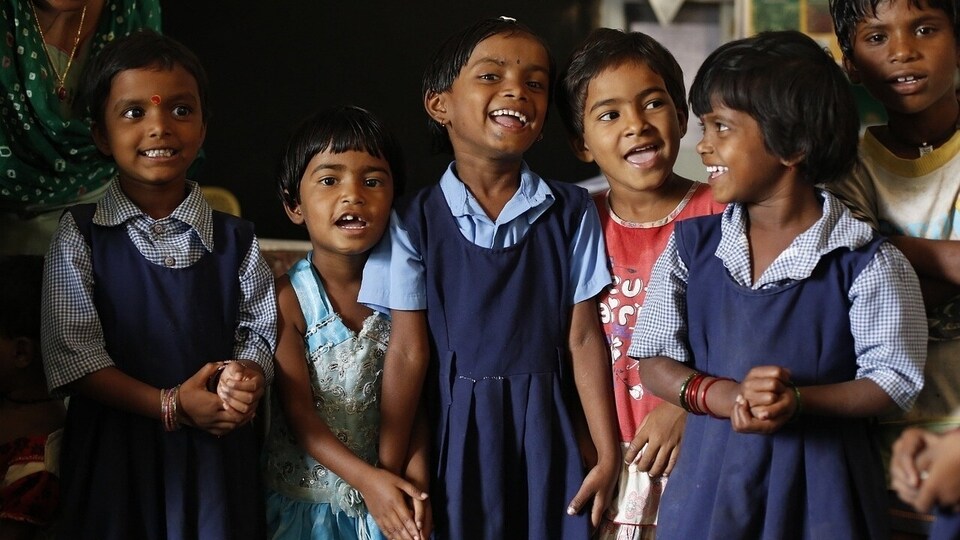
The National Education Policy provides a much-needed direction by making universal foundational literacy and numeracy (FLN) in primary schools by 2025 the goal. The tall task ahead of us is to achieve the target for almost 43.7 million children studying in classes 1 to 3, which entails working with two million teachers in almost 1.2 million primary schools. Appropriately, the government launched the National Mission on Foundational Literacy and Numeracy (NIPUN) in 2021. A five-tier (national-state-district-block-school) implementation approach was established, envisaging roles and responsibility with the various stakeholders involved. A lot of space was provided to states and Union Territories for formulating stage-wise action-plans based on the gaps identified. A natural corollary to NIPUN Bharat was Foundational Learning Study (FLS), a large-scale benchmarking study undertaken by the National Council of Educational Research and Training (NCERT) in March 2022 in which 86,000 Class 3 students from 10,000 schools participated. A policy linking methodology was implemented for the first time to arrive at the benchmarks in literacy and numeracy under FLS. Any mission is unachievable until our foot soldiers (teachers) are provided with appropriate ammunition (capacity building exercises). Quality learning entails well motivated and qualified teachers. For this purpose, Digital Infrastructure for Knowledge Sharing (DIKSHA) and National Initiative for School Heads’ and Teachers’ Holistic Advancement (NISHTHA) have been leveraged. The DIKSHA platform contains various resources for continuous professional development of teachers so they can create an age-appropriate environment through play, interactions, stories, art, craft and music, toys, and games.
Apart from resources for teachers, resources for children in 13 languages were launched by education minister Dharmendra Pradhan in 2022. Jadui Pitara, as it’s called, includes worksheets, playbooks, puzzles, posters, flash cards, and other materials that embody the local culture, social context and languages, and is intended to arouse interest and meet the varied requirements for students at the foundational stage.
FLN is a critical part in the agenda of the G20 Education Working Group (EdWG). Three EdWG meetings on different themes have been organised and the fourth and final one will be held on ensuring FLN, especially in the context of blended learning. We are aware of the Herculean task ahead but as a nation we cannot fail our children. We need to put all our resources together and tailor our responses accordingly. American philosopher Frederick Douglass once said, “It is easier to build up a child than it is to repair broken men.” We firmly believe in this.
Sanjay Kumar is Union school education secretary. The views expressed are personal


