
 E-Paper



Is disruption ahead for the gig economy?
Platforms got enormous goodwill by serving their urban clientele. But as wages decline and discontent rises, they’re at risk of being seen as ruthless hiring agents

 Prefer HTon Google


When they first entered our lives, gig economy platforms seemed to herald an urban revolution. A few taps on the phone was all it took to get food from restaurants that were miles away (through Swiggy or Zomato) or to book an instant ride (through Ola or Uber). These apps seemed to be able to deliver on-demand services even while liberating drivers and delivery persons from the drudgery of a fixed routine. Platforms were solving our unmet needs while creating flexible well paying gigs for a growing army of workers.
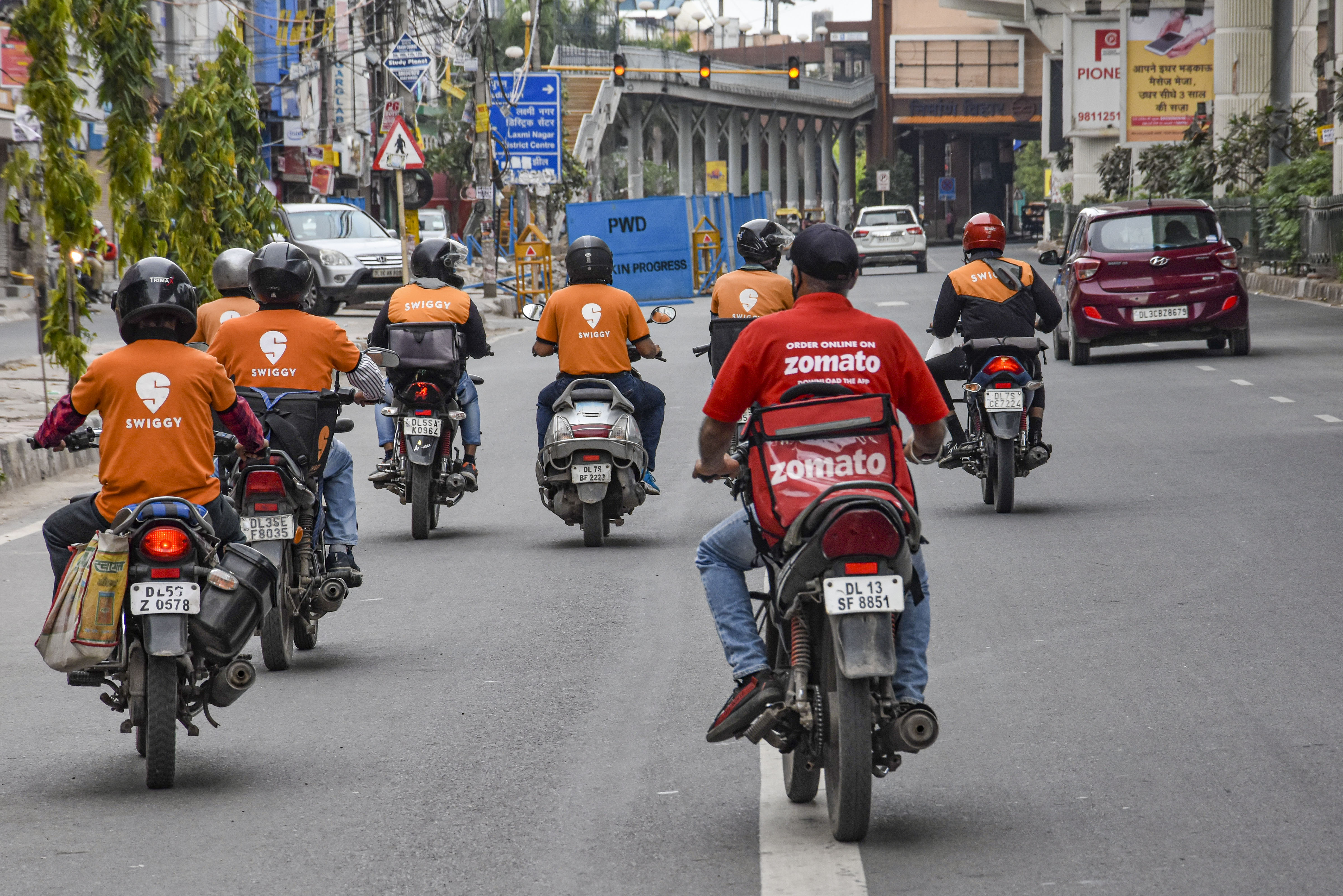
The dream run has ended now. From London to Delhi, there are growing signs of discontent among platform workers. Some complain of pay cuts. Others complain of being unfairly ‘deactivated’ by platform algorithms that they can’t understand. In several instances, workers have come together to form unions to raise awareness about their complaints and to seek redressal from courts and politicians. Both social and traditional media have taken note of their complaints and protests.
In the early years of the gig economy, start-up founders and their backers were able to sell their preferred narrative — of how they were revolutionising the world of work. But workers’ unions and their advocates have come up with their own counter-narrative. This counter-narrative paints gig platforms as shady internet intermediaries, which have been able to inflate their own valuations by exploiting workers and trampling on their rights. If gig economy evangelists invoke a glorious future where no one needs to be chained to a nine-to-five routine, their detractors point to an ugly pre-industrial past when street corners swelled with the ranks of the unemployed, and powerful hiring agents distributed the day’s work to whoever was lucky enough to be hired.
The truth, as is often the case, lies somewhere in between these competing narratives. It is hard to classify platforms as unambiguously beneficial or harmful for workers. For instance, a number of empirical studies show that Uber’s entry in an American city tends to raise the aggregate employment of taxi-drivers (including those on the platform and those operating independently) in those cities but some of the studies suggest that wages tend to decline somewhat. Across the economy, the overall employment effect may be fairly muted. A 2019 Organization for Economic Cooperation and Development (OECD) working paper by Cyrille Schwellnus and his colleagues suggests that gig employment accounts for roughly 1-3% of total employment across OECD economies. The OECD study considered only two-sided digital platforms that matched consumers and workers, and excluded platforms such as AirbnB and Amazon from its ambit. Contrary to the claims of its evangelists and detractors, gig work occupies only a small share of employment even in economies where access to high-speed internet is nearly universal. In the past few years, gig platforms have been able to make inroads in the personal transport and personal services sectors. Most manufacturing activity and a large share of services remain outside the ambit of gig platforms.
How workers view gig platforms seems to be influenced quite strongly by the extent of their dependence on them. A number of surveys suggest that gig workers who use these platforms to find part-time work tend to rate the platforms favourably. In contrast, workers who are solely dependent on platforms to find work tend to be more resentful. Any change in working conditions (such as a hike in platform commissions) tends to hit them hard.
Contrary to what platforms claim, the relationship between dependent platform workers (who rely largely on the platform to find work) and the platforms is akin to that between employees and their employer, with platforms largely controlling pay, incentives, and working conditions. Such levels of control are worrying when we consider that platforms typically tend to have monopoly power in the markets they operate in. Think of any major city, and it will have at most, 2-3 prominent ride-hailing services or delivery apps. This means the choice of employer for a certain type of work gets restricted, and that throttles the bargaining power of workers. In other words, the market for gig work begins to look like a ‘monopsony’ (a market with one buyer). It is the fear of such monopsonistic tendencies in the gig economy that have led to calls for greater regulation of platforms. Proposals by lawmakers in Europe to classify platform workers as employees are meant to address such concerns. Such proposals are likely to find resonance in other parts of the world in the coming months and years. It is not clear yet whether such regulations would treat committed and occasional gig workers as one group.
Gig platforms stand at the crossroads now. They have earned enormous goodwill by providing high-quality services to their urban clientele. But they risk losing such goodwill if they are seen as ruthless hiring agents insensitive to the plight of those dependent on them. If they roll out changes in their work contracts on their own, they may be able to pre-empt heavy-handed regulation and continue to grow their business. In other words, they will need to “disrupt” their own business model in order to thrive. If not, they may find their business model disrupted by lawmakers and judges.
Pramit Bhattacharya is a Chennai-based journalist.
This column will use the prism of economics to look at the world and society
The views expressed are personal


