The Indian Space Research Organisation (Isro)’s loud thinking on outsourcing the manufacture of satellite launch vehicles is not surprising. “Work is in progress to put the mechanism (for outsourcing) in place,” Isro chairman AS Kiran Kumar told media-persons in New Delhi last Tuesday. This, he said, has been done to balance the growing demand for satellites with the need for adequate numbers of launch vehicles. While a roadmap for the extent and scope of private participation in Isro’s new scheme of things may take a while to unfold, the basic idea seems to be for the agency to provide training for industry at its centres and allow private players wider access to its design, drawings, and testing facilities.
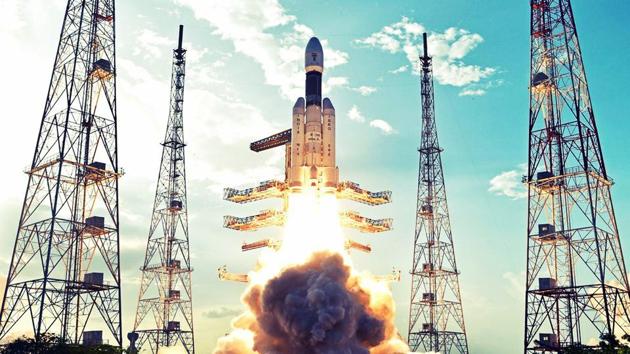
Isro already uses industry manpower and facilities to build small to mid-sized satellites — ranging from 300 kg to 2,000 kg — for domestic use and export. The latest move gives the agency room to focus on its primary goal of becoming a leader in the highly competitive global satellite launch market, particularly for nano- and micro-satellites. The international market for these satellites is expected to touch $3 billion in the next couple of years, as thousands of satellites for space-based applications like navigation and surveillance line up for launch by 2025. This is unlike the heavier (plus 2.5 tonne) communication satellite market where Isro’s Geosynchronous Satellite Launch Vehicle (GSLV) seeks to make a mark.
Isro is keen on private operators like Godrej & Boyce taking over its workhorse Polar Satellite Launch Vehicle (PSLV) programme altogether. The PSLV has recorded more successful missions, 39, than any other space agency with comparable launchers and Isro is now developing a ‘compact’ booster along the lines of the PSLV. This new avatar can be assembled in just 72 hours as against the 40 day-turnaround time a standard PSLV would take, and can launch payloads up to 700 kg into a near-Earth orbit of 700 km.
While energising Isro’s partnership with private players in satellite fabrication is one thing, subcontracting private industry to build launchers is a potential game changer that could stimulate R&D and help absorb enterprise and innovation into Isro’s missions. This has been proven by Nasa and the European Space Agency where private players like SpaceX and aerospace majors like Boeing play key roles in launches. In any case, corporate giants like Godrej, Tatas, L&T, Mahindras and the state-run Hindustan Aeronautics Limited (HAL) have been supplying critical systems and spacecraft parts to Isro’s launch vehicles. So opening the door wider to private participation would encourage more big players to join in the effort to bolster India’s launch capability. Private companies are not hamstrung by bureaucratic tangles that often stall government projects, and they are magnets for funding from various sources since high-tech companies automatically attract investment.
{{/usCountry}}While energising Isro’s partnership with private players in satellite fabrication is one thing, subcontracting private industry to build launchers is a potential game changer that could stimulate R&D and help absorb enterprise and innovation into Isro’s missions. This has been proven by Nasa and the European Space Agency where private players like SpaceX and aerospace majors like Boeing play key roles in launches. In any case, corporate giants like Godrej, Tatas, L&T, Mahindras and the state-run Hindustan Aeronautics Limited (HAL) have been supplying critical systems and spacecraft parts to Isro’s launch vehicles. So opening the door wider to private participation would encourage more big players to join in the effort to bolster India’s launch capability. Private companies are not hamstrung by bureaucratic tangles that often stall government projects, and they are magnets for funding from various sources since high-tech companies automatically attract investment.
{{/usCountry}}This could not happen sooner as India’s current launch rate of three satellites a year for domestic use is set to jump to 20 satellites from 2018. As satellites get smaller and cheaper, there is a corresponding need to develop more cost-effective launch vehicles to keep the number of launches higher and costs lower. India currently boasts 30 to 35% cheaper launches than other countries. The 2008 Chandrayaan 1 mission (which helped scientists confirm the presence of water on the Moon) and the 2014 Mars Orbiter Mission (carried out on a ridiculously low budget) have established Isro’s credentials as a low-cost, high-technology service provider par excellence in the satellite launch market.
As Isro wades deeper into the fiercely competitive global launch market dominated by the American, Russian, European, and Chinese launchers, it is imperative to have another cost-effective space transportation system like the Reusable Launch Vehicle (RLV) for smaller satellites. The RLV’s booster and upper stage are reusable, so it would bring down launch costs dramatically with a corresponding increase in launch capability. Having successfully test-flown the RLV’s technology demonstrator version last year, Isro should try to realise the technology as soon as possible. Along with a small-scale version of the PSLV, this could provide an ideal launch configuration for Isro to find its place in the sun.
Prakash Chandra is a science writer
The views expressed are personal