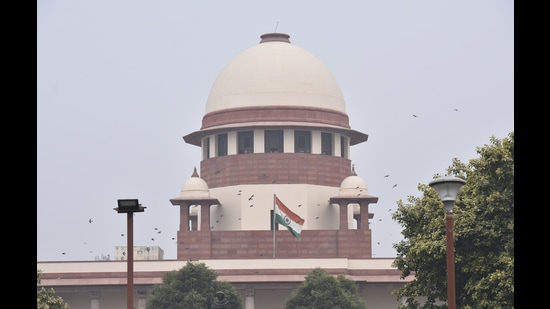
On Monday, a Supreme Court bench, led by Chief Justice of India (CJI) SA Bobde, reprimanded the executive for failing to manage the farm protests, and suggested it would stay the implementation of the laws. During the proceedings, Justice Bobde emphasised that he was worried about the possibility of an incident leading to a breach of peace, the presence of the elderly and women at the site of the protests in times of the pandemic and in winter, and told the law officers representing the government that the executive got enough time but had been unable to resolve the strike.
In an ideal setting, law-making is entirely within the purview of the legislature and managing the law and order consequences of legislations falls within the domain of the executive. Unless the constitutionality of the law is being determined — and the court did not get into the merits of the law at this stage — the judiciary should, once again, in an ideal setting, not concern itself with the protests against legislation. But the farm protests have presented an unusual, even extraordinary situation, where political negotiations haven’t delivered an outcome and the possibility of a breach in peace is indeed real. The court’s suggestion of a committee to examine the laws and listen to all stakeholders, in this backdrop, offers all sides a mechanism to step back from their stated positions — and renegotiate.
This should not be seen either as a victory or a loss by any side. For the government, this provides much-needed breathing space and allows it to remedy the error of not engaging in adequate consultation before the passage of the law. It is also a lesson that when laws go through legislative scrutiny, even if there are disagreements about it, the legitimacy of the new framework is more widely accepted.
{{/usCountry}}This should not be seen either as a victory or a loss by any side. For the government, this provides much-needed breathing space and allows it to remedy the error of not engaging in adequate consultation before the passage of the law. It is also a lesson that when laws go through legislative scrutiny, even if there are disagreements about it, the legitimacy of the new framework is more widely accepted.
{{/usCountry}}The farm unions must recognise that the protests have helped establish their concerns on the national stage and a new mechanism is being created to address their concerns. They should call off the current form of protests, and engage constructively with the new committee. While it is said that you campaign in poetry and govern in prose, movements too happen in poetry, but negotiations happen in prose. It is time for both sides to negotiate now with an open spirit.