
 E-Paper



Keeping Up with UP | A win in Karnataka holds lessons for UP-Bihar
Congress needs strong local leadership for its revival in the north, but given the BJP's strategy, this could well be a double-edged sword

 Prefer HTon Google


As the big question on Karnataka's next chief minister was resolved on Thursday -- Siddaramaiah will head the state, DK Shivakumar will be his deputy and remain state party chief till the Lok Sabha polls next year— it now remains to be seen what the Bharatiya Janata Party (BJP) will do.
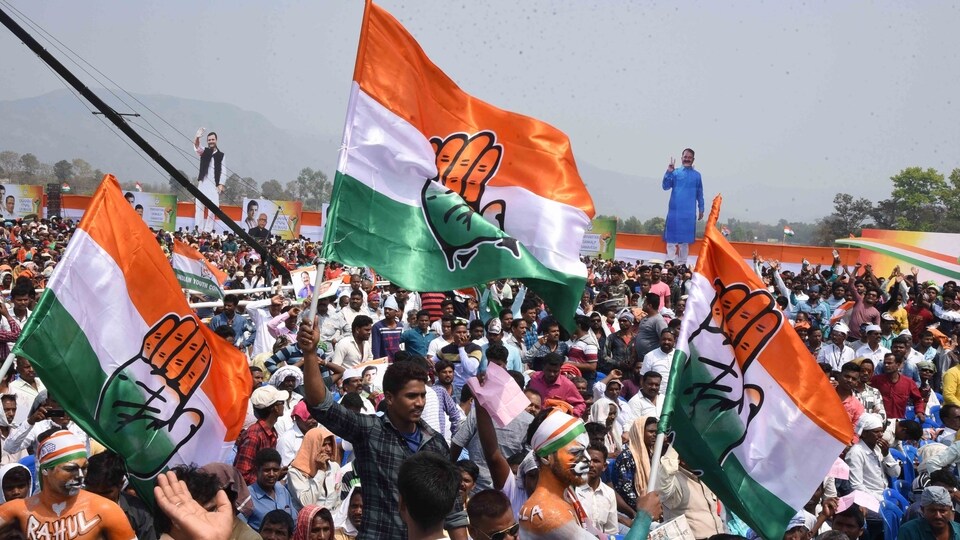
The BJP, after sending congratulatory messages, fell silent. A senior leader hinted about 'Plan B', which many interpreted as using disenchanted MLAs to destabilise the government. Former Karnataka revenue minister R Ashoka had told the press much before counting day that the BJP had a "Plan B" in case the party failed to secure a majority.
It would be difficult to achieve this, and a vertical split in the party alone (along the lines of what happened in Maharashtra) can pave the way for the formation of any alternative government. The Congress with 135 MLAs in a house of 224 is on a stronger footing than the BJP, which only won 66 seats. Even the Janata Dal (Secular), which hoped to play kingmaker, only won 19 seats.
Shivakumar, who did not relinquish his claim to the CM's chair till late Wednesday, had already made a public statement days earlier, in which he spoke about his sacrifice for the party and the fact that he would never backstab his leaders --- a comment that ruled out any possibility of a rebellion. On Thursday, Siddaramaiah then tweeted about the party being "united" in guaranteeing people's welfare.
The Congress high command has confronted this challenge in other states with strong local leadership: The ongoing tussle for supremacy in Rajasthan is one example. The Congress has powerful leaders, Ashok Gehlot and Sachin Pilot in Rajasthan. Often, people describe it as a generational crisis in the grand old party.
Gone are the days when the party high command replaced chief ministers at the drop of a hat and no leader worth his salt had the guts to rebel.
There are dozens of such instances but the one I have been a witness to happened in 1988. The Congress had won the 1985 assembly election under the leadership of Narayan Dutt Tiwari. He became chief minister on March 11, 1985 and, after a few months, in September 1985, the party high command decided to replace him with Vir Bahadur Singh. The musical chairs ended in June 1988, when the party high command decided to replace Vir Bahadur Singh with N D Tiwari. The MLAs met late night in the Vidhan Bhavan and elected Tiwari in absentia as he was travelling abroad.
Till 1989, Uttar Pradesh (UP) had strong leaders, though the state was remote controlled by Delhi. Today, there is a complete vacuum of state-level leadership .The established ones have either grown old or have been sidelined, while the new ones were never groomed. As a result, the Congress has been out of power for over three decades in UP. In the last assembly election, the party won barely 2% votes.
This is an important learning for the Congress especially in states like Uttar Pradesh and Bihar that cumulatively account for 120 of the 543 Lok Sabha seats in the country. The story of another big state Maharashtra with 48 Lok Sabha seats in western India is no different.
The recent Karnataka elections has shown that a strong local leadership with mass appeal and organisational skills is the need of the hour in the three states.
What's more, the BJP has built a strong organisation from the block to district level with a galaxy of leaders of different statures. Thus, while the cadre develops the base, the local leadership solidifies it and the party high command converts it into vaults.
Unfortunately, the crisis that the Congress faces in states like UP and Bihar is that their cadres have deserted the party and moved to greener pastures and there was no local leadership to hold them back.
Till the late 1980s, when the decline of the Congress started in Uttar Pradesh, the party had some popular leaders, if not mass leaders — Kamlapati Tripathi, Narayan Dutt Tiwari, Vir Bahadur Singh and Vishwanath Pratap Singh, who later turned into a famous rebel and formed the government at the Centre.
Today, barring Pramod Tiwari and his daughter Aradhana Mishra, there are hardly any names in the Congress that one can easily recall. One of the main reasons is that the majority of them are inactive or feel dumped.
The present party president Brij Lal Khabri (62) is adopted from the Bahujan Samaj Party and is labelled as an organisation man. He was the BSP MP from Jalaun in 1999 and, thereafter, the Rajya Sabha member from 2008-2014. He is also Dalit, a caste that was loyal to the Congress party before shifting allegiance to the BSP in the 1990s. Khabri is not a mass leader and perhaps few even know him as state Congress president. There is a big question mark over whether he can win his own seat.
Khabri succeeded the energetic but little-known Ajay Kumar Lallu, who won the assembly elections in 2012 and 2017. He was from an Other Backward Class (OBC) community, and during his stint as state chief from 2019-22, he was sent to jail several times for staging dharnas (sit-ins) and demonstrations. Still, he could never emerge as a leader to reckon with.
The scenario is no better in Bihar. The present state Congress president Akhilesh Singh is known more for his skills of manipulation – he was a member of G23 (a group in the Congress that raised the banner of revolt against the leadership) but is still close to the Gandhi family. He was preceded by Madan Mohan Jha, who according to at least one analyst, was also inept at winning.
As for Akhilesh Singh, the expert who wished to remain unnamed, said, “He is still a known name, if not a mass leader, and can end second on his seat in the Lok Sabha elections.”
The Gandhi family has been largely dependent on the Amethi and Rae Bareli Lok Sabha constituencies from where it has contested several elections.
Politics has also changed from a time when it was not polarising. That the family charisma failed to cut through the communal polarisation is clear from the fact that even Rahul Gandhi lost from the family’s stronghold of Amethi in 2019. He has literally relinquished the state, leaving it to his sister Priyanka Gandhi Vadra, the general secretary of the All India Congress Committee in charge of Uttar Pradesh, to lead. She did launch spirited campaigns like “Ladki Hoon Lad Sakti Hoon” but failed to enhance the vote share, which dipped to about 2% in the 2022 assembly polls.
And this explains the price that the party has to pay for the absence of a local leadership. After every successful rally of the Gandhis in the state, people sceptically question the party’s ability to convert crowds into votes. The Gandhi siblings don't possess the same aura as their grandmother, Indira Gandhi, to win states across India.
In Karnataka, the Gandhis extensively campaigned against the BJP’s mascot Narendra Modi and won the state only because they had an active cadre and a capable local leadership.
Though the Congress decision to include a ban on the Bajrang Dal after coming to power raised some eyebrows, the BJP high command also blundered by equating Bajrang Dalis with Bajrang Bali, who is worshipped in Indian homes.
Bajrang Dal, a youth wing of the Vishwa Hindu Parishad was formed in 1980. Besides its commitment to building Ram, Shiva and Krishna temples in Ayodhya , Kashi and Mathura respectively, the Bajrang Dal was also opposed to religious conversions and cow slaughter.
Having played its role in the Ayodhya temple movement, the Bajrang Dal has been active in Karnataka, allegedly spearheading attacks on churches and prayer halls.
The Karnataka win has created an unprecedented hype in the Congress party even in Uttar Pradesh. It has also raised the hopes of the party leaders. The state elections will be due in 2027 only. Experts say it’s time to develop a mass leader in the state as Gandhi’s trips will remain sporadic.
From her perch in Lucknow, HT’s resident editor Sunita Aron highlights important issues related to the elections in Uttar Pradesh
The views expressed are personal


