
 E-Paper



Living on the shelf: A writer reacts to Marie Kondo’s advice on how to trim one’s personal collection of books
Tidying expert Marie Kondo set off a storm among book-lovers when she suggested keeping less than 30 books.

 Prefer HTon Google


The storm trickled through even into my relatively Twitter-free existence. Lifestyle guru, Marie Kondo, claiming we ideally ought not to stow more than 30 books in our homes. “Ideally shut up,” tweeted one of many enraged bibliophiles. I was late to the “let’s throw out Kondo’s book” party. To begin with, I don’t own a Netflix subscription (yes, I manage; yes, there are other things to do) and had absolutely no idea Kondo was currently on TV with her very own debut show, ‘Tidying up with Marie Kondo.’ Vaguely, I knew about her best-selling book, The Life-Changing Magic of Tidying Up, released in 2011. A friend explained Kondo’s “spark joy” philosophy while we were on a road trip in Tamil Nadu in 2016; we agreed it sounded lovely, and I promptly forgot about it. Until now.
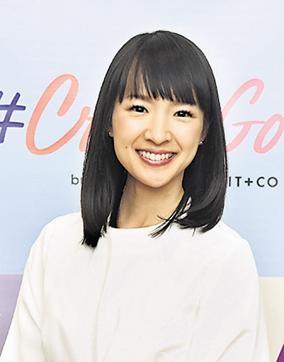
She was quite the sensation, I discovered. For the uninitiated (if there are any), the hallmark of her method is simple: keep items that, when held, “spark joy”. Apparently, it’s a concept repeated time and time again in the series .
I assume it was all going well until the book controversy. “Do NOT listen to Marie Kondo or KonMari in relation to books. Fill your apartment and world with them,” tweeted novelist Anakana Schofield. While her tweet didn’t quite inspire me to read Schofield’s writing, it offered a sense of how much anger the de-cluttering guru had sparked. The response on social media from defenders of books could make you believe, as Ron Charles says in his article ‘Keep your tidy, spark-joy hands off my book piles’ for The Washington Post, “that she [Kondo] hates books. All books.” Which wasn’t true of course, he goes on to say. Although there are problems with Kondo’s shelf-tidying message – she advises deciding the fate of each book by touch, for instance. “Make sure you don’t start reading it,” she says, “Reading clouds your judgement.” And I do feel uncomfortable relating Kondo’s spark joy philosophy to literature – after all, many books that I love don’t quite spark joy as much as poignancy and disquiet. Yet Kondo and the KonMari controversy did inspire me to stand in front of my shelves and take a long hard look. It wasn’t, though, what propelled me into reflecting on my book collection. What set this off was a gesture a friend made over Christmas last year.
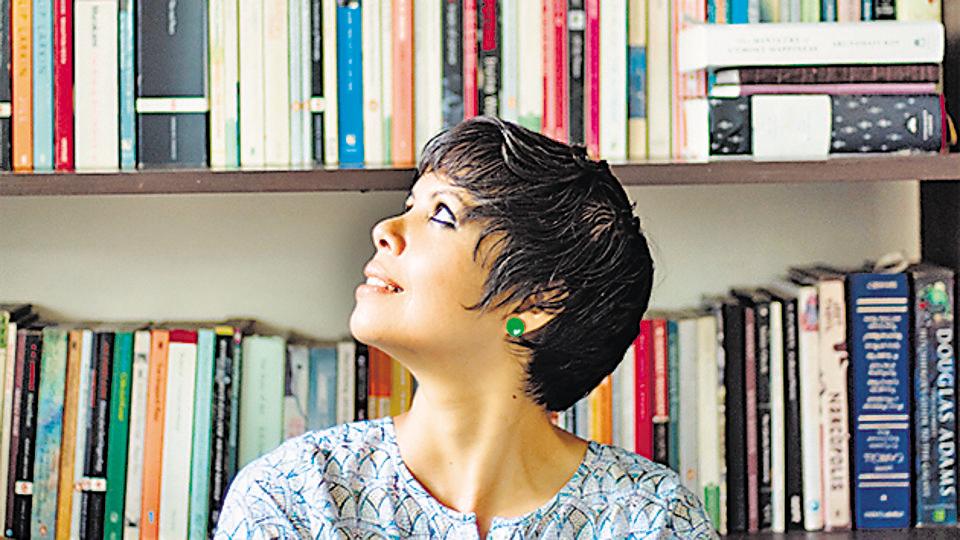
Admittedly, when it comes to books, I’ve always been acquisitive. I’ve been buying books for as long as I can remember; it was the one thing my parents never said no to – even if they refused innumerable temper-tantrum pleas for Barbie dolls, Glo Worm toys, puppies, and ponies. I knew I could walk into a bookstore, and mostly pick up anything I wanted. I realise the immense privilege in this. I also realise that while it’s made me a voracious book collector, it’s also turned me into a bit of a hoarder. I’ve collected books wherever I’ve lived – London, Brighton, Delhi, Shillong – trawling bookstores, second hand stalls, charity shops, and I’ve had them carted around whenever I’ve moved. They were the heaviest, biggest boxes. They were the ones I worried about most – what if they were lost? Or worse, damaged? I would unpack, nervous, happy only after they were all back safely on my shelves. But last Christmas, something happened that made me question my relationship with my library.
A friend made me a gift of a book she’d owned for many years. While that in itself perhaps isn’t quite momentous, it was a book we’d talked about months before in a shared cab ride one evening, on our way home from work. We talked about it as enthusiastic book lovers do – she explaining how much and why she’d enjoyed a slim collection of stories called Cities I’ve Never Lived In by debut writer, Sara Majka, while I proclaiming, as so many of us often do, that I must “get my hands on it at some point”. The copy I now own is far from new, but it carries within it our conversation, our moment of connection, our words too. And a note from her that says “this book saw me through some rough times. I hope it does the same for you.” She told me she does this quite often – and not just with books, but movie DVDs, TV show box sets, music albums.
I’ve started looking at my library anew.
Not as an ever-expanding conglomerate, a heft of personal ownership, but as something that can also be shared. It isn’t as though my collection hasn’t seen any pruning over the years. Review copies I didn’t particularly enjoy, accidental double copies, books for which I’d found editions with nicer covers, academic texts, gifts from publishers, gifts in literary festival tote bags – they’ve all been periodically packed into cartons and delivered to libraries and secondhand bookstores. But I’m referring to books I’ve bought and own. Books about which I’ve had many conversation with many friends and lovers. I’d like to be brave and do what my friend did at Christmas. Gift a book that’s meant something to me, that’s helped me through rough times – that I’ve shared a moment over with someone else. It’s an act of incredible generosity.
To gift is not like lending (though lending books, when they’re not returned, amounts to grudging giving away) and not like buying another copy of the same book. It has to be that book. The one with you. And I’m not sure I’m up to it. Already I falter, making a quick list that I’d never gift. The Lord of the Rings set with Alan Lee’s original illustrations that my mum found for a thousand rupees in a book fair in Shillong, a copy of Douglas Adams’ The Long Dark Tea-Time of the Soul, tattered and worn, that an old boyfriend bought me for Valentine’s Day, when we were students and broke, a second edition of Charles Dickens’ A Tale of Two Cities, an old copy of Kate Chopin’s The Awakening which I found in Blossoms, Bangalore, and read at a point in my life when it resonated most. Try as I might, to envision this vast generosity on my part, I’m afraid I might fail.
Yet what pushes me onwards is a concept borrowed from the social sciences, that of the biography of things: the idea that objects, like people, gather time, movement, and change, that they are constantly transformed (and must be allowed to transform) and these transformations of people and objects are tied up intricately with each other. I’d like to think of my books as objects with lives. That they came into my life at a particular time, and may enter others’ in a similar way. Much as I’m tempted to begin with books that haven’t quite spoken to me – John Williams’ Stoner, for example, or Elena Ferrante’s Neapolitan series – I do see this quite defeats the purpose of the gesture. I’ll begin then with books that I’ve loved in the past that perhaps don’t quite speak to me anymore. It’ll take some consideration, and I cannot promise it will happen with regularity. But it’s a start. Sometimes, Marie Kondo, if something has sparked joy, a way to celebrate is also to gift it away.


