India thrives in its gatherings. Cricket triumphs, political rallies, religious festivals, or celebrity events draw thousands — sometimes lakhs — into streets and squares, showcasing our nation’s vibrant pulse. Yet, this energy comes with a persistent challenge — managing these crowds safely and predictably. Recent tragedies, from stampedes to chaotic dispersals, reveal the steep price of mismanagement. The solution isn’t just stricter policing or post-incident probes: It’s systemic planning, an area where India’s governance often falls short. Crowds in India are evolving. Once limited to predictable events like annual pilgrimages or election rallies, they now form spontaneously, sparked by social media and converging in minutes. These flash gatherings often overwhelm semi-urban areas unprepared for such surges. Unlike traditional assemblies, they’re less structured, more fluid, and far harder to anticipate.
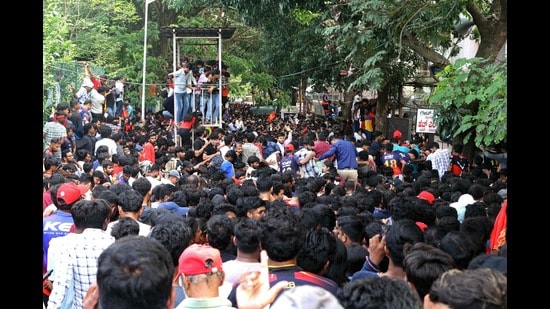
Conventional policing — barricades, megaphones, lathi-wielding units — is increasingly ineffective. Our police are skilled and courageous but often under-equipped for this new reality. The problem isn’t just policing; it’s governance that hasn’t kept pace.
India urgently needs a National Framework for Crowd Management — a flexible, tiered system tailored to crowd size, event type, and local infrastructure. This would replace the current patchwork of ad-hoc measures with standardised protocols on risk assessment, exit strategies, inter-agency coordination, and deployment checklists. Crowd safety must also be woven into urban planning and disaster management, not left solely to district police. At the local level, joint operations centres (JOCs) could transform coordination. Picture police, fire services, health teams, transport authorities, and municipalities working from a shared plan with clear command lines. JOCs can streamline decisions and resources, ensuring swift responses when needed.
Technology can revolutionise crowd control. Many cities already have CCTV networks and drones. Pairing these with AI-driven crowd-modelling and density-tracking software could provide real-time alerts, flagging risks before they escalate. AI heatmaps can guide dispersal, monitor entry points, and spot choke points.
{{/usCountry}}Technology can revolutionise crowd control. Many cities already have CCTV networks and drones. Pairing these with AI-driven crowd-modelling and density-tracking software could provide real-time alerts, flagging risks before they escalate. AI heatmaps can guide dispersal, monitor entry points, and spot choke points.
{{/usCountry}}Yet, most police units lack access to such integrated tools. The ministry of home affairs could address this through its modernisation of police forces scheme, funding state-level pilots. Partnerships with Indian tech firms and research institutes could also deliver solutions tailored to our unique context.
Physical spaces shape crowd dynamics. Too many Indian cities lack clear signage, multiple exits, or directional systems vital for safe movement. Urban development programmes, like smart cities, should prioritise crowd-conscious design in routine upgrades.
For recurring events — think Kumbh Mela or local fairs — temporary modular infrastructure offers practical solutions. Prefabricated barricades, elevated walkways, digital signs, and mobile medical units don’t demand huge budgets, just meticulous planning.
Crowd safety hinges on public cooperation. In crises, clear, trusted communication is critical. Police should craft event-specific messaging in local languages, using digital platforms and community networks. In areas with frequent gatherings, ongoing engagement with resident associations, local leaders, and panchayats can boost awareness and compliance, making crowds active partners in safety. India’s police forces learn constantly, but often in silos. A national repository of after-action reports, managed by the Bureau of Police Research and Development, could change that. These concise reviews of crowd events would build a shared knowledge base, letting officers nationwide learn from each other’s successes and failures. Accountability must also extend beyond the police. Municipalities and event organisers share responsibility for planning and infrastructure. Holding them accountable in post-event reviews would foster a culture of proactive risk management.
Perfect crowd control in a nation of India’s scale is a tall order. But our size makes strategic planning non-negotiable. Well-managed gatherings showcase administrative prowess, build public trust, and save lives. Mismanaged ones erode confidence and court tragedy.
India has the talent, tools, and institutions to meet this challenge. What’s needed is alignment between policy and practice, Centre and states, and the agencies on the ground. Crowd management, like election planning, must become a routine administrative task, not a crisis-driven scramble. In a nation where people will always gather, public safety lies not in chasing total control but in designing intelligent systems. It’s time to plan smarter, anticipate better, and ensure that India’s vibrant gatherings remain a source of pride, not peril.
OP Singh is director general of police & head, Haryana Narcotics Control Bureau with extensive experience in crowd management. The views expressed are personal.