While the world remains a passive observer, the staggering violence in Pakistan-occupied Jammu & Kashmir (PoJK) this week has upended the policies of Pakistan’s deep State that has for long used instruments of terrorism to wage an asymmetric war against India on the Kashmir issue.
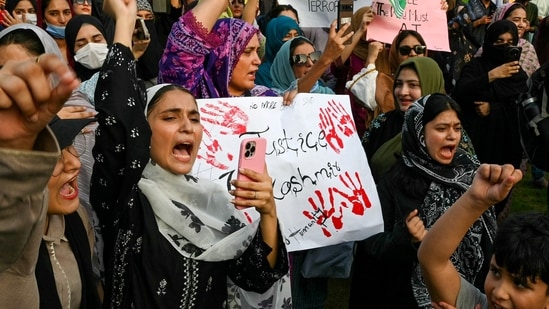
Pakistan faces the biggest challenge it has in decades to its positioning on Kashmir. On the one hand, Pakistan’s army has, for years, nurtured terror groups such as the Lashkar-e-Taiba, pushing in their men across the Line of Control, into India, to unleash atrocities in the name of so-called “freedom fighters”. Now, confronted with an uprising in its own backyard, Islamabad has abandoned all pretense of being interested in civil liberties or any kind of freedom, inflicting horrific brutalities on political protesters.
There were bodies lying in pools of blood on the roads of Rawalakot and Mirpur, with at least 40 unarmed civilians reported to have been killed in firing by Pakistan’s security forces on civilians. The protests are being led by a group called the Joint Awami Action Committee (JAAC) that has demanded the abolishment of 12 seats in the local legislature that are reserved for “refugees” from India. The Kashmiris in PoJK say this is an euphemism used by those at the helm in Rawalpindi, Islamabad, and Lahore to grab control of the region.
Amidst a media blackout by Pakistan’s TV channels, the JAAC says the death toll could be much higher. Its leaders have taken to social media to reveal that the Pakistani military fired at thousands of peaceful protestors. Worse, an exact death count is difficult because, they say, bodies have been forcibly taken away from local hospitals and morgues.
{{/usCountry}}Amidst a media blackout by Pakistan’s TV channels, the JAAC says the death toll could be much higher. Its leaders have taken to social media to reveal that the Pakistani military fired at thousands of peaceful protestors. Worse, an exact death count is difficult because, they say, bodies have been forcibly taken away from local hospitals and morgues.
{{/usCountry}}Also Read: Why Pakistan-occupied Kashmir is migraine for Rawalpindi
As corpses piled up in the streets of PoJK, the most dismissive and nonchalant response came from Pakistan’s defence minister Khwaja Asif, who said the protesters “were enemies, like India”.
The untenability and intrinsic hypocrisy of Pakistan’s Kashmir policy stood exposed like never before. In 2011, on a visit to Pakistan as secretary of state, with then foreign minister Hina Rabbani Khar standing by her side, Hillary Clinton had warned Islamabad, “You can’t keep snakes in your backyard and expect them only to bite your neighbours.”
In a rare moment of honesty, Rana Sanaullah, a key aide to Pakistan Prime Minister Shehbaz Sharif, admitted as much to journalist Hamid Mir. He likened protestors in PoJK to the “Mujahideen we trained and sent to fight (in India)”. Now, he said, they and groups like theirs were snapping at the neck of the Pakistani State.
But the current unrest is not only about Pakistan-trained terrorists proving to be a noose around their neck. It is also about the political rights of a part of Kashmir that Pakistan likes to call “Azad” or free (PoJK for us) but is entirely occupied, controlled, manipulated, and brutalised.
Also Read: PoJK polls a 'cosmetic exercise' to mask illegal occupation, says MEA
The most recent conflagration has been over a three-phase election in PoJK. India has called this a “cosmetic exercise to camouflage illegal occupation”. Pakistani political parties such as Imran Khan’s Tehreek-e-Insaaf have called the election results “pre-arranged”. And the JAAC has called for a mass boycott of the three-phased polls that began this week.
Ever since India abrogated Article 370 in Jammu and Kashmir, Pakistan has been apoplectic. Islamabad wanted to conveniently forget its own history: The decision to split PoJK into two regions, what it euphemistically calls Azad Kashmir and Gilgit-Baltistan. It overreacted and overreached on India’s internal decision-making process by vowing to never talk to India unless the abrogation was reversed, knowing fully well that this would never happen. Indian High Commissioner to Pakistan Ajay Bisaria was asked to leave and given 72 hours to pack up and go home as a response to the Article 370 abrogation. Years later, terrorism as State policy has continued and the attack in Pahalgam led to Operation Sindoor.
Now, the world’s focus is, and should be, on what is happening in the part of Kashmir that is under Pakistan’s occupation and control. The myth of “Azad” Kashmir has been conclusively busted. As the protesters attempt a long march on foot to Muzaffarabad, internet and mobile services were suspended. Locals say those killed had been shot in the head. The organisers of the agitation say, as they take cover at night, military snipers take aim at the light from mobile phones and shoot at will. They fear something bigger and more terrible is around the corner. “We have seen this kind of violence only in video games,” one protester said in a video that has since gone viral.
If Pakistan ever deluded itself into believing that it had a moral argument to make to India or the world on the Kashmir issue, that decades-old narrative has unravelled permanently this week.
Barkha Dutt is an award-winning journalist and author. The views expressed are personal