
 E-Paper



Policies and People | Green finance: Miles to go and promises to keep
Green finance flows are falling far short of India’s current needs. In 2019/ 2020, tracked green finance was ₹309 thousand crore ($44 billion) per annum, approximately a fourth of India’s needs, says a new report

 Prefer HTon Google


The 27th session of the United Nations (UN) climate conference (COP27) at Sharm el-Sheikh, Egypt, is barely two months away, and the issue of climate finance continues to be one of the biggest sore points for the developing world. This is understandable because the historical emitters (developed nations) have consistently failed to live up to their promise of providing adequate funds to the developing world to tackle the climate crisis.
Climate finance refers to local, national or transnational financing — drawn from public, private and alternative sources of financing — that seeks to support climate mitigation and adaptation actions. It is needed for mitigation to reduce emissions and for adaptation to tackle the adverse effects of a changing climate.
Talking finance in Bali
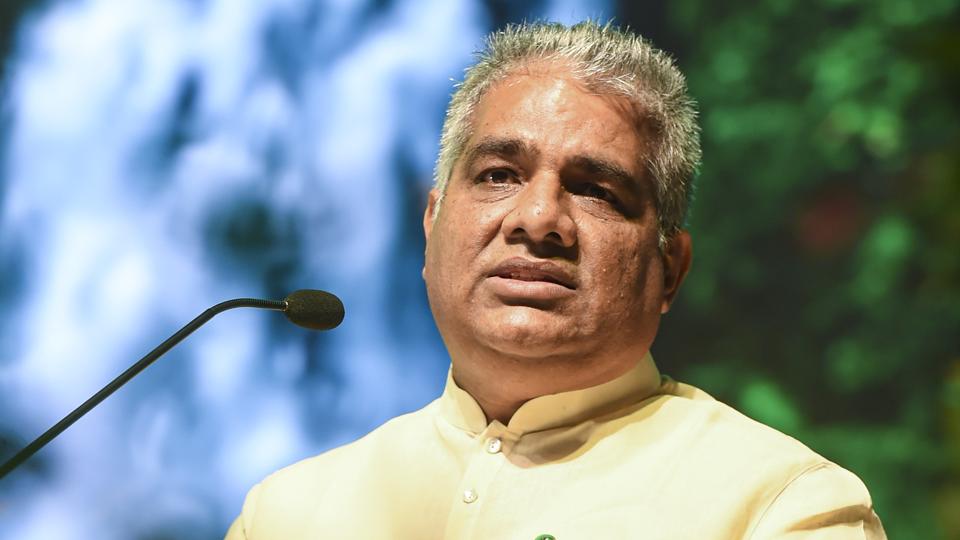
The issue of finance was raised again by India’s environment minister, Bhupender Yadav, last week at the G20 environmental and climate ministerial meeting in Bali, Indonesia.
Addressing the opening ceremony, the minister said that the current pace and scale of climate finance from developed countries is not matching the global aspiration to combat the climate crisis, reported ANI. The minister highlighted that the world is going through multiple crises, with rising energy bills, food insecurity, and a pandemic that continues to push back years of progress in sustainable development.
Reminding the world that there is an urgent need to mobilise resources to stimulate the economy in a manner that makes it more resilient and sustainable, Yadav said: “... the promise of climate finance remains a mirage. An added problem is the clubbing of development finance with climate finance,” he said, adding, 70% of public climate finance was given out as loans instead of grants in 2019.
“In 2019-20, only 6% of climate finance was in grants. This is pushing developing countries into more debt. Developing countries face an estimated gap of $1 trillion in Covid-19 spending.” he added. Yadav also called for the need to recognise that development and environment conservation must be aligned, rather than treating them as exclusive of each other to effectively combat climate change globally.
Green finance flows: Miles to go
For those interested in the crucial climate finance story, I would suggest you read an informative timely and new report released by the Climate Policy Initiative (CPI), an analysis and advisory organisation with expertise in finance and policy.
CPI has analysed India’s first-ever effort to track green investment flows, and the news is, as expected, not great.
According to the new report, Landscape of Green Finance in India, the tracked green finance in 2019-2020 was ₹309 thousand crore ($44 billion) per annum, which is less than a fourth of India’s needs.
The report estimates that for India to achieve its Nationally Determined Contributions (NDCs) under the Paris Agreement, the country requires an approximate ₹162.5 lakh crore ($2.5 trillion) from 2015 to 2030 or roughly ₹11 lakh crore ($170 billion) per year.
The evaluation of financial flows has been estimated for key real economy sectors like clean energy, clean transport and energy efficiency. The study tracks both public and private sources of capital — domestic as well as international — and builds a framework to track the flow of finance right from the source to the end beneficiaries through different instruments with an emphasis on bottom-up approaches based on actual flows rather than commitments, providing the most accurate analysis to date of where India’s climate finance stands, the finance gaps it faces, and the opportunities that lie ahead.
Key findings of the research report:
1. Domestic sources continue to account for the majority of green finance, with 87% and 83% in FY2019 and FY2020, respectively.
2. The share of international sources increased from 13% in FY 2019 to 17% in FY 2020: Foreign Direct Investment (FDI) flows increased substantially from FY2016-2018, reaching nearly ₹9 thousand crore ($1.2 billion) in FY2020. However, green finance still only accounts for ~3% of total FDI inflows to India.
3. The total fund flow towards mitigation was almost equally split between clean energy (42%) and energy efficiency (38%), and was significantly higher than clean transport (17%).
4. This report presents a first-of-its-kind analysis of adaptation funding in India. For the adaptation sectors, the total amount of green finance was ₹37 thousand crore ($5 billion) per annum over FY2019/FY2020. The major source of adaptation funding, however, was domestic (94%), fully funded by central and state government budgets.
The way forward
The concluding observations of the report provide a map of the road forward.
| Green finance flows must increase rapidly to ensure that India meets its Panchamrit targets. |
| Public finance has played a major role in increasing green finance flows, but more involvement of the private sector is required. |
| A strong policy environment is critical to enabling green finance at scale. |
| Coordinated efforts across data collection, reporting, and access will increase green finance flows. |
| Accelerating financial flows towards adaptation is critical. |
While the climate crisis doesn’t know borders, it is much more severe on countries such as India because of their locations and weaker financial, administrative and human resource capacity to cope with the scourge. This is fuelling, rightly so, the demands for loss and damage compensation. So, it’s high time the West walks the talk and keeps its promises to pay up.
The views expressed are personal


