Post-Covid, India’s inbound tourism can be a key driver of growth
This time around, focus on services and export sectors as growth engines too. Tourism is one such sector which is employment-intensive, can bring in huge forex earnings and provide reasonably large-scale, low-tech employment that delivers growth
Thirty years ago, in 1991, India set off on a path of economic reforms. I remember the gloom of the financial crisis slowly giving way to excitement, as our lives changed in unimaginable ways.
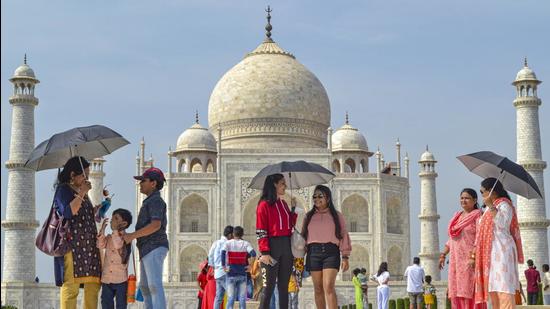
Many economists suggest that we are now in a global economy where growth in the next six quarters will be the strongest since 1940. Since our key source markets — the United Kingdom, Germany, France, Russia and Japan — are likely to see significant growth and an increase in disposable income, we need to ensure we benefit from the upsurge in tourism demand. (PTI)
Fast forward to 2021 and I am part of the inbound tourism industry, a sector that’s facing an existential crisis. Despite Covid-19 numbers declining and vaccinations increasing, inbound tourism companies have not raised a single invoice since March 2021. The country’s overall tourism direct gross value added (DGVA) has plummeted by 93.3% year-over-year in quarter 1 of 2020-21. An industry that contributes roughly $30 billion to our annual Gross Domestic Product (GDP) has just stopped still in its tracks.
As per official estimates, 21.5 million tourism-related jobs have been lost in fiscal year (FY) 2020-21. The sector, which created 8% of employment or 39 million jobs in the FY 2019-20, is now seeing massive devastation due to its collapse over the past 15 months.
India’s own history has lessons. The 1991 economic reforms were triggered by a crisis. Now, as the country battles an unprecedented health crisis, a way out of the current situation is to realise that manufacturing alone won’t deliver the growth that India needs. This time around, focus on services and export sectors as growth engines too. Tourism is one such sector which is employment-intensive, can bring in huge forex earnings and provide reasonably large-scale, low-tech employment that delivers growth.
Many economists suggest that we are now in a global economy where growth in the next six quarters will be the strongest since 1940. Since our key source markets — the United Kingdom, Germany, France, Russia and Japan — are likely to see significant growth and an increase in disposable income, we need to ensure we benefit from the upsurge in tourism demand that will naturally follow from these countries in 2022.
After 75 years of Independence, India must look at tourism as a driver of growth, if it implements some policy changes, and commit to investments. At a time when Prime Minister Narendra Modi is pushing for export-led growth, the country could benefit from the low hanging fruit of tourism, by recognising the sector as an exporter.
In this pursuit, India must first do away with its international tourist offices, and give its ambassadors and embassies the responsibility to help grow inbound tourism to India. The government must urgently come up with a tourism growth strategy that is owned by the ministry of tourism, and supported by the ministry of external affairs. As soon as India successfully vaccinates a significant portion of our population, our ambassadors must work on confidence-building measures to reassure tourists that India is a safe destination to travel to.
Whenever we decide to open our borders, we must remain focused on just our key markets that have traditionally represented the highest tourist footfalls in India. The ministry of tourism must continue to demonstrate a clear understanding of the international travel market — something that stood out in its recent decision to announce 500,000 free visas.
With its world heritage sites, India is best positioned to create interesting new holiday products that cater to post-Covid-19 necessities such as social distancing and work-from-home. Heritage hotels with good service and reasonable prices, and hosts straight out of historical sagas about maharajahs and maharanis, will make the country a unique destination. Alongside this, there are many undiscovered destinations that are waiting to be explored.
Finally, when we do open, we should do so in a transparent manner, and allow the seamless entry of travellers who have had a World Health Organization-approved vaccine. Keep travel rules simple and ensure that the online visa approval process accepts vaccine certificates from our source markets. Make it easy for people to come for a holiday, and ensure that they follow Covid-19 protocols when travelling within the country.
As soon as the government believes that it is safe to open borders, India’s tourism industry will be raring to go. India at 75 must be its moment in the sun.
Dipak Deva is managing director, Travel Corporation India

 E-Paper