
 E-Paper



Quad shows it’s robust and flexible
By deepening its strategy and focusing on a practical agenda, Quad showed wisdom


Few plurilateral groupings in recent decades have achieved as much as Quad has in a short span. Yet the grouping of India, United States (US), Japan and Australia often confronts deep scepticism, with questions about its sustainability, strategic logic, messaging and delivery. Some of these questions stem from past baggage. After all, Quad’s first avatar collapsed rapidly, but the second avatar is more solidly rooted in shared strategic anxieties about China’s rise, even though it is not explicitly spelt out. Others stem from assessments that overplay divergences and underplay convergences among Quad members. This ignores how bilateral relations between each of the Quad countries is better than ever. And yet other doubts, encouraged by Beijing and Moscow, stem from a desire to see Quad fail by delegitimising it in Southeast Asia.
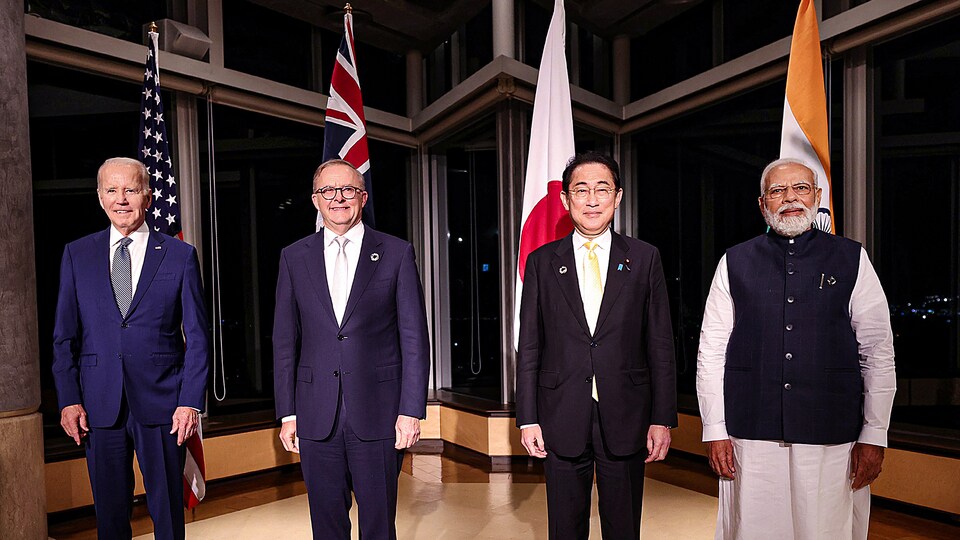
Confounding the sceptics, despite US president Joe Biden cancelling the Australia leg of his visit, Quad quickly adapted as its leaders met in Hiroshima on Saturday. The shift in venue is a footnote in the larger diplomatic story, but shows the nimbleness of the group that hasn’t let rigid bureaucracies cripple it yet. No one let ego come in the way. But this large-heartedness is also coming from a place of calculated self-interest. The four countries bridged differences on Ukraine, issued a set of principles on the Indo-Pacific which embeds a vision distinct from China, emphasised the role of Asean and Pacific Island countries, and advanced a practical agenda of cooperation.


