Last week, the Pranab Mukherjee Legacy Foundation invited me to be a speaker at a function in his memory, organised by his daughter, Sharmishtha Mukherjee. The other speakers were Sitaram Yechury, leader of the Communist Party of India (Marxist), NK Singh, chairman of the 15th Finance Commission, and Shekhar Dutt, former defence secretary and current governor of Chhattisgarh. Dinesh Singh, former vice-chancellor of Delhi University, delivered the vote of thanks. Curiously, there was no one from the Congress, of which
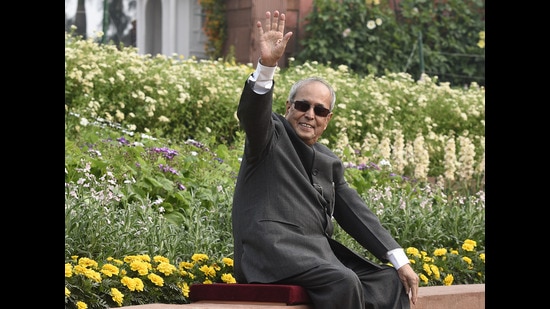
Last week, the Pranab Mukherjee Legacy Foundation invited me to be a speaker at a function in his memory, organised by his daughter, Sharmishtha Mukherjee. The other speakers were Sitaram Yechury, leader of the Communist Party of India (Marxist), NK Singh, chairman of the 15th Finance Commission, and Shekhar Dutt, former defence secretary and current governor of Chhattisgarh. Dinesh Singh, former vice-chancellor of Delhi University, delivered the vote of thanks. Curiously, there was no one from the Congress, of which Pranab was an icon.
Pranab was the quintessential witness to an era. Born in 1935, his career began as a clerk in the post and telegraph department in West Bengal and culminated as the 13th President of India. His political career took off in 1969, when he was elected to the Rajya Sabha on a Congress ticket. His political mentor was Indira Gandhi, who recognised his remarkable capabilities. Under her, he became finance minister (FM) at 47, and the de facto number two in her Cabinet.
Meteoric success, however, has its pitfalls. The blue-eyed protégé of Indira Gandhi suffered a catastrophic political reversal after her tragic assassination in 1984. Apparently, Rajiv Gandhi, who succeeded his mother as Prime Minister (PM), was not convinced of his loyalty.
Is this true? Former Delhi chief minister Sheila Dikshit once gave me her version of what transpired. She was in the plane in which Rajiv Gandhi, along with Pranab, were returning from Kolkata to Delhi, on hearing of the attack on Indira Gandhi. According to her, Rajiv Gandhi emerged from the cockpit, confirming that she had passed away. Pranab Mukherjee was seated in the first row, aisle seat. Rajiv stopped next to him, and asked, “What next?”
Pranab, citing past precedents, replied that, as per the party’s constitution, the next leader would have to be elected by the Congress Parliamentary Party, and in the interim, the senior-most leader could be sworn in as the PM. His “error” was that he did not instantaneously say that Rajiv Gandhi was the only and immediate choice.
Rajiv Gandhi was a gentleman. But he was surrounded by a coterie of politically rootless and ambitious men, who allegedly planted in his mind that Pranab was untrustworthy. His downfall was precipitated; he was expelled from the party, and for the next five years, went into political wilderness.
People remember the highs in the lives of great men but forget the lows. It was only when PV Narasimha Rao became PM in 1991, after Rajiv Gandhi’s untimely and tragic assassination, that Pranab’s fortunes changed. He was appointed deputy chairman of the Planning Commission, and then external affairs minister.
The Congress lost the 1998 elections to the Bharatiya Janta Party (BJP). Sonia Gandhi became the president of the Congress party. Pranab, with his vast experience in party affairs, and phenomenal knowledge of parliamentary procedures and constitutional provisions, mentored her during her initial helmsmanship. In 2004, when the Congress — in alliance with the Left Front — came to power again, Sonia Gandhi declined to be PM, and instead nominated Manmohan Singh. Pranab was overlooked, in spite of his far greater political seniority. In fact, as FM, Pranab had appointed Manmohan Singh as governor of the Reserve Bank of India (RBI).
History is not always fair, but often has its compensations. In 2012, Pranab became the President of India, but even that, according to some in the know, was not backed fully by the Congress leadership, whose preference was vice-president Hamid Ansari. It was only some last minute political networking, in which Mamata Banerjee and Mulayam Singh Yadav supposedly played a key role, that ensured Pranab’s presidency.
Ironically, it was the BJP that gave Pranab the Bharat Ratna. Many criticised him for speaking, after he had retired as President, at a Rashtriya Swayamsevak Sangh event in Nagpur. But Pranab, the inveterate consensus builder and believer in the Indian tradition of shastrartha or civilised discourse, did not think this was wrong, or a negation of his strong views on India’s secular credentials.
Pranab kept a detailed daily diary. Sharmishtha is writing a biography of her father using this invaluable historical material. It should make for very interesting reading.
Pavan K Varma is author, diplomat, and former Member of Parliament (Rajya Sabha) Just Like That is a weekly column where Varma shares nuggets from the world of history, culture, literature, and personal reminiscences with HT Premium readersThe views expressed are personal
One Subscription.
Get 360° coverage—from daily headlines
to 100 year archives.
Archives
HT App & Website