
 E-Paper



SC verdict on ECI marks an inflection point
The historic judgment comes amid a tussle between the Centre and the top court. Don’t be surprised if the action shifts to Parliament and decisions on NJAC and ECI are reopened. The battle lines have been drawn

 Prefer HTon Google


The shadowboxing between the government and the courts has reached an inflection point with the seminal verdict on how election commissioners (ECs) will henceforth be chosen. The question — who should appoint judges — appears to have been met with a counter question from the judiciary: Who should appoint India’s ECs and chief election commissioner (CEC)?
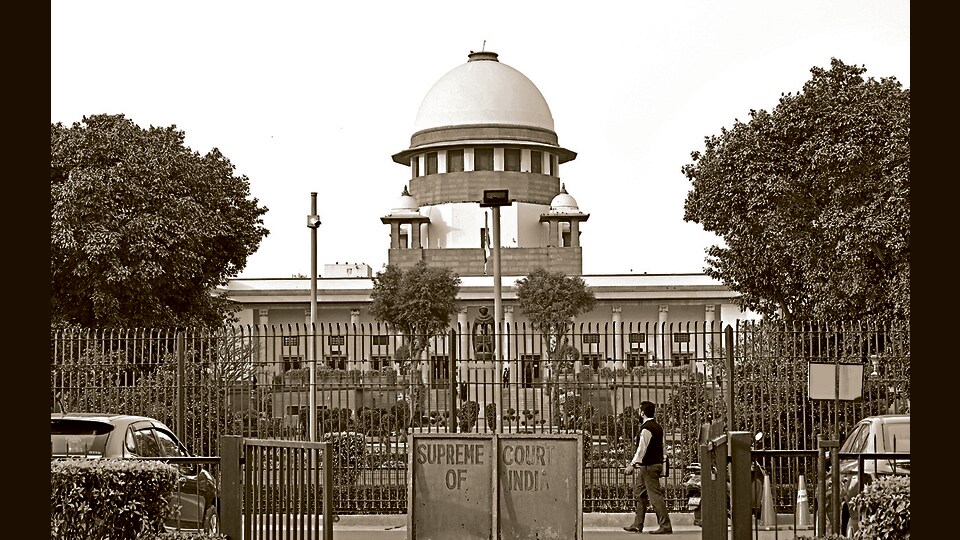
The Supreme Court’s (SC)’s sharp intervention, unless changed by Parliament, will end the age-old practice of the Election Commission of India (ECI) members being appointed by the President on the advice of the council of ministers. The Leader of Opposition and the Chief Justice of India (CJI) will now be part of a panel with the Prime Minister (PM) to combat what justice KM Joseph called the “pernicious effects of the exclusive power being vested with the executive to make appointment to the Election Commission”.
The court went so far as to say the “core values of the Constitution, including democracy and rule of law, are being undermined”.
This is a historic verdict.
It’s a no-brainer that adding a multiplicity of voices to the process of choosing ECs is a much-needed reform. And, unless the government decides to use the legislature to challenge it by passing a new law, the new system will add a significant measure of independence to a body that has become increasingly politicised.
But let’s not kid ourselves. The headlines, dramatic as they are, do not reveal the full story of what is playing out in the wings. A jousting match for autonomy and power between the judiciary and the Modi government may be unfolding. And while some amount of adversarial energy is good, even necessary, we don’t know how this round of confrontation might end.
For several months, high-profile public functionaries, including law minister Kiren Rijiju and vice-president Jagdeep Dhankhar (a lawyer by training), have needled the judiciary by challenging the collegium system. Dhankhar has even questioned the basic structure doctrine. In 1973, a 13-judge constitutional bench decided that while making laws was the prerogative of Parliament, these could not violate the Constitution’s essential values. Ironically, this judgment in the Kesavananda Bharati case resulted from growing tensions between the Indira Gandhi-led government and the courts. Earlier in 1967, in the Golaknath case, the SC held that Parliament was not empowered to make laws that went against the grain of constitutionally guaranteed fundamental rights.
As the wheels of history turn full circle, it also has to be admitted that there are imperfections with the collegium system, not least its opacity. The collegium — effectively the five senior-most judges of the apex court deciding who will be a judge and in which court — has not always buttressed its argument. One of the first challenges that CJI DY Chandrachud had to contend with was protests by lawyers after the collegium decided to transfer some extremely popular judges. The confusion and high drama surrounding the elevation of Victoria Gowri to the Madras high court was another illustration of the collegium tripping on its intentions.
Both the institutions at the centre of the current storm — ECI and the judiciary — have been, unfortunately, politicised. When a member of ECI can later serve as a minister in the government (as was done by MS Gill, who served as CEC between 1996 and 2001, and then was inducted as a minister in 2008), questions will be raised about its impartiality. The same can be said about judges who become parliamentarians (former CJI Ranjan Gogoi) or governors (former justices Abdul Nazeer and P Sathasivam). It was, after all, the Bharatiya Janata Party’s minister, Arun Jaitley, who, while in Opposition, spoke so eloquently about “pre-retirement judgments for post-retirement benefits,” in a clip that today’s Opposition, the Congress, is conveniently citing.
The functioning of ECI and the collegium both need reform.
But other than politicians, almost everyone agrees that whatever the faults of the process to appoint judges, giving the government of the day, any government, a major say in it is not the solution. It’s not a coincidence that politicians who agree on almost nothing all came together across party lines in endorsing the National Judicial Appointments Commission (NJAC) till the SC read it down.
After the court’s order on ECI, don’t be surprised if the action swiftly shifts to Parliament and both the decisions of the SC — on the NJAC and ECI — are reopened. In the run-up to the general elections, now just a little over a year away, will the government leave the argument with the judiciary to mere verbal sparring? Or will it take the next step and go for a full legislative disagreement?
The battle lines have been drawn.
Barkha Dutt is an award-winning journalist and author The views expressed are personal


