If Norway was a state in India, its population would rank it right below Himachal Pradesh. What makes a good partner is, however, not shaped by its size, but by the complementarity of interests, values, and economies. The deepening of the relationship between Norway and India over the last couple of years shows that the cooperation is mutually beneficial. I am glad to be able to visit India so soon after taking over as the Norwegian foreign minister to develop the relationship further.
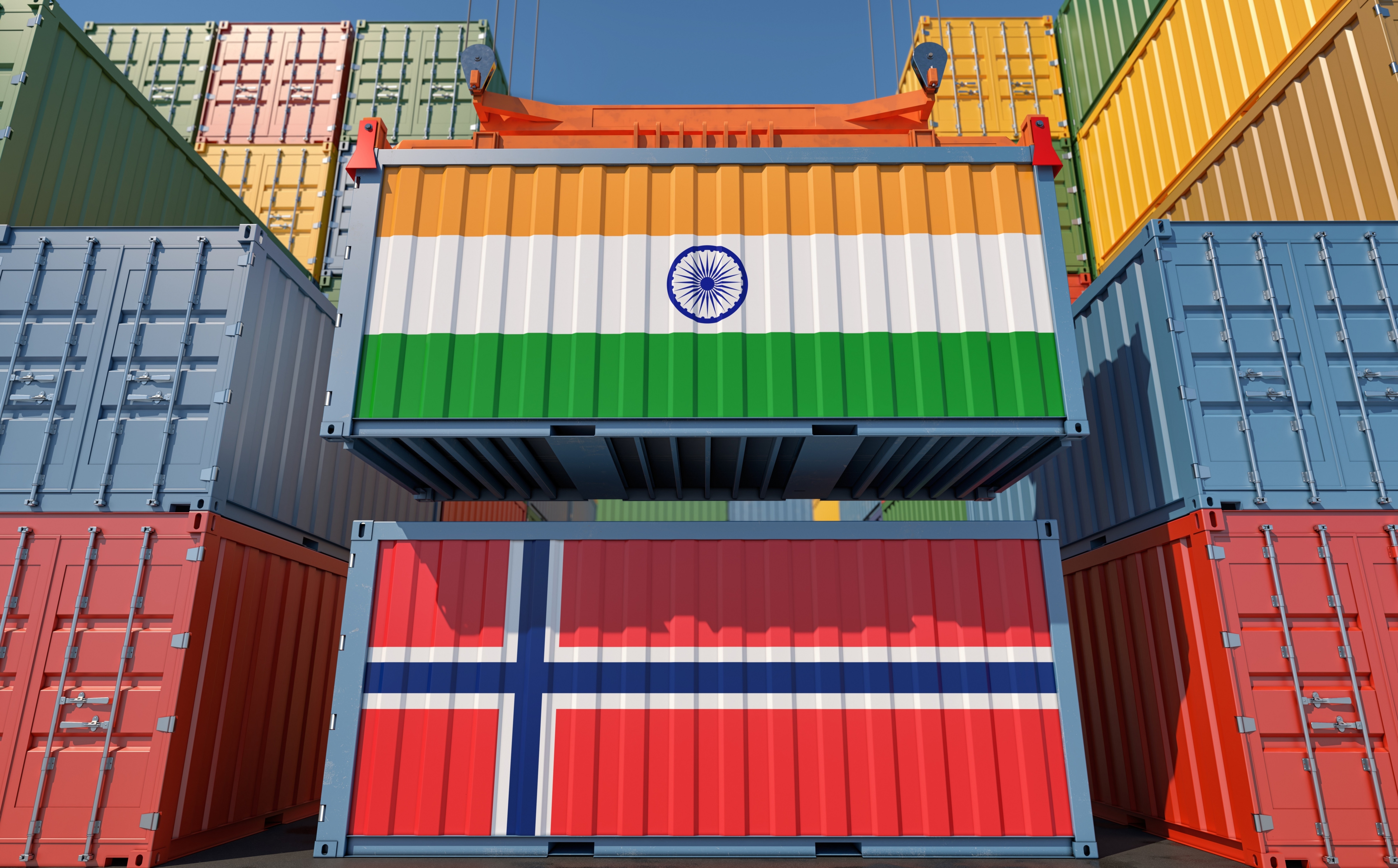
Norway was one of the first countries to recognise India on its Independence in 1947. As I take this opportunity to congratulate India on its 75th year of Independence, I take pride in the stable and positive relationship we have had since then.
The rules-based international order is crucial to seek solutions to common challenges. Multilateral institutions like the United Nations (UN) have played a key role in developing the rules-based international system of cooperation between States.
Like India, Norway has benefited politically and economically from this system, and has high stakes in its survival. Norway truly values its cooperation with India in the multilateral arena. Currently, we are both faced with demanding tasks as members of the UN Security Council. Despite the challenges, both India and Norway continue to work together tirelessly to support binding international cooperation and making the multilateral system more effective and inclusive. The world needs more, not less, multilateral cooperation.
Norway is cooperating with India in the energy sector. Norway is one of the world’s largest energy exporters and an innovation powerhouse. This week, I am travelling to India with 17 Norwegian businesses, which are offering world-leading solutions in renewable energy, hydrogen, carbon capture and storage, and more. I am glad to be witnessing the signing of several agreements with Indian companies during my stay.
{{/usCountry}}Norway is cooperating with India in the energy sector. Norway is one of the world’s largest energy exporters and an innovation powerhouse. This week, I am travelling to India with 17 Norwegian businesses, which are offering world-leading solutions in renewable energy, hydrogen, carbon capture and storage, and more. I am glad to be witnessing the signing of several agreements with Indian companies during my stay.
{{/usCountry}}Prime Minister (PM) Narendra Modi’s announcement of enhanced climate goals at the Conference of the Parties (COP26) in Glasgow has made India an attractive destination for green investments and business cooperation in the energy sector. Our companies are increasingly looking to India as a market and for partnerships with Indian companies.
These partnerships are not only contributing to the energy transition in our two countries, but also using India as a platform for scaling solutions that benefit everyone. At the global level, we are extremely pleased that, together with India and over 170 other countries, the agreement on a globally binding agreement on plastic pollution to be finalised by 2024 was reached.
In addition to technology and know-how, we are investing capital in this partnership. The Norwegian government’s development finance institution, Norfund, has already committed over $140 million in India, and is looking to India for investments through its new Climate Investment Fund. The Norwegian sovereign wealth fund has invested about $17 billion in India across all sectors. Trade between India and Norway doubled from 2020 to 2021, with 2022 looking promising.
The blue economy partnership is another example of mutually beneficial cooperation. Our fisheries cooperation with India started in the 1950s and has been followed by decades of joint ocean research. And since the creation of the India-Norway Task Force on Blue Economy for Sustainable Development in 2019, suggested by PM Modi, the partnership has expanded to marine pollution, ocean management, green shipping, and more.
If managed sustainably, the blue economy can deliver economic growth, new jobs, improved nutrition, and increased food security. Ocean-based climate solutions can contribute 1/5th of the greenhouse gas (GHG) reductions needed to keep the world within 1.5 degrees of warming. Through the International Maritime Organisation-Norway Green Voyage 2050 project, Norway and India are working together on low- and zero-carbon demonstration projects in the maritime industry. And our companies are building zero-emission ships together, contributing to scaling solutions to the climate crisis while creating green growth.
An integrated part of all our work is our longstanding commitment to women’s empowerment and participation, which is also the vision laid out by PM Modi. Together with our Indian counterparts, we are working to promote the political empowerment of women, the prevention of harmful practices, and women’s rights to reproductive and sexual health.
As Norway and India embark on a future journey of sustainable solutions, our complementarity will strengthen further.
Anniken Huitfeldt is the foreign minister of Norway
The views expressed are personal