
 E-Paper



Terms of Trade | Bihar’s caste census: Opposition’s trump card or a damp squib
The Bihar government will start the first stage of its caste census, with Nitish Kumar having invested political capital behind this demand. Here are the factors behind the politics of this exercise and its potential impact

 Prefer HTon Google


On January 7, the Bihar government will start the first stage of its caste census in the state. Reports say this will document household and caste details, while the second phase will collect information on the economic status of the members of these households. The results of the entire exercise, the government has said, will be available in the first half of 2023 itself.
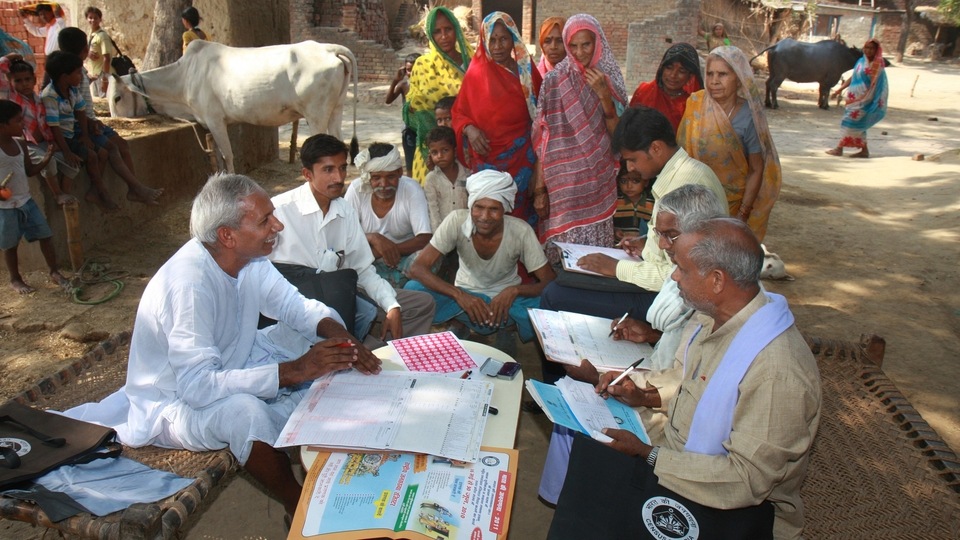
Lest there is any confusion, the caste census in the state is not just a benign data-gathering exercise. Even before he left the National Democratic Alliance (NDA) for the second time to partner with the Rashtriya Janata Dal and its allies in the state, chief minister Nitish Kumar had invested a lot of political capital behind this demand and even taken an all-party delegation in August 2021 to meet the prime minister on the issue. The chronology of the politics of the caste census issue is as follows.
Reservation for Scheduled Caste (SC) and Scheduled Tribe (ST) groups, which is the original reservation provision in the constitution, is largely in proportion to their share of the population. When the Mandal Commission recommended reservations for Other Backward Classes (OBC) in 1980, it argued that the ideal case would have been to grant 52% reservation, which is what it believed the share of OBCs was. However, it settled on the 27% figure by a deductive method after subtracting 22.5% (sum of SC and ST quota in reservations) from the 50% upper limit on total reservations set by the Supreme Court. To be sure, the V P Singh government implemented OBC reservations only in central government jobs in 1990. In 2006, the Congress-led first United Progressive Alliance (UPA) government expanded the scope of Mandal by introducing OBC reservations in central educational institutions (CEI). Once the Supreme Court approved OBC reservations in CEIs, the Mandal question was largely settled.
However, three factors, which have mostly evolved in the post-2006 period, have opened up this question once again. Chronologically, and in increasing order of importance, they are the following.
The first is the growing demand for reservations from communities that do not come under reserved categories. This includes Jats in western Uttar Pradesh and Haryana, Marathas in Maharashtra and many other communities (most of them are dominant peasant castes) in various parts of the country. Political parties, attracted by the electoral rewards such inclusion might bring, have been more than willing to accommodate such demands, which have often been quashed by the judiciary. The fate of hurriedly announced Jat reservations by the second UPA government is a case in point. The competitive politics around reservations notwithstanding, the possibility of expansion of the list of reserved communities made extant beneficiaries uncomfortable about greater competition for reserved category jobs and educational opportunities. To be sure, such insecurities are driven more by perception than reality as there is more than enough evidence to show that cut-off marks for reserved category tend to converge with unreserved seats once the positive effects of reservation come into effect. Politics, however, is often driven by perception, not facts.
The second factor has a more direct relation to politics. The Mandal Commission’s recommendations were a result of a long struggle by various OBC groups and political parties in India. However, in most places, the leadership of such a struggle was with dominant OBC groups. This also meant that the political rewards of the Mandal battle largely went to leaders of dominant OBC groups. The Mandal consolidation (along with the votes of Muslims) emerged as a major political challenge to the Mandir-driven politics of the Bharatiya Janata Party (BJP). The BJP struggled with this challenge for a long time. It is only in the post-Modi phase that the party has managed to overcome the Mandal challenge by devising a political strategy to drive a dominant versus non-dominant wedge within OBC voters. While the BJP’s initial success on this front, especially in the state of Uttar Pradesh, has been driven by what can be described as exploiting retrospective anti-incumbency (against the Samajwadi Party) it did set in motion a process which is aimed at formalising the wedge between dominant and non-dominant OBCs as far as reservations are concerned. In 2017, the Narendra Modi government set up the Justice Rohini Commission that has the mandate to re-stratify OBC reservations and earmark a bigger share of the extant 27% quota for OBC sub-castes that have not benefitted proportionately from reservations. While the Commission has been given repeated extensions, its final recommendations have not been submitted yet. If implemented, its recommendations will significantly reduce the reservation benefits that are available to dominant OBC groups in the country.
The third factor is the Modi government’s decision to announce (and the subsequent judicial approval for) a 10% reservation for Economically Weaker Sections (EWS) among communities that were not eligible for any reservation. More than anything, this decision has given a lot of strength to the argument that the 50% cap on reservations is not set in stone.
The growing clamour for a fresh caste census to ascertain the share of the OBC population in the country must be seen in the context of these three developments. Unlike what is argued by many people, the estimated population share of OBCs in India is not completely unknown. While the decadal census does not record the number of OBCs, various government surveys such as the ones conducted by National Sample Survey and the National Family and Health Survey explicitly count OBCs and estimate their population share to be more than 40%. Political parties asking for the caste census believe that once the caste census has ratified this population share, the demand for increasing reservations for OBCs to match their population share will get an objective basis. Such a demand, it is believed, will generate significant political tailwinds for the parties making this demand.
Will this political strategy work for the opposition? This will depend on three factors.
The first is whether a demand for conducting the caste census (and raising the quota for OBC reservations) will have the same kind of traction which was there three decades ago when Mandal was first implemented. There is good reason for some degree of circumspection on this question. The public sector’s (which is where reservations apply) share in both education and employment has shrunk significantly and most people are reconciled to the fact that the status quo ante will not be restored. The tangible benefits of reservation, are much smaller than they were three decades ago.
The second is whether the BJP will oppose such a demand at all. This is not entirely in the realm of the impossible. Given the fact that non-dominant OBC support is crucial for the BJP’s electoral performance, it might not even oppose the demand for raising the reservation quota if there is significant momentum for it. The BJP’s tactics of being non-committal on the caste census – perhaps one of the reasons it has even put the decadal census on hold – might just be the proverbial act of kicking the can down the road. In fact, the BJP might want to further complicate the discourse by arguing that even if the OBC quota were to be increased, it should be done in keeping with reserving a bigger pie for non-dominant OBCs, which is what the Rohini Commission will most likely recommend.
The third, and this is the most difficult to predict, question is whether the caste census data will throw some unexpected results which could trigger unexpected political realignment. What if a caste census, which also looks at economic attributes of various caste groups, shows that intra-caste inequality – a small section being economically well-off and the rest being below a threshold which is a bare minimum for being called prosperous – is a bigger phenomenon than inter-caste inequality at least for OBCs and so-called upper castes. That SCs continue to lag on economic indicators is a widely accepted statistical reality. While the idea might seem politically inconvenient to many people, it is not entirely untenable. If the census were to throw such numbers, there will be a stronger case for not taking caste as the be-all and end-all of economic inequality in India as far as mass politics is concerned.
It is difficult to answer these three questions and therefore the overall political impact of the caste census that will begin in Bihar tomorrow. What can however be said with a lot of certainty is the fact that the period from now to the 2024 elections will see a lot more churning on the caste front than the period from 2018 to 2019 saw.
Every Friday, HT’s data and political economy editor, Roshan Kishore, combines his commitment to data and passion for qualitative analysis in a column for HT Premium, Terms of Trade. With a focus on one big number and one big issue, he will go behind the headlines to ask a question and address political economy issues and social puzzles facing contemporary India.
The views expressed are personal


