
 E-Paper



Terms of Trade | Hindi cinema, the angry young man, and India’s economic story
Youth anger has finally met austerity in India, but its portrayal in popular culture is still missing


The image of angry young men has been an essential part of the popular culture in post-independence India.
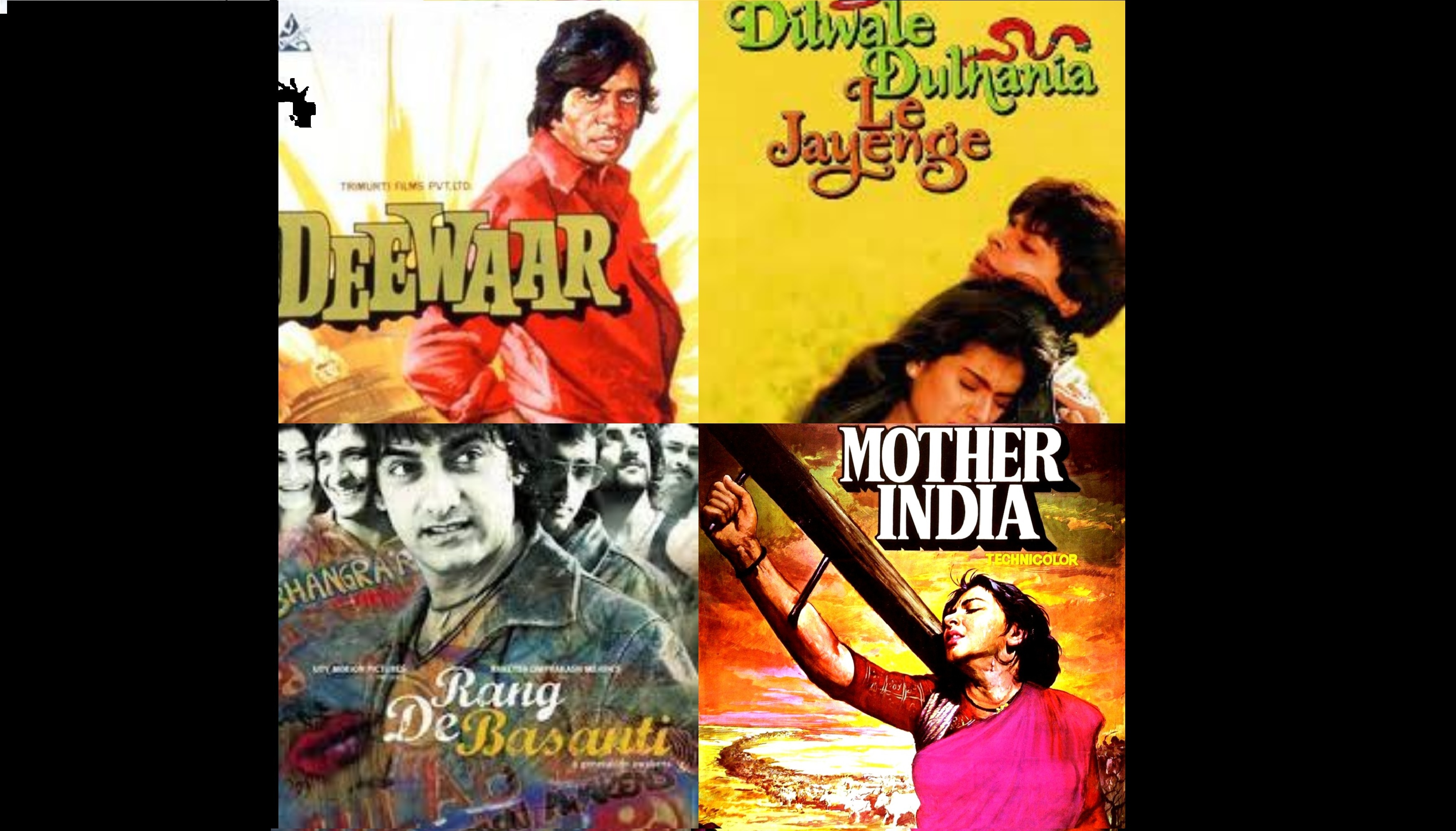
With time, however, the nature and texture of these images have changed. And in these changes lies the political economy story of independent India.
1950s: Mother India’s Birju and the vexed agrarian question
The earliest, and, till date, one of the most powerful, images of an angry young man in popular culture is that of Birju played by Sunit Dutt in Mother India, a 1957 cult classic.
There is a scene in the film where Briju, armed with a spear, confronts the village moneylender, who has come to take his usury-based share in Birju’s family farm’s produce. The conflict between hapless farmers and the predatory money lender, who was often the local landlord as well, which was shown in Mother India, was the central economic contradiction in India’s villages in the first few decades after independence. Birju, after he has killed the money lender, is eventually killed by his mother in the climax of Mother India, perhaps in keeping with the social hegemony against the idea of class violence in those times.
Debates around these issues were not confined to films alone. However, Mother India was ahead of its times. Ten years after Mother India’s release, peasants in a North Bengal village called Naxalbari unleashed what was to become the first in a long chain of Maoist violence in India, which was initially targeted against the epitome of feudal oppression, the village landowner.
To be sure, India had seen violent conflict between peasantry and the landlord class even before the Naxalbari violence.
Whether or not Indian agriculture was feudal or was it already moving towards a capitalist mode of production was the subject of among the most interesting and polarised debates the Indian economic landscape has ever seen. Most of this debate was carried in the pages of the Economic and Political Weekly (EPW).
In 1990, the Samkeeksha Trust which brings out the EPW, republished the important papers in this debate in a book form. In her introduction to Agrarian Relation and Accumulation: The 'Mode of Production' Debate in India, Utsa Patnaik, one of India’s most eminent Marxist economists, who was herself a participant in the Mode of Production Debate, underlines the larger question around such a debate.
“The starting point of the broader debate lay in a dual dissatisfaction as far as this author was concerned: first, with the idea that the mechanisms and trajectory of development of an ex-colonial country like India were in their essentials the same as those for the western capitalist countries; and secondly, with the idea that India was part of a world capitalist ‘periphery’, a mere appendage integrated through exchange, with the western world”, Patnaik wrote.
Patnaik’s argument in favour of Indian agriculture already showing capitalist tendencies and her theorisation of the “rent barrier” in Indian agriculture – where the rich landlords had the capacity to invest but did not have to incentive to, and the poor peasantry wanted to invest but did not have the means to it – continues to be relevant even today in some ways, as has been argued in a recent paper by Srishti Yadav, the findings of which were discussed in an earlier version of this column.
That agrarian politics is a lost cause in India was best portrayed in a 2010 film Peepli Live, where the protagonist, Nattha, is anything but an angry young man and runs away from his village (and farms) to overcome the agrarian crisis. Nattha’s fate is in keeping with the fact that construction work has emerged as the biggest source of non-farm employment in India in the post-reform period.
1970s: Deewar’s Vijay against India’s rotten and shackled licence quota raj ridden economy
By the 1970s, both the post-independence planning honeymoon and the Nehruvian hegemony which gave the Congress its political carte-blanche, were over. The Indian economy was facing problems of food shortages, high inflation, low growth and to top it all, widespread corruption abetted by the state itself. Even though the Congress had failed to deliver, progressive politics, at least of the Left-leaning trade union variety in the cities, was not getting anywhere close to capturing political power.
It must have been a coincidence but the in 1975, the year Deewar was released, India’s powers-that-be felt so scared of the growing democratic anger that the central government, under Indira Gandhi’s leadership, imposed the Emergency the same year.
It was this anger and betrayal which Yash Chopra’s Deewar sought to capture, where Vijay, played by Amitabh Bachchan, the son of a coerced but compromised trade union leader, takes to the world of crime – smuggling goods, an inevitable byproduct of India’s trade restrictions then – to carve out a better life for himself even as his brother Ravi, played by Shashi Kapoor, decides to brave the odds within the system and becomes a police officer. Even though it is Ravi who is the proverbial hero, as an honest policeman who shoots his own brother to uphold the law, it was the rebel Vijay who captured public imagination of the angry and disappointed youth in the country.
Deewar was as much about an angry young man’s anger, as it was a subtle critique of the economic system. You could not do well in business unless you were willing to break the law. As far as taking up progressive or revolutionary politics was concerned, it was by and large a lost cause. Once again, economists have written extensively on the mutation of what was intended to be a state-led planning based model to make the most of India’s limited resources at independence into a rotten, corrupt and widely unfair licence raj rent seeking based system.
1990s: DDLJ’s Raj and the reforms-sparked rebellion rebel against social conservatism
In 1991, India did away with most of its licence permit raj system as finance minister Manmohan Singh announced a new industrial policy. In 1993, Infosys, India’s first IT Sector Giant, had its IPO, which, in more ways than one, signalled the forthcoming IT sector boom. This boom would not only make billionaires out of entrepreneurs but also create millions of white collar workers from humble Indian families and literally open the gates of the first world for them.
It is not surprising that the typical Indian angry man was rebelling not on economic issues but against social conservatism. The best portrayal of it was in the character of Raj, played by Shahrukh Khan in the 1995 mega hit Dilwale Dulhaniya Le Jayenge, taking all troubles to win parental approval from a conservative Indian father; even though the latter is a successful businessman in London, to marry his lover.
Once again, popular culture was not speaking in a vacuum. The 1990s was the decade of the retreat of the macro class question from the economic landscape. Mumbai, the seat of popular culture in India, had seen its biggest manifestation in terms of the unsuccessful textile mill strike of the 1980s, which left hundreds of thousands of workers defeated and destroyed.
Caste and communalism became the driving factors behind politics and somewhere within their subconscious, the architects of popular culture wanted people to believe that the promise of economic reforms will make these problems disappear. While a section of the Left intelligentsia kept arguing against the so-called ill-effects of “neoliberal policies”, there was enough upward mobility within the system or at least the promise of it to make sure that they were largely seen as naysayers.
2000s: Rang De Basanti and the volcanic eruption against corruption
Released in 2006, Rang De Basanti painted a political landscape which would play out five years later. It pointed to corruption at the highest levels (the film shows this with the Defence Minister), called out the system for not being able to do anything about it, showed the opposition as being complicit, and portrayed corruption as something completely antithetical to the idea of the nation. The Anna Movement of 2011, which demanded a radical Lokpal legislation was very similar to Rang De Basanti, as least in terms of its rhetoric.
Once again, the larger macroeconomic message was difficult not to see. India’s problem was not some structural macroeconomic question. It was still corruption at the high table – the United Progressive Alliance (UPA) government was seen as having destroyed Indian economy’s dream run because of rampant corruption – and what was really needed was fresh politics. In some ways, Mani Ratnam’s Yuva which preceded Rang De Basanti by two years also conveyed the same message.
The vacuum in the post-Modi phase
If there is something to be said about the proverbial hero in the popular culture under the Modi government, he shows determination and commitment, rather than anger against the State and the system.
There have been films portraying the surgical strikes (Uri), India’s successful 1998 nuclear tests; also under a BJP government (Parmanu), heroes taking it upon themselves to promote erstwhile taboos such as menstrual health (Padman) and even championing government schemes to boost local level entrepreneurs (Sui Dhaga: Made in India).
While it is easy and tempting to brand such efforts as being pro-regime, what is equally true is that such portrayal in popular culture was only in keeping with the popular aspiration and optimism that the current regime’s policies have the potential to economically uplift mass of the people. The fact that the Bharatiya Janata Party has been winning election after election despite the Indian economy losing growth momentum since 2017-18 and even after the pandemic forced a contraction (with most independent economists criticising it), speaks volumes against such a belief.
2022: The unemployed angry young man fighting austerity
To be sure, unemployment is not a problem which has arisen in 2020s in India. However, if one were to go back just a decade ago, it was increasingly believed that India’s unemployment wars would be fought as reservation wars. One erstwhile dominant peasant caste after another — from the Jats in Haryana to the Patidars and Marathas in Gujarat and Maharashtra — was out in the streets demanding reservations in government jobs. They were not averse to destroying public property in this pursuit as well.
The reason was simple. A false sense of complacency about land ownership being enough to take care of their economic needs, these intermediate castes did not invest enough in education earlier and therefore suddenly found themselves unable to partake in the new economy private sector employment story. The only way to prevent economic ruin was to ask for reservation in government jobs and ensure a soft landing for the current generation.
The fact that the opposition has been gunning for demands such as caste census, that the BJP government at the Centre has constituted a committee to re-stratify OBC reservations, and terms such as dominant and non-dominant OBCs have entered the political lexicon in India, are testimony to these factors.
However, six months into 2022, things are suddenly looking different. In January 2022, there were large scale protests, including some violent ones over delay and irregularities recruitments for blue-collar railway jobs. This month, we have seen a replication of the railway protests, only on a bigger scale, against apprehensions over armed forces changing their recruitment model to a more casual (aimed at resource saving) variety.
To be fair, the Narendra Modi government has not created the impossible-to-climb austerity wall of hopelessness, which millions of India’s unemployed young men and women are finding themselves against. Almost all states regularly see massive protests of casual workers such as para teachers, which are a creation of austerity measures in state employment. Because railways and armed forces are nation-level employers, protests against austerity measures in related employment have grabbed national and not just regional headlines.
The larger macroeconomic contradiction is crystal clear. The Indian state’s fiscal concerns or lack of capacity does not allow it to offer assured public sector employment of the kind it has been offering in the same numbers anymore. The job-seekers, devoid of skills which would make them competitive in the best parts of the Indian labour market, are seeing this is as signs of a future disaster and also frittering away of benefits which movements reservations, for instance, have or would have ensured for them.
Both politics and popular culture are still coming to terms with this new anger. One can say with a lot of confidence that this anger is not going anywhere anytime soon.
It remains to be seen which one among politics and popular culture catches up with the mood of the masses first. The latter of course, will find it easier, because it does not necessarily have to solve it to find popular traction.
Post Script: It is this author’s lack of linguistic capabilities rather than a belief in Hindi being the be all and end all of popular culture in India which has made him choose examples from Hindi films to describe popular culture.
Every Friday, HT’s data and political economy editor, Roshan Kishore, combines his commitment to data and passion for qualitative analysis in a column for HT Premium, Terms of Trade. With a focus on one big number and one big issue, he will go behind the headlines to ask a question and address political economy issues and social puzzles facing contemporary India.
The views expressed are personal


