India’s Capital, Delhi, deserves much better treatment in so far as its management of municipal wastes is concerned.
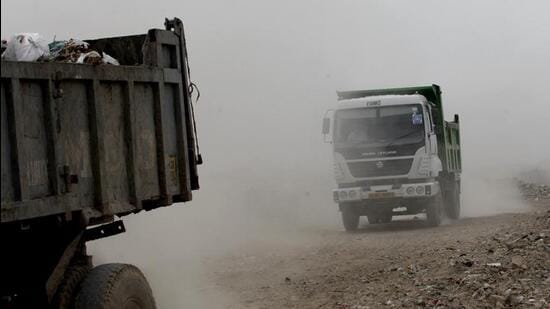
It is every resident’s dream to see Delhi provide these living comforts to its citizens. This is because, apart from bread and butter and affordable living spaces, the basic requirement for a city is a clean environment, in every sense of the word — with no garbage or filth strewn, lots of greenery, and smooth roads to facilitate the movement of traffic.
India’s Capital, Delhi, deserves much better treatment in so far as its management of municipal wastes is concerned.
It is every resident’s dream to see Delhi provide these living comforts to its citizens. This is because, apart from bread and butter and affordable living spaces, the basic requirement for a city is a clean environment, in every sense of the word — with no garbage or filth strewn, lots of greenery, and smooth roads to facilitate the movement of traffic.
The crisis
Over the years, Delhi’s population has been growing at a rapid pace, and in turn, its propensity to spend more, and generate more waste. With this, the generation of waste of all kinds — including hazardous wastes — has also been increasing with each passing year. The traditional practice of shuffling waste — to facilitate the escape of toxic gases and to remove the plastic and other wastes trapped in heaps — is helpful for smaller lots of waste, but doesn’t work for large amounts. Moreover, mere “shuffling” is not enough. As per rough estimates, waste generation may cross the mark of 12,000 metric tonnes per day, further adding to the accumulated wastes at the three crucial landfill sites, which are taking a far bigger load than they can.
Locating other sites in the Capital to dump wastes has also become a major problem, with the spread of urban conglomerates all over the city. Any effort to locate sites even on government land is met with stiff resistance. With “not in our neighbourhood” being the general response, it is becoming impossible to shift these dumping sites anywhere else in the land-locked Union Territory. Haryana and Uttar Pradesh also, understandably, do not allow the dumping of wastes in their areas.
Therefore, a solution to this mounting problem needs to be found within the city and its three landfills as soon as possible, lest the bomb of accumulating municipal wastes explode, causing serious health issues for citizens. There are also far-reaching implications that this delay will cause, in terms of the city’s economic growth. The need to rid the city of these “mountains of shame” must, therefore, become a priority.
Factor this:
To find a permanent solution to tackle the problem of municipal waste in the capital city, the following must also be considered: One, as mentioned, the lack of alternate sites. Two, the importance of segregating wastes to facilitate processing. Three, as types (such as electronic and hazardous) and quantities of waste increase, learning the best way to dispose of them. Four, fixing the problem of seepages of liquid waste into the ground, which pollute the groundwater table of the city.
Additionally, huge quantities of garbage at the three landfill sites — Bhalswa, Ghazipur, and Okhla — are decaying under anaerobic conditions, generating landfill gases which principally contain methane and carbon dioxide. Methane is a greenhouse gas (GHG) which is 25 times more potent than carbon dioxide, in its contribution to global warming. This makes it nearly impossible for mounting garbage to be managed, as the population keeps growing.
However, there is a way.
A recent study conducted by researchers in Italy found people living within 5 km of a landfill site are at an increased risk of developing lung cancer and other respiratory diseases. Given the circumstances, effectively insulating the three landfill sites from the general public by constructing a wall of sufficient width and height is imperative.
Constructing the walls: The construction and demolition wastes (C&D wastes) being generated daily in the city can be used for the construction of the walls. The findings of a test report of the samples taken from the dumping site at Ghazipur found the waste lying at the dumping site has 63% earth, aggregates, stone pellets, and C&D waste, 7% plastic and glass, and 30% organic waste, which can be used for generation of electricity.
The Council of Scientific and Industrial Research (CSIR) and the Central Road Research Institute (CRRI) have reportedly approved the use of recycled waste after mixing with bitumen among other processes to lay roads. If all the residual garbage is mandatorily lifted by the Railways, the National Highways Authority of India, the public work department (PWD), the Delhi Development Authority, and other state and central agencies for construction purposes, the end of Delhi’s waste problem could be near.
Fixing the seepage problem: One way to start is to facilitate the setting up of a large-scale waste-to-energy plant, while simultaneously insulating the ground-level surface, by using polythene of an appropriate thickness under reinforced cement concrete (RCC), also of appropriate thickness, to make it leachate-proof, thereby preventing its seepage into the ground.
The surroundings: The entrance to the site should be designed to enshroud the activities that occur within the boundary wall. The connecting road to the site should have at least four lanes on either side. These three sites would essentially become permanent factories to process municipal waste. The boundary walls at the sites — constructed with the C&D wastes — can showcase murals and paintings. Some space may also be commercially used to earn revenue, which can help recover operational costs. Plants of hardy varieties can be planted along the walls.
Simultaneously, the landfills must be made fully inert, by extracting the trapped GHGs. A beginning was made at the Ghazipur site by the Gas Authority of India Limited to commercially exploit the trapped gases through a pilot project on a plot of four hectares to enrich the landfill gases to natural gas quality for utilisation as CNG.
There is no other way to effectively, practically, economically, and permanently deal with the accumulated mountains of garbage at the three landfill sites. The larger public interest could be well served by establishing permanent factories for holistically processing municipal wastes without polluting the environment.
A beginning must be made.
KS Mehra was commissioner of unified MCD from 2008 to 2012
The views expressed are personal
One Subscription.
Get 360° coverage—from daily headlines
to 100 year archives.
Archives
HT App & Website