
 E-Paper



The road ahead for the next Congress president
The new chief will have to grapple with three challenges — the upcoming assembly elections in the short term, expanding its organisational base in the medium term, and telling the public what the Congress stands for in the long term

 Prefer HTon Google


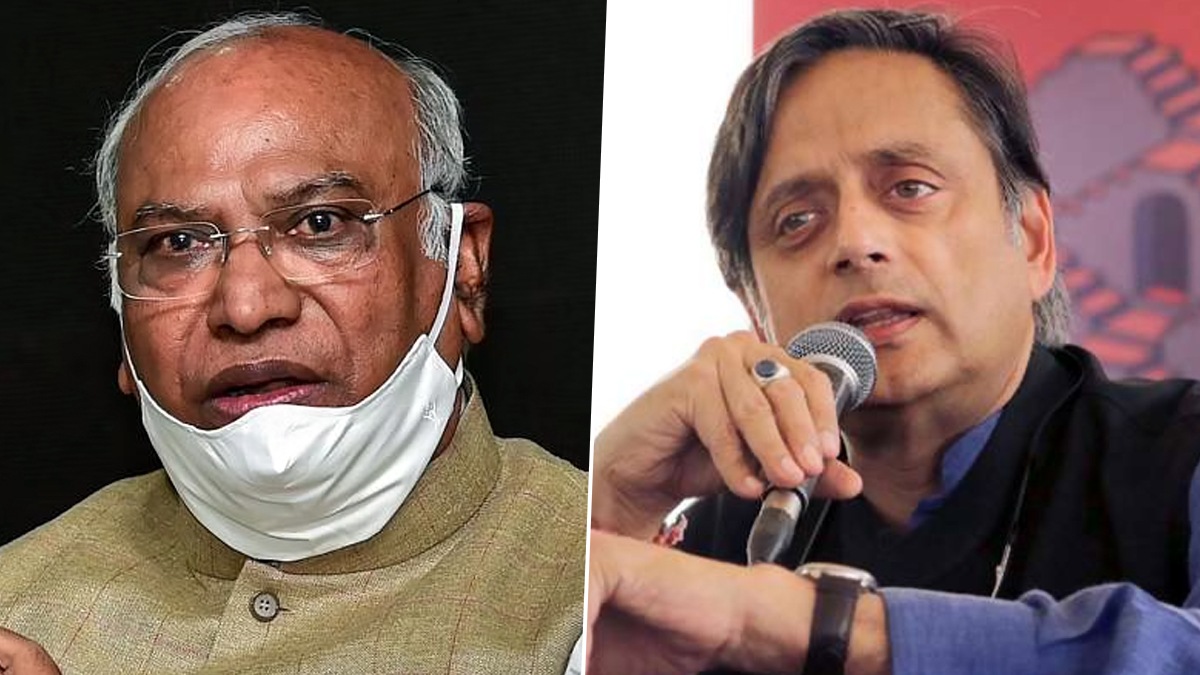
At 8am on Monday, people will begin streaming into a white one-storey building on 24, Akbar Road in central Delhi – the headquarters of the 136-year-old Indian National Congress. Inside, set up in one room, will be a ballot box, with the election committee of the party handing out printed, black and white ballot papers with the names of the two candidates vying to be the next president of the party – former leader of the Opposition in the Rajya Sabha Mallikarjun Kharge and former Union minister Shashi Tharoor. Each voter will have to fill in their delegate and membership details in the ballot paper before depositing it in the box. By evening, observers expect that members of the All India Congress Committee and others such as Members of Parliament would have cast their vote to elect their next leader who is going to most likely steer the party in the next general elections. Simultaneously, across the country, the process will be repeated in its 28 state capitals for members of the Pradesh Congress Committees and other district-level leaders who make up the 9,000-people-strong electoral college of the party. Two days later, the ballots will be counted to determine the successor to its longest serving chief, Sonia Gandhi.
The Congress planned this election as a showcase of its robust internal democracy as part of its initiative to simultaneously revamp both its organisation and grassroots connect (with the ongoing Bharat Jodo Yatra led by Rahul Gandhi making its way from the southern tip of the country to its northernmost extremities) in a bid to rejuvenate its cadre, dispirited after a string of brutal electoral reverses. Instead, the process has been mired in controversy and embarrassment for the party with an unprecedented rebellion in Rajasthan virtually challenging the authority of the party chief and eventually nixing the candidature of the one-time frontrunner for the post, chief minister (CM) Ashok Gehlot.
Questions were raised about the fairness of the process with suspense over whether the party establishment was backing one candidate (first Gehlot, then briefly Digvijaya Singh, only for Kharge to be pushed into the fray on the last day of filing nominations). But these questions notwithstanding, and irrespective of the nature of the election itself and how much influence continues to vest with the Gandhi family – it is almost certain that the first family of the party will continue to retain the levers of power in the party, if in private – the next president of the party will have his task cut out.
The two candidates have contrasting areas of strength – Kharge, 80, is a veteran leader with close ties with the Gandhi family and someone who rose through the ranks. He has relationships with other senior Opposition leaders due to his long stint in Parliament, has won elections since the 1970s in Karnataka, and will be the first Dalit chief of the party in half a century (after Jagjivan Ram in 1970-71). Tharoor, on the other hand, is media savvy and articulate, with a wide following among young people and has won three hard-fought terms from Thiruvananthapuram. But whoever is anointed the next Congress chief on October 19, he will have to grapple with three challenges – over the short-term, the medium-term and the long-term.
The short-term challenge is electoral. Assembly polls in Himachal Pradesh have been notified already and those in Gujarat are also expected to be conducted before the end of the year. In both states, the party is in trouble. In Himachal Pradesh, the party appears to be banking on the state’s political tradition of voting out the incumbent without setting its house in order. There are at least three claimants to the CM’s chair within the party but no face who can command popularity across the state (like former CM Virbhadra Singh, who died last year, could), the campaign has not picked up steam yet though the Bharatiya Janata Party (BJP)– hoping to repeat its feat of breaking this particular trend of incumbents losing power in neighbouring Uttarakhand – has pressed in Prime Minister Narendra Modi, home minister Amit Shah and party chief JP Nadda (it’s his home state) into the campaign already.
In Gujarat, the party is now a shadow of its robust self that gave the BJP a run for its money and posted the best results in a generation in 2017. Senior leaders have left, the messaging of the campaign is unclear, key demographics that backed the party in the last polls have been placated by the BJP (such as the Patels, who propelled the Congress to success in Saurashtra) and the party is fending off a challenge from the Aam Aadmi Party (AAP) which is looking to carve out a space in the Opposition camp.
The next president’s first challenge will be to figure out a way to run these two campaigns effectively (remember that the Bharat Jodo Yatra will be running separately), deal with regional satraps and competing ambitions and put up a credible fight against the BJP. These may be early days, but if the Congress flounders in its first direct confrontation with the BJP, the next chief will find his position greatly weakened.
The medium-term challenge is organisational. A party is only as effective as its grassroots network disseminating its political promises, messaging and attacks on opponents. The party already starts with the problem of being a mass-based outfit that depends on patronage networks nurtured by power, not a cadre-based machine that can withstand some years in the wilderness. With senior leaders deserting the party in droves, morale is low especially when the average worker sees their political superiors crossing the political bridge to greater rewards and the unpredictable and somewhat irresponsible behaviour of its own leadership.
The next chief will need to stem this rot, infuse some enthusiasm among the ground-level organisation by revamping state units riven by infighting and ossified leadership with little connect to the people, and make sure that the party has muscle enough to turn crowds into votes, carry political messages to homes and over phones, discipline senior leadership used to public squabbles to settle disputes and find a way to do it without inciting unrest and desertion. And, he will also have to find a way to do it while managing a delicate balance with the Gandhis.
The long-term challenge, though, is ideological. A political party needs to have a vision that is both agenda setting in a country with rising aspirations and aggregating interest groups in a political space where resources are limited and disparate groups are vying for it. What does the Congress stand for? Is it advocating Nehruvian secularism or Mandir-style soft Hindutva politics? Will it adopt a hard-line foreign policy and national security? Does it see itself as a social movement? What is its stand on welfare? How will it ensure economic growth in a difficult global environment? The party’s stand on issues such as this is muddled and this will be particularly damaging in the summer of 2024 when people will have to make up their minds between the BJP (which has a clear ideological agenda of welfare delivery, cultural pride and power to Hindus, strong national security and has the most effective vehicle to articulate that message, Modi) and the Congress. Remember also that the Congress will have to fend off claimants to its 120 million-odd voter base from the Opposition camp – the AAP banking on its governance model and several regional parties on their grassroots strength and charismatic CMs.
It is in crafting an ideological message that is distinct, clear, coherent and rousing that the real test for the next Congress chief will lie.
letters@hindustantimes.com


