I wonder how many of you are following the Special Intensive Revision (SIR) exercise currently underway? I ask because it could affect your right to vote. Some of the facts that have emerged are disconcerting. They raise deep and fundamental questions.
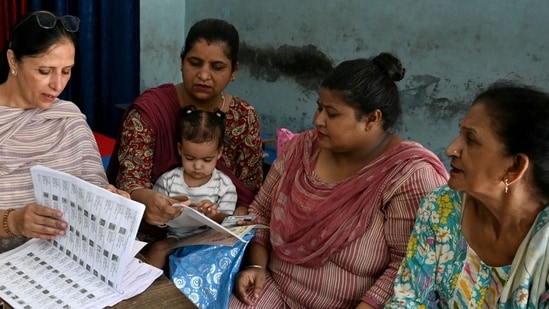
For instance, it’s reported that the voters list in 17 of the 19 states and Union Territories where the third phase of SIR is being conducted has shrunk by over 15%.
This means net SIR deletions in the 30 states/UTs where at least its first phase is over are around 12 crore. Maharashtra alone might drop 2 crore voters; 32.8% could be lost in Delhi, 12.8% in Chandigarh. These are huge numbers.
Separately, Hindustan Times has reported that 1.1 million Delhi voters were inexplicably deleted from the rolls even before the SIR exercise began. This happened between January 2025 and June 2026.
It sharply contrasts with the fact that between the state assembly election of 2020 and the Lok Sabha election of 2024, 0.4 million were added whilst a similar number were added between the 2024 Lok Sabha election and the 2025 state assembly election. Why were they dropped? There’s no available explanation.
Surely as the population increases, the number of voters should increase as well? Doesn’t that stand to reason? Government estimates put the adult population in 2024 at 99 crore. At that time, the voters list was 98 crore. That was almost an exact match.
{{/usCountry}}Surely as the population increases, the number of voters should increase as well? Doesn’t that stand to reason? Government estimates put the adult population in 2024 at 99 crore. At that time, the voters list was 98 crore. That was almost an exact match.
{{/usCountry}}Today, Yogendra Yadav, the national convenor of the Bharat Jodo Abhiyan, says the adult population could be 103 crore but the voters list is likely to shrink to 88 crore — 15 crore voters could have been deleted. That’s a very sizeable number.
It’s facts like these that have, no doubt, led Ashok Lavasa, a former election commissioner, to question the SIR exercise. It may be legal, as the Supreme Court has ruled, but is it fair?
Take the example of Bengal, where 27 lakh cases have been sent to tribunals because of alleged logical discrepancies. Right to Information replies have revealed that some 82,000 have been adjudicated and in 91% of the cases, it was found the names were wrongly deleted. They had to be restored. Doesn’t that raise serious questions about the credibility of this category called logical discrepancies? Doesn’t the Election Commission owe us an explanation?
Or take the smaller example of Delhi. The Hindu reports that, as a result of the SIR exercise, in 24 of the 70 assembly constituencies there are now fewer electors than the number of people who voted in the assembly elections of 2025. Frontline reports that in polling booth 33 in Chandni Chowk out of 909 voters, 908 have been deleted. Doesn’t that raise questions about the accuracy and credibility of the SIR exercise?
After Bihar, phase two and phase three of the SIR exercise requires voters to be mapped to the 2002 electoral rolls. But what’s so sacrosanct about 2002, asks former chief election commissioner SY Quraishi. He reveals that his own father’s name was misspelt in that year. That’s unlikely to be the only error.
If something similar happens to you, you could be dropped as a voter on the grounds that your citizenship is questionable. Under the SIR exercise block level officers (BLOs) — mostly government school teachers — have been given the authority to decide whether a voter, who is already on the rolls and has voted earlier, is a citizen of India and can continue on the rolls. Is it right to give such powers to BLOs?
First in Bihar and then in Bengal, Kerala and Tamil Nadu, the SIR exercise was held just before the elections were due. Given all the problems that have occurred — many of which were predictable — why did it have to be held at this time and in such a compressed timeframe? This question has been often asked but never answered.
Elections are one of the cornerstones of democracy. But if the electoral rolls are questionable, or even doctored as some fear, how much damage will that do to India’s democracy? That’s the final question I want to leave you with.
Karan Thapar is the author of Devil’s Advocate: The Untold Story. The views expressed are personal