The numbers have increased and I am very happy about that. It proves a few points — that the species is effectively protected habitat-wise and animal-wise.
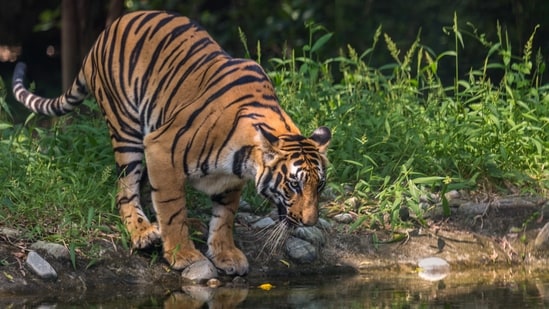
Now, the tiger numbers have increased in the protected areas, which proves a second point and as a corollary to that, there are hardly any tigers left outside protected and Project Tiger areas. When we began Project Tiger in 1972, the majority of the tigers were outside protected areas because the number of reserves
The numbers have increased and I am very happy about that. It proves a few points — that the species is effectively protected habitat-wise and animal-wise.
Now, the tiger numbers have increased in the protected areas, which proves a second point and as a corollary to that, there are hardly any tigers left outside protected and Project Tiger areas. When we began Project Tiger in 1972, the majority of the tigers were outside protected areas because the number of reserves was low, at most 15. Now, there are over 50 tiger reserves.
The area has greatly increased, but where are the tigers outside the 50+ tiger reserves and national parks and sanctuaries? Practically nowhere. It means they can only survive or they have a future only in sanctuaries. While the same report says that numbers have gone up, there is a controversy that the numbers may be jigged. There has always been that doubt because since we are so dependent on numbers, the park wardens are very scared of any reduction.
Further, even if the numbers are as they are (the report this time says they were also counted, camera-trapped apart from extrapolation), are there any tigers outside of the protected area system in this country? The answer will be practically none. What happens when these tigers explode out of the parks and sanctuaries? For example, more than half the lions now are outside parks in Gujarat. How many new protected areas have the tiger states established from 2000 onwards? Practically none.
Corridors are conduits from which tigers can move from one protected area to another, though they run a risk of being killed. But it does provide a conduit. How many conservation reserves have been set up? I can’t remember any. On the other hand, there is a notification that states that coal blocks will be allowed even in the buffer areas and corridors, so even in heavy forest areas. Even those blocks are now opened up to mining. So, what future do you have for tiger numbers increasing and the safety of tigers outside protected reserves? They (tigers) multiply, so where will they go?
Future of tigers in India
India needs to establish new national parks and sanctuaries and effectively protect them. This protection will not be just for tigers. For 50 years I have believed that biodiversity in India, both floral and faunal, has a future only in effectively protected areas. Once tiger numbers increase further, the conflict with man will increase, and the sufferer will be the tiger. The only other future seems to be that we export tigers. So perhaps we have to export tigers in future (laughs).
Reintroduce tigers from India to other tiger-range countries
I would support helping other countries. After all, it's one planet. But there is a caveat. No tiger should be caught and sent from any protected area. You capture them from outside and only those that are a problem. The breeding nucleus must remain. We can export only after we ensure none of our parks are short of their full carrying capacity. We should meet our own ends first.
Expand our vision of wildlife
There has been a call in the past which I have challenged: If you have saved the tiger, you have saved Indian wildlife. I do not subscribe to that. The tiger is a wonderful umbrella species, but overfocusing on the tiger can be counterproductive. I am not denigrating the importance of the magnificent tiger. This overfocus leads to a diversion of focus on the loss of habitat of other species elsewhere. The conservation in India has become far too mega-mammal-specific. Tiger, number 1; Lion, number 2; Rhino, number 3 and so on.
The lack of adequate knowledge and great enthusiasm for tigers is harming other species. Those species matter in this country even though they are not charismatic (like the tiger is considered). We do not understand fire ecology, for example. The burning of the forest (as done by some during safaris, for example) to show (people) the tiger or other animals has caused a huge decline in Hog Deer numbers in Corbett National Park.
Did we have a target in mind in the 1970s when Project Tiger began?
No. We were worried about the extinction of the tiger at that time. There were other species on the brink but the government and people caught on to the tiger. Very rightly so. For the first time when we did the enumeration, there were around 1,800 tigers left. We followed the pug mark counting process so it was less precise compared to today’s methodology. That was a very low number. It was an eye-opener and set into motion a number of actions. The first being the enactment of the Wildlife Protection Act.
From 1972 to 1990, a lot of reserves and protected areas were created. In my own case of Madhya Pradesh (MP) where I set up many parks, when two ministers wanted the denotification of tiger parks, I used to say, “We have to inform Madam Gandhi about it” and they would back off. Conservation happens top to bottom in India not the other way around. After my departure from service, they denotified some sanctuaries in MP.
MK Ranjitsinh is a former bureaucrat and one of the main architects of the Wildlife Protection Act 1972
(As told to HT's Jayashree Nandi)
The views expressed are personal
One Subscription.
Get 360° coverage—from daily headlines
to 100 year archives.
Archives
HT App & Website