The recent announcement of the Union government on free food grains to beneficiaries of the 2013 National Food Security Act (NFSA) is both ironic and politically savvy, especially in the context of the debate on freebies. While the Bharatiya Janata Party (BJP) voted in favour of NFSA, with many party leaders arguing for an even more expansive law, early into its term at the Centre, there were attempts to undermine the benefits of the public distribution system (PDS) and replace
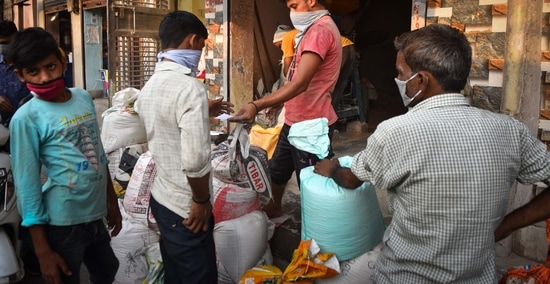
The recent announcement of the Union government on free food grains to beneficiaries of the 2013 National Food Security Act (NFSA) is both ironic and politically savvy, especially in the context of the debate on freebies. While the Bharatiya Janata Party (BJP) voted in favour of NFSA, with many party leaders arguing for an even more expansive law, early into its term at the Centre, there were attempts to undermine the benefits of the public distribution system (PDS) and replace it with cash transfers. Since 2015, almost every Economic Survey has argued for a reduction in PDS coverage and an increase in the issue prices. The Shanta Kumar Committee (2015) also had similar recommendations.
Nevertheless, PDS has continued, and emerged as a lifesaver during Covid-19. There is a tacit acknowledgement of the crucial role being played by PDS in the government’s repeated extension of the additional grains under the Pradhan Mantri Garib Kalyan Anna Yojana (PMGKAY) until the end of December 2022, and then somewhat sweetening its withdrawal by making the existing legal entitlements under NFSA free for one year.
While there are political compulsions behind these moves, the economic agenda is clear. While seemingly making a progressive pronouncement, the government is moving towards a drastic reduction of food subsidies and taking attention away from the reduced procurement from farmers. The government is saving around ₹1.8 lakh crore, which was the additional expenditure on PMGKAY, and spending about ₹18,000 crore to give free grains under NFSA. While around 60 million tonnes of rice were procured in 2020-21 and 2021-22, the procurement in the Kharif marketing season for 2022-23 is around 36 million tonnes. Last year, wheat procurement was less than half of what it was in previous years. Official production figures do not show a fall of such scale — with market prices rising and no commensurate increase in minimum support price (MSP), the procurement has not kept pace with the needs of an expanded PDS this year.
This could have serious implications for the food security of many households. There are indications that the distress caused by unemployment continues, and is exacerbated by recent food inflation. In such a scenario, withdrawing the additional 5 kg being given for free under PMGKAY may end up hurting many households. This is nowhere compensated by the remaining grains being given for free. The free grains under NFSA results in a saving of only ₹10 to ₹15 per month per beneficiary, whereas they would have to spend additionally around ₹125 per person per month to buy an equivalent amount from the market. Instead, the additional food grains must be continued for a longer period, for which procurement needs to be stepped up while also undertaking more substantial PDS reforms.
PDS can be an effective instrument towards ensuring food security. The existing procurement and distribution network can be expanded, strengthened and decentralised to include pulses and edible oils in the PDS basket. Pulses were distributed nationally during the first phase of PMGKAY in 2020, and several states include these in their PDS basket. They contribute to the protein and fat requirement and enable diversifying diets. This is important because most Indians have a cereal-heavy diet with insufficient consumption of foods from other food groups. Prices of pulses and oils have also been volatile in the last few years, partly due the import dependence, making their consumption uneven. Procuring them at assured prices for PDS could also contribute to increasing production and moving towards self-sufficiency. Similarly, including millet in PDS and diversifying school and anganwadi meals to include eggs, fruits, and other proteins could together aid in improving diets and nutritional outcomes.
Another issue facing PDS is coverage. While NFSA entitles 67% of the population to subsidised rations (75% in rural areas and 50% in urban), owing to the fact that the population figures of the 2011 Census continue to be used for calculating the number of beneficiaries, the coverage under NFSA is around 60% of the current population. This has also been pointed out to the Supreme Court (SC), which asked the government to consider using the population projections data of the ministry of health, rather than waiting for the next census. Using current population figures could add about 100 million beneficiaries to NFSA, Jean Dreze and Reetika Khera estimated. The government does not seem interested in addressing this issue, as is evident in its affidavit to the SC, where it has argued that PDS coverage needs to be reviewed as an increase in per capita incomes in the last 10 years indicates reduced need.
NFSA has taken the first step in protecting cereal security for many. Many states such as Bihar and Uttar Pradesh seem to have seen a major turnaround in PDS implementation due to the expansion in coverage, price reduction and other reforms by NFSA. It is time to further consolidate these gains and move towards food security for all by strengthening PDS. Rather than short-term announcements, tinkering with price and quantity, what is required is a longer-term vision where PDS is reformed, evaluating concerns related to nutrition, the environment and farmers’ income. This would mean a more decentralised system where various crops are procured across the country.
A decentralised storage and distribution system can be worked out where local procurement is used where available, with a centralised agency coordinating the transfer of surplus to deficit areas. Other food distribution programmes, such as anganwadis and school midday meals, should also be part of this integrated planning. The debate on free grains and the attempts by the government to reduce the coverage are only diverting attention away from these substantial issues.
Dipa Sinha teaches economics at Dr BR Ambedkar University, Delhi
The views expressed are personal
One Subscription.
Get 360° coverage—from daily headlines
to 100 year archives.
Archives
HT App & Website