
 E-Paper



View: Why does ‘turning the other cheek’ not make strategic sense?
If India has to sit on the global high table, then it must read the mind of its adversaries and competitors through hard intelligence.

 Prefer HTon Google


New Delhi: External Affairs Minister Subrahmanyam Jaishankar reflected the mood of the nation when he said that the “smart strategy of turning the other cheek” does not make sense. “ If somebody is practicing cross-border terrorism, you must respond, you must extract, impose a cost out there,” he said while addressing the media last Saturday.
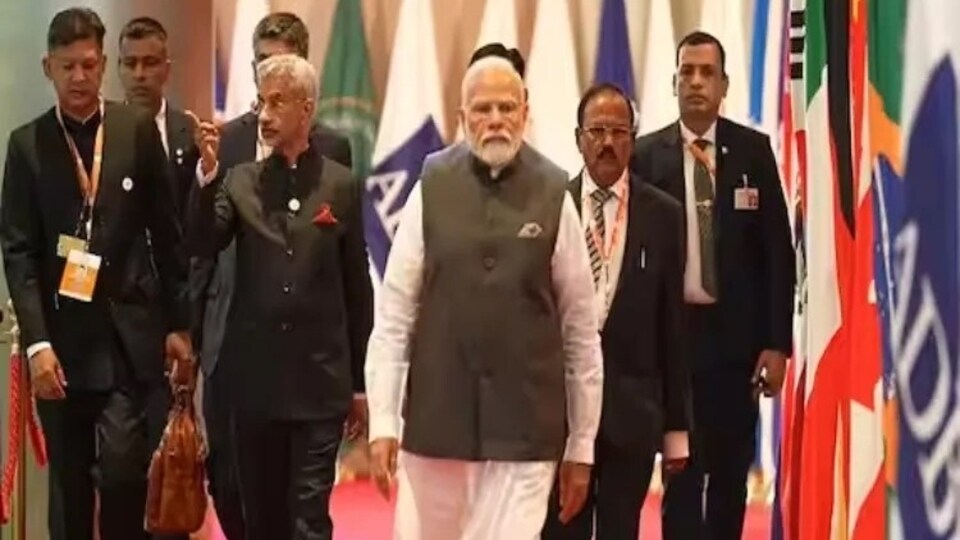
Extrapolating the erudite minister’s thought, it means that India under Prime Minister Narendra Modi refuses to take things lying down when it comes to national security issues or core concerns. This was not a message to merely western neighbor Pakistan but also to a distant pretender Canada, where maverick Justin Trudeau is allowing radical Sikh proponents of Khalistan to divide the Indian diaspora in distant land for domestic political objectives. Of course Trudeau is hopping mad on how a third world country is calling out a G-7 power and a Five Eyes alliance partner on promoting insurrection in India through terrorists and extremists sheltered in Canada.
The current public mood, rightly assessed by Minister Jaishankar, is that India will protect its national interests be it off the Gulf of Aden in high seas or against Islamic jihadists in Pakistan or expansionist China or so-called Khalistan elements taking shelter in Canada, US and UK or Germany.
However, the key to safeguarding Indian national interest is availability of actionable/operational intelligence and not readouts from western newspaper reports as was the case pre-2014. If India has to sit on the global high table, it has to develop indigenous capabilities on collecting operational intelligence rather than rely on scraps of intelligence from friendly countries or associates as they are called.
Fact is what India needs is hard intel not assessments and interpretations from analysts who have not done work on ground or field. It is like getting a decision from a police officer on how to handle a communal riot when the man himself has never ever handled law and order situations on ground zero. Analysis can never replace actionable intelligence but can only sharpen the government response.
The question that the Indian intelligence needs to ask itself is why the Chinese Army transgressed across the Line of Actual Control in East Ladakh on May 5, 2020 ? What were the real reasons behind the Chinese transgressions in East Ladakh and who ordered the PLA to create military upheaval in Ladakh? Can we even today answer the exact reasons why China waged a 1962 war on India under Jawahar Lal Nehru? Why did the erstwhile Soviet Union look the other way in 1962?Fact is that the Intelligence Bureau chief at that time was categorical that China will never attack India and this statement is part of official record. More than sixty years later, can we provide an explanation on why Chinese President Xi Jinping removed his Foreign and Defence Minister in quick succession. That China is behind a bamboo curtain is no answer but a mere justification.
Given the open society that India is, its adversaries or even competitors get ball by ball account on decision making or plans through the newspapers, TV channels or social media but the Indian government hardly gets similar intelligence from Pakistan, China or even countries in the west. And the worst part is that the Indian government is satisfied with it or has learnt to live with it without asking for more. Simply put, this is akin to turning the other cheek in operational intelligence terms.
While Jaishankar’s statement reflects the mood of the nation, it needs to percolate within the Indian intelligence, which is mired in bureaucratic red tape and functions like CPWD most of the time. Not turning the other cheek makes sense but it also requires best tools, practice, and initiative on part of intelligence agencies to present the government of the day with credible multiple options to respond to any threat. And this requires huge human and technical resources as well as top quality leadership based on merit and not merely seniority. Pre-emption is always better than retaliation.


