
 E-Paper



What do women farmers need in this budget?
The feminisation of agriculture, driven by the migration of rural men to urban centres, makes climate-resilient ecosystems a priority. Here’s why

 Prefer HTon Google


In the vast landscape of Indian agriculture, women play a pivotal role, constituting around 43% of agricultural labourers globally and a staggering 84% in rural India. Despite their substantial contribution, women farmers face numerous challenges such as a lack of land rights and minimal representation in decision-making processes. In the interim budget, which will be presented on February 1, climate-positive allocation can empower women farmers to address the multidimensional aspects of their work and associated small-scale industries.
What does gender have to do with climate challenges?
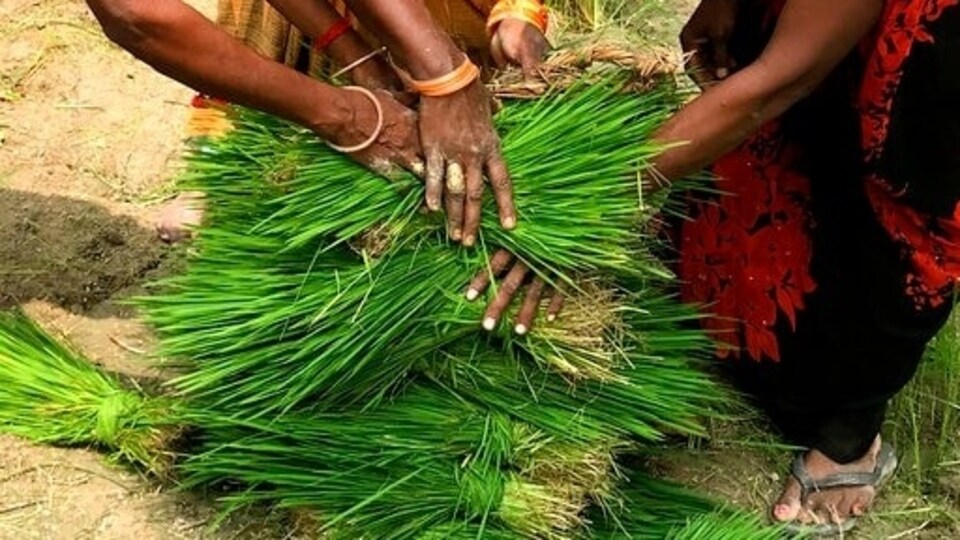
Women account for 33% of the cultivators and 47% of agricultural labourers in India. The feminisation of agriculture, driven by the migration of rural men to urban centres, highlights the increasing roles women play in all stages of farming, from cultivation to post-harvest activities. As men migrate in search of better opportunities, women actively cultivate crops, going beyond traditional roles to food processing and marketing. But their role in marketing is limited to the local haats (rural markets).
Their close connection to the land positions them as key contributors to innovative farming techniques and sustainable practices, but their drudgery does not reduce. Back-bending work impacts a woman’s reproductive health and nutritional levels. She is not acknowledged as a farmer due to a lack of land rights and thus, receives no benefits as a farmer. What’s more, climate-change-based vagaries exacerbate the problems women agriculturists face with limited access to natural resources like land, water, forests, equipment, schemes of the government, inputs and subsidies.
The installation of solar-based irrigation systems in regions like Madhya Pradesh has benefitted women to grow high-value crops and earn higher incomes. By substituting manual irrigation with mechanical irrigation, women’s workloads can greatly decrease. Agriculture practices need to be gender-smart, and this is crucial to mitigate the impact of climate change. Recognising their role in fostering long-term well-being is essential for crafting a budget that supports climate-positive practices.
Budgetary commitment
In India's first State of Elementary Education in Rural India report, released in August 2023, we, at Transform Rural India, with the support of the data intelligence unit located in the ministry of rural development sought to uncover the extent to which parents influence their child’s educational outcomes. It revealed that 36.8% of girls cited the need to earn for their families as the reason for leaving school, which highlights farming as the only source of livelihood for women in rural India. Initiatives like the Mahila Kisan Sashaktikaran Pariyojana under the National Rural Livelihood Mission (NRLM) have been instrumental in acknowledging and enhancing the visibility of women farmers.
Thus, there is increased investment in programmes like the Mahila Lakhpati scheme, which aims to diversify livelihoods, promote collective initiatives, and provide access to credit for women farmers. Innovations such as the Nari Adhikar Kendra, a community and women-led institutional mechanism established in 2022 in Madhya Pradesh, address issues beyond agriculture, including gender-based violence, child marriages, and technical support for women entrepreneurs.
This approach integrates gender-transformative strategies, fostering economic empowerment and enhancing women's labour force participation. Women entrepreneurs and agri-entrepreneurs can be encouraged in the cultivation of millets, processing, and running mills.
What does a climate-positive budget look like?
As the 2024-25 budget takes shape, it must reflect the importance of women farmers in India's economy and environment. A climate-positive budgetary approach can empower women, recognise their invaluable contributions, and pave the way for sustainable, gender-smart agriculture practices. It needs to create the intersectionality required for women farmers in India. While their contributions go unseen in the grand scheme of things, the budget 2024-25 needs to reflect their importance in the economy as well as the environment.
In "Exploring gender approach to climate change and agroecology: Women farmer's search for agency in India", published in the Asian Journal of Social Science (Volume 51, Issue 1, March 2023), Pushpa Singh pointed out how climate change has a gendered nature, disproportionately affecting women due to entrenched patriarchal systems. Socially structured gender roles create specific vulnerabilities for women, restricting their access to key decision-making processes. The upcoming budget needs to recognise and address the specific vulnerabilities women farmers face, creating an intersectional framework that acknowledges their contributions and challenges.
By ensuring investment in agri-entrepreneurship, access to credit, equipment, and asset creation, as well as infrastructure facilities, a community-first design that helps women — and the environment — will help make our agricultural practices climate resilient.
Seema Bhaskaran is the gender lead at Transform Rural India, a Delhi-based NGO that is designing solutions to transform rural localities in India. The views expressed are personal


