On June 5, Prime Minister Narendra Modi launched a critical initiative: “Lifestyle for the Environment — LiFE movement”, stressing human-centric collective efforts and robust actions to boost sustainable development.
Sustainable development is crucial if we are to tackle the climate crisis. But, unfortunately, there is an alarming lacuna in the knowledge about the climate crisis. A 2017 HT-MaRS Monitoring and Research Systems Youth Survey in India revealed over 74% of people (18 and 25 years) were unaware of how greenhouse
On June 5, Prime Minister Narendra Modi launched a critical initiative: “Lifestyle for the Environment — LiFE movement”, stressing human-centric collective efforts and robust actions to boost sustainable development.
Sustainable development is crucial if we are to tackle the climate crisis. But, unfortunately, there is an alarming lacuna in the knowledge about the climate crisis. A 2017 HT-MaRS Monitoring and Research Systems Youth Survey in India revealed over 74% of people (18 and 25 years) were unaware of how greenhouse gases caused global warming. Equally worrying is that renewable energy was an enigma to 70.9% of respondents. This knowledge gap on the climate crisis makes climate education necessary for young people. An increasingly influential India must seize on years of research and numerous policy-led initiatives, including a move to revamp the national school curriculum to move it away from rote learning towards critical thinking, and create engaging and locally suited climate courses.
Introducing climate education will require serious efforts by the central and state governments, schools, non-governmental organisations, climate mitigation agencies, senior academia, scientific bodies, international organisations, and the private sector to collaborate and create a curriculum for students.
As a representative of a leading Indian clean energy company, I believe our efforts, the overall clean energy sector and the country’s fight against the climate crisis cannot succeed if the youth are not the primary stakeholders in the battle. To this end, ReNew has created a unique online course that aims to create a new generation of climate advocacy champions. Through such targeted courses, we can create climate ambassadors — young people who will lead India’s journey towards net-zero and imbibe the basic tenets of the LiFE movement that emphasises “mindful and purposeful usage” rather than “mindless and wasteful consumption.”
For example, the course deep dives into sustainability, safeguards against the climate crisis and climate entrepreneurship and is being discussed with the government. We have made this course voluntary, ensuring it will supplement the traditional curriculum and take only one hour a week. It will also make learners aware of the government’s social welfare schemes linked to the 2030 Sustainable Development Goals.
We will roll out the climate curricula to 100 schools across 10 states this year, including Uttar Pradesh, Gujarat, Karnataka and Rajasthan, in Hindi, Gujarati and English. This pilot will cover around 20,000 students.
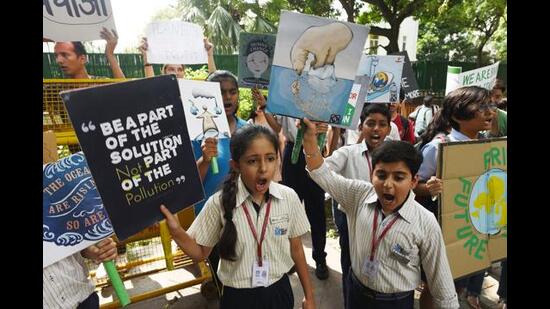
From climate activist Greta Thunberg in Sweden to Hina Saifi and Sneha Shahi in India, the youth are creating awareness about the climate crisis and sustainable lifestyles. We owe it to the youth and children to help channelise their inspiring activism, broader climate questions and receptive minds into a structured path, driven by facts, experiments and a practical approach towards climate crisis mitigation, and do so in an organised, engaging, locally relevant, and timebound manner. This climate crisis education could help climate and ecological sensitivities become a part of their real life.
Vaishali Nigam Sinha is the chief sustainability officer, ReNew Power, and chair, ReNew Foundation. The views expressed are personal
One Subscription.
Get 360° coverage—from daily headlines
to 100 year archives.
Archives
HT App & Website