Undeterred by weather or wallet, they do their bit — hold up placards, shout slogans, lobby lawmakers, and, involuntarily, prefix “our” to references of Indian prime ministers.
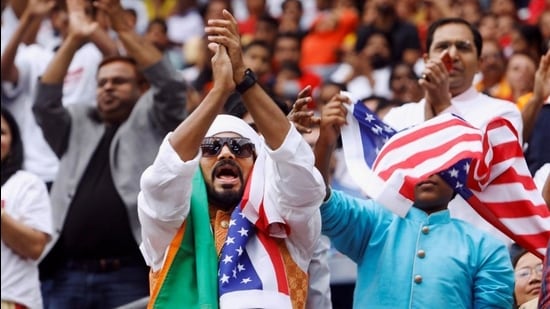
They still do their bit, but not as often as they did once. Their children? Even less. “The diaspora that the Indian government has come to know is not static,” says a new report based on a 2020 survey of Indian-Americans. Indian-descent Americans born and raised in the United States (US) “exhibit different sensibilities both with respect to politics in India as well as politics closer to home”. They are also “less engaged with India and more US-focused than their parents’ generation”.
This aspect of the report — “How Indian Americans view India? Results from the 2020 Indian American Attitudes Survey”, authored by Devesh Kapur, Milan Vaishnav and Sumitra Badrinathan — merits more attention. Second-generation Indian-Americans tend to be more American than Indian, as compared to their parents, and are, therefore, less indulgent and forgiving of India.
Just a little over a third of those born in the US — 36% — said they felt extremely or well-connected to India, compared to the nearly six out of 10 — 59% — of foreign-born naturalised Indian-Americans who felt the same way. Twenty-five per cent of US-born Indian-Americans said they felt not too, or not at all, connected, compared to just 15% naturalised Indian-Americans.
US-born Indian-Americans are not only less connected to India, they are also more likely to identify themselves as liberal — 55% to 41%. They tend to be more concerned about human rights, democratic values and rights of minorities, issues that have tested every government in India, of one party more than the others.
{{/usCountry}}US-born Indian-Americans are not only less connected to India, they are also more likely to identify themselves as liberal — 55% to 41%. They tend to be more concerned about human rights, democratic values and rights of minorities, issues that have tested every government in India, of one party more than the others.
{{/usCountry}}Indian-Americans matter. They lobbied the US Congress and the White House to lift sanctions slapped by President Bill Clinton in response to the 1998 Pokhran-II nuclear tests, which were eventually removed by President George W Bush. They rallied — partly mobilised by Prime Minister Narendra Modi, who was then a rising Bharatiya Janata Party leader, and Sushma Swaraj — to pressure Congress and the administration to punish Pakistan for the Kargil intrusion in 1999. And they helped facilitate the 2008 passage of the India-US Nuclear Agreement, a landmark development that changed the bilateral relationship forever. In 2016, the community helped block the Barack Obama administration’s sale of F-16s to Pakistan.
India has shown its gratitude to them with the highest civilian awards. It’s time for the government to reach out to their children, the second-generation Indian-Americans, who are now moving into key government positions. And that should not be difficult.
The same study that flags the issue provides the clue. Second-generation Indian-Americans, born in the US, don’t travel to India much; so “Destination India” might not work. But 51% of them said they had watched Indian movies/television in the last month; and 67% of them had eaten Indian food over that period. Could food and films be useful conversation starters?
yashwant.raj@hindustantimes.com
The views expressed are personal