
 E-Paper



Independence Day Special: Golden moments of Indian sports - Part 2
Hindustan Times takes a look at seventy-two moments of sporting glory in our Independence Day special. Here is the second of a three part series.


It has been more than seven decades since India broke the shackles of colonialism. Even as a fledgeling nation took its first steps towards growth and development after its independence from British rule on August 15, 1947, sports became an instrument of instant global recognition. The relentless pursuit of glory on a sporting field gave birth to new aspirations and also provided a vent for patriotic fervour. There have been several milestones achieved in multiple sporting disciplines over these years by Indians. We, at Hindustan Times, will take a look at seventy-two such moments of glory in our Independence Day special. Here is the second of a three-part series.

ALSO READ: Independence Day Special: Golden moments of Indian sports - Part 1
26) 1982: India hosts Asian Games for the second time
In what was a show of strength by then Indian Prime Minister Indira Gandhi, India hosted the Asian Games for the second time in New Delhi in the year 1982. India finished fifth in the medals table and there were several memorable performances by Indian athletes in front of home crowd. Doordarshan, India’s national broadcaster, started colour broadcasting for the first time during the event.
27) 1983: Kapil’s Devils stun Windies to win World Cup
This was perhaps the moment which changed the way India watched and consumed sports. The Indian team had been dismal in the first two World Cups and not much was expected from the team, led by Kapil Dev, during the 1983 Prudential World Cup. But the script changed, the moment India beat two-time reigning world champions West Indies in their opening game of the tournament. But defeats against the Windies, in the reverse fixture, and Australia left the Indians staring at an early flight back home. In the must win match against Zimbabwe, the team was five wickets down from 15 runs before skipper Kapil Dev played the innings of a lifetime. His unbeaten 175 formed the foundation of an Indian victory. India went on to defeat England in the semi-final and then upset West Indies in the final, Mohinder Amarnath played a starring role in both matches, to not just change the cricketing hierarchy but also give India an all new passion.
28) 1983: Gavaskar surpasses The Don
Sunil Manohar Gavaskar had given ample proof of his genius throughout the 1970s, having faced and subdued some of the deadliest bowling attacks in the world. His technique as an opener and ability to play long innings was unmatched and it brought him to the doorsteps of greatness as he surpassed Sir Donald Bradman’s record of 29 centuries. His mammoth unbeaten knock of 236 against West Indies at Madras was the 30th time he had surpassed the three-figure mark, to become the world record holder for most centuries in Test cricket.
29) 1984: Payyoli Express PT Usha misses Olympic medal by fraction of a second
PT Usha was India’s biggest hope for a track medal at the Olympics in the 1984 Games in Los Angeles. The lanky sprinter showed great form to qualify for the final of the 400 mtres hurdles event and posed a serious threat to the favourites. PT Usha ran the race of her life but finished 1/100th of a second behind the bronze medal winner to agonizingly miss out on the big prize.
30) 1985: India win World Championship of cricket
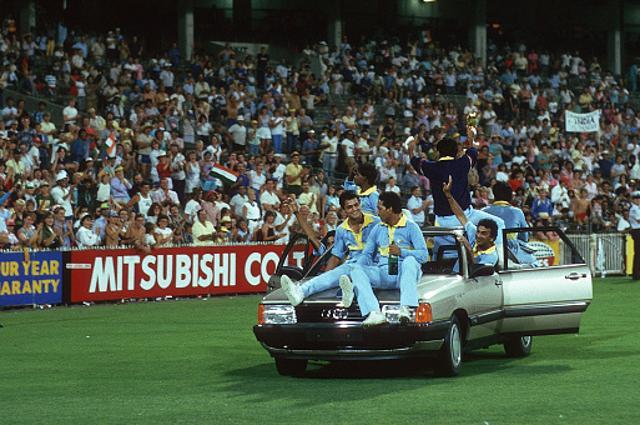
Sunil Gavaskar’s final bow as India captain ended with the team winning the World Championship of cricket. India found a new star in Ravi Shastri, who instantly became the poster of Indian cricket after winning an Audi car for being adjudged the player of the tournament. The team beat Pakistan in the final at the MCG to establish themselves as the top dogs of limited overs cricket.
31) 1986: PT Usha strikes back with vengeance
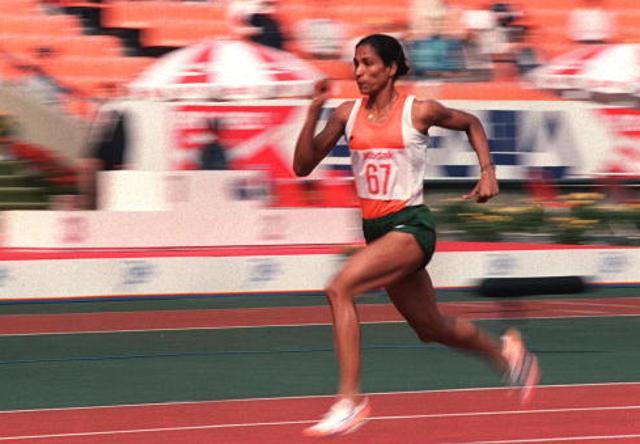
She was without doubt one of the best track and field athletes of her time and PT Usha showcased her brilliance at the 1986 Asian Games as she won four gold medals. She won the yellow metal in the 100 metres and 200 metres sprints as well as the 400 metres hurdles and the 4x400 metres relay.
32) 1986: Khajan Singh lights up the pool at Seoul
India were not known to produce world class swimmers and that is the reason why Khajan Singh Tokas became a household name after the Asian Games in 1986. The Delhi swimmer put in a performance of a lifetime as he finished second in the 200 metres butterfly sroke event to take home a silver medal, which was rejoiced by the entire nation.
33) 1987: India co-hosts cricket World Cup
Not only had the Indian team changed the cricketing hierarchy on the field, the Board of Control for Cricket in India was slowly becoming a powerhouse in the sport’s administration. It was because of the BCCI’s might that the World Cup moved out of England for the first time and was co-hosted by India and Pakistan. Kapil Dev’s team lost to England in the semi-final at Bombay while Pakistan faced a similar fate at the hands of Australia. A packed house at Calcutta’s Eden Gardens witnessed history as Allan Border’s Australia won the World Cup.

34) 1987: Gavaskar reaches mount 10K
Sunil Gavaskar made another huge statement of his stature as one of the best batsmen ever as he became the first player to score 10,000 runs in Test cricket. It was also a testament of Gavaskar’s longevity as he went on to play 125 Test matches. He would go on to retire from international cricket at the end of the series against Pakistan. His last hurrah though ended in India’s first ever series defeat on home soil against Pakistan. Gavaskar’s gritty 96 wasn’t enough to save India from defeat at Bangalore.
35) 1987: Amritraj powers India to Davis Cup final
The Davis Cup is the holy grail of international tennis, where the best players in the world represent their respective countries. India had made it to the final of the event in 1974 but their journey to the summit clash of the 1987 event was full of glorious moments. An ageing Vijay Amritraj and Ramesh Krishnan starred for India as they went past heavyweights Argentina and Australia on their way to the final. The Indians were routed 0-5 in the final by Sweden, but this was a significant achievement for Indian tennis.
36) 1988: Viswanathan Anand crowned India’s first chess Grandmaster
At the age of 18, Viswanathan Anand became India’s first Grandmaster win by clinching the Shakti Finance International chess tournament held in Coimbatore, India.
37) 1990: India reign supreme in Kabaddi
Kabaddi was introduced for the first time at the Beijing Asian Games and India steamrolled the opponent to clinch gold. They have since gold in all the Games.
38) 1994: Kapil breaches the barrier
When the Indian all-rounder got rid of Sri Lankan batsman Hashan Tillekratne, he created history by being the then highest wicket-taker in Test cricket. He broke the record of another legendary all-rounder Sir Richard Hadlee.
39) 1996: Leander lands an Olympic medal
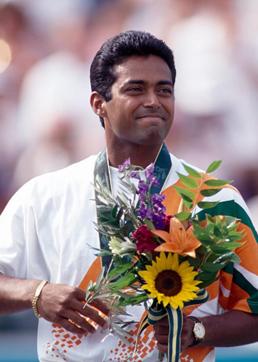
Indian tennis ace Leander Paes ended India’s 44-year old wait for an Olympic medal when he bagged bronze at the Atlanta Olympics in 1996. He entered the competition as a wild card and then marched on to beat Brazil’s Fernando Meligeni to clinch the Bronze medal for India.
40) 1997: Mahesh Bhupathi makes a mark
The Indian paired up with Rika Hiraki of Japan and scripted history by becoming the first Indian to clinch a Grand Slam title when he won the French Open mixed doubles.
41) 1998: Shiva Kesavan breaches the barrier
Shiva Keshavan, then 16, qualified for the Winter Olympic at Nagano. He took part in Luge, a relatively unknown sport in India and has qualified for every Olympics since.
42) 1999: Kumble takes all 10
Anil Kumble trundled in and spun a web around Pakistan at the Feroz Shah Kotla. He got the wicket of Shahid Afridi and then when he dismissed Wasim Akram, he became the second player to claim all 10 wickets in a Test inning.
43) 1999: Baichung Bhutia breaks new ground
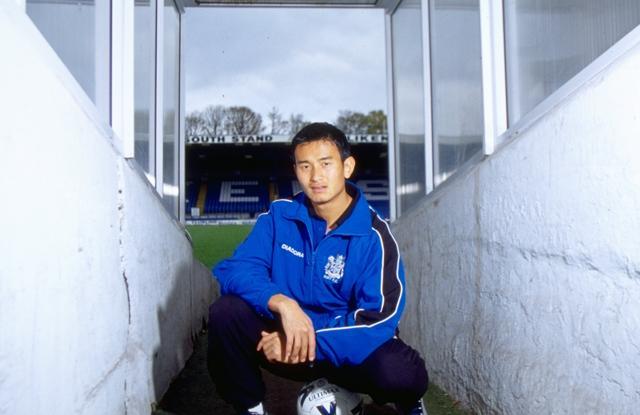
He had established himself as the face of Indian football and in 1999, Baichung Bhutia scripted history when he signed for Bury FC, which is a second division club in England. He was only the second Indian to play for a European club after Mohammed Salim who played with Celtic FC in Scotland.
44) 2000: Malleshwari makes India proud
In Sydney Olympics, Karnam Malleswari lifted 110 kg in the “snatch” and 130 kg in the “clean and jerk” and with a total of 240 kg, she clinched the bronze medal and became the first Indian women to achieve this feat.
45) 2000: Anand at it again
After several close shaves, Viswanathan Anand finally won the FIDE World Chess Championship in 2000 for the first time. He entered the tournament as the number one seed and defeated Alexei Shirov 3½–0½ in the final match held at Tehran.
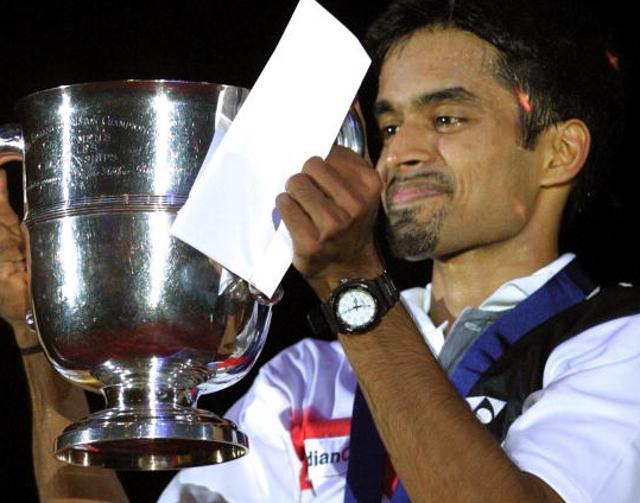
46) 2001: Gopichand scripts history
He was the 10th seed, he had three surgeries on his left knee in four years, and yet Pullela Gopichand entered the finals, conceded the first set, and then made a roaring comeback to clinch the title. It was a watershed moment in Indian badminton, and quite fittingly Gopi is responsible for the Badminton revolution in the country.
47) 2001: The great Indian comeback
Australia came visiting, smashed India in the first Test in Mumbai, enforced a follow-on in the second when India finally decided to show up.
VVS Laxman (281) and Rahul Dravid (180) batted not only for one entire day but also helped India pull off a shock win against Australia. India then went on the win the final Test and scripted a historic 2-1 win against Australia.
48) 2002: Koneru Humpy shows the way
Aged 15 years and 57 days, Koneru Humpy became the youngest woman ever to achieve the title of grandmaster (male or female). This record was later by China’s Hou Yifan in 2008.
49) 2002: Anju’s leap of faith
Anju Bobby George not only realised a dream but inspired an entire generation to dream. By winning a bronze medal in long jump at the World Championships in Paris, she shattered the glass ceiling.
50) 2004: India’s maiden silver medal
India’s success at the Olympics has been few and far in between and hence when Rajyavardhan Singh Rathore clinched silver at the men’s double trap shooting event in Athens, he wrote a golden page in India’s sporting history


