
 E-Paper



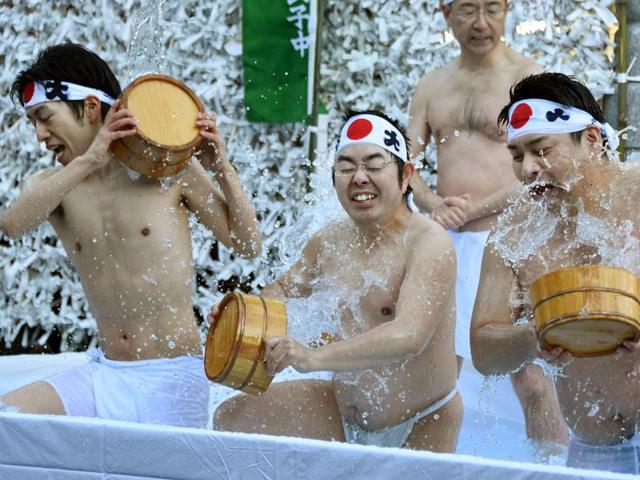
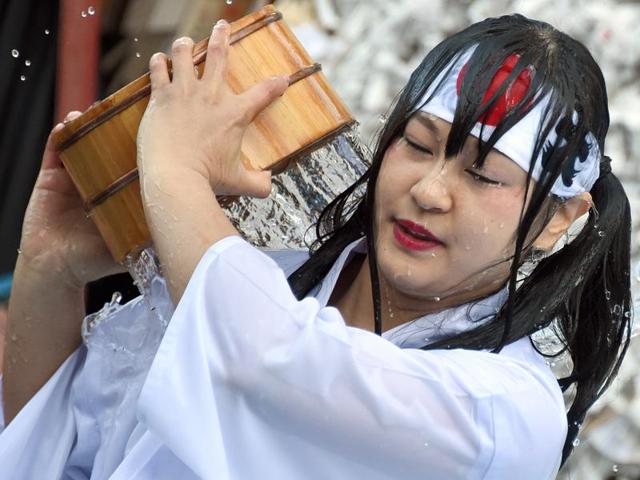
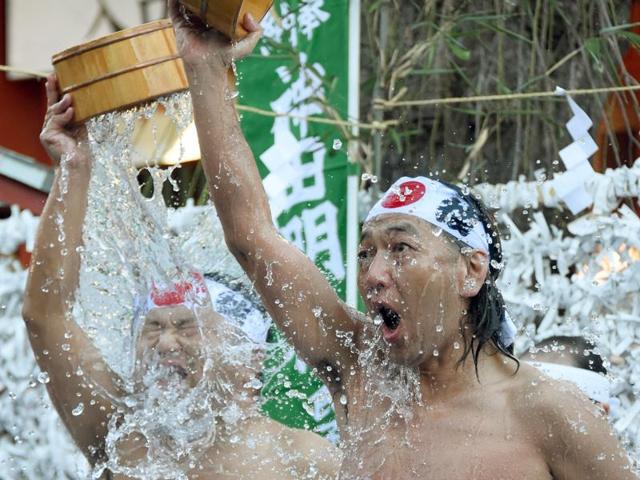
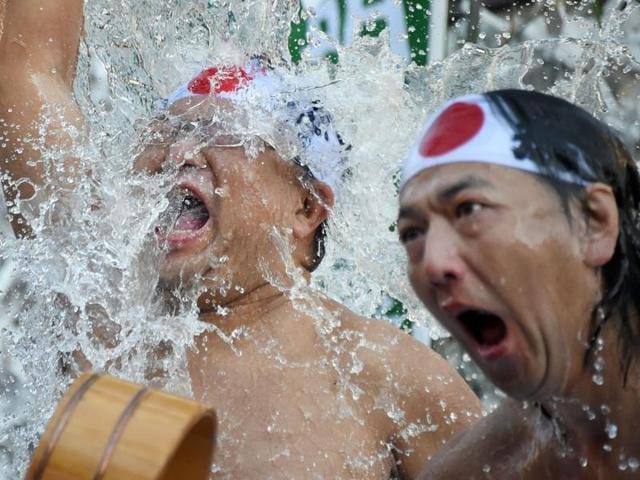
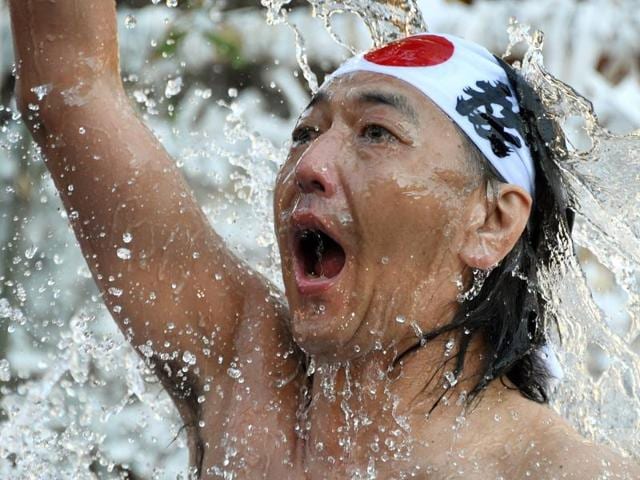
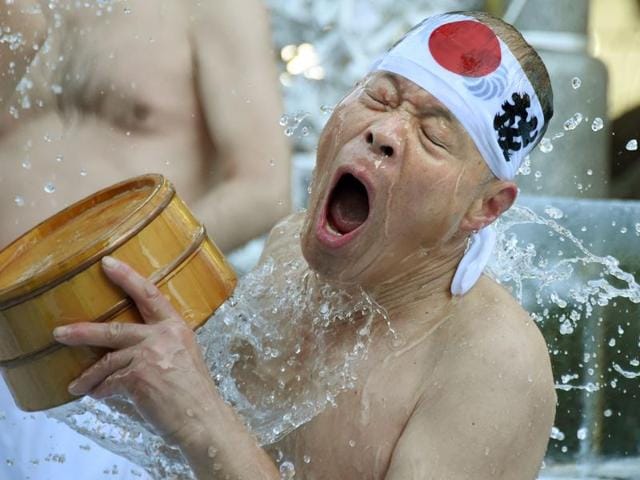
Purify your body and soul with cold water, the Shinto way
Believers of Shinto, the ethnic religion of Japan, pour cold water over themselves to purify their bodies and souls as part of an endurance show at the Kanda Shrine in Tokyo on Saturday. (AFP)
Updated on: Jan 09, 2016 4:55 PM IST

Share via


Copy link

1/13
 View Photos in a new improved layout
Updated on Jan 09, 2016 4:55 PM
Believers of Shinto, the ethnic religion of Japan, pour cold water over themselves to purify their bodies and souls as part of an endurance show at the Kanda Shrine in Tokyo on Saturday. (AFP)
2/13
 View Photos in a new improved layout
Updated on Jan 09, 2016 4:55 PM
Shinto (the way of the Kami) is the name of the formal religion of Japan which was first used in the 6th century C.E., although the roots of the religion go back to at least the 6th century BCE. (AFP)
3/13
 View Photos in a new improved layout
Updated on Jan 09, 2016 4:55 PM
36 believers aged between 19 and 63 took part in the annual new year event. (AFP)
4/13
 View Photos in a new improved layout
Updated on Jan 09, 2016 4:55 PM
Shinto has no founder, no official sacred texts, and no formalised system of doctrine. (AFP)
5/13
 View Photos in a new improved layout
Updated on Jan 09, 2016 4:55 PM
Shinto understands that the kami -- sacred or divine beings -- not only exist as spiritual beings, but also in nature; they are within mountains, trees, rivers, and even geographical regions. (AFP)
6/13
 View Photos in a new improved layout
Updated on Jan 09, 2016 4:55 PM
Shinto followers are supposed to live in harmony and peaceful coexistence with both nature and other human beings. (AFP)
7/13
 View Photos in a new improved layout
Updated on Jan 09, 2016 4:55 PM
A foundation for Japanese culture for centuries, Shinto religious festivals and ceremonies have been part of official government celebrations. (AFP)
8/13
 View Photos in a new improved layout
Updated on Jan 09, 2016 4:55 PM
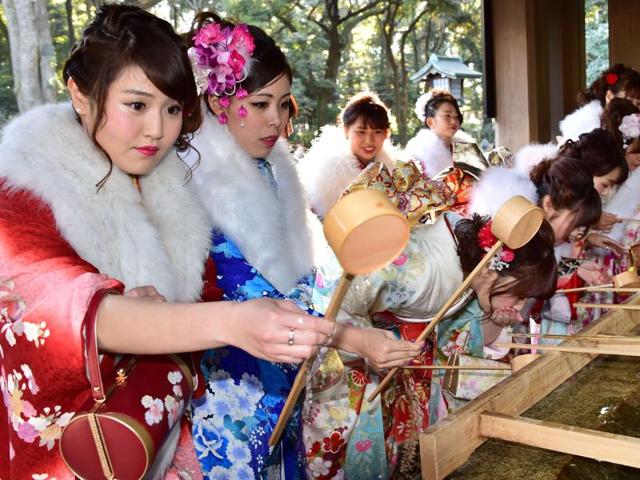
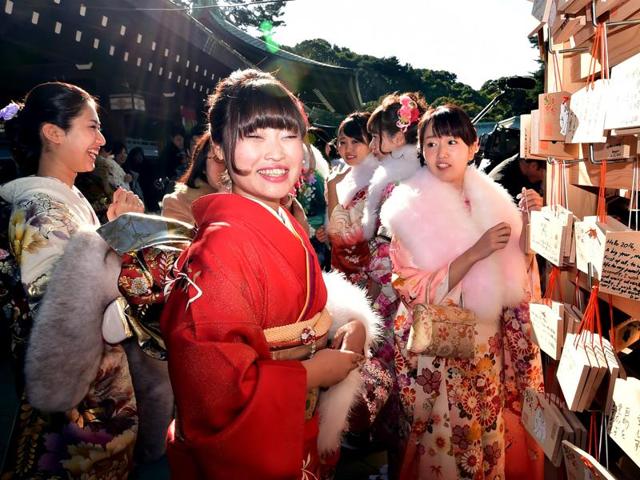
20-year-old female tour guides dressed in traditional kimonos during a ‘purification ceremony’ with a Shinto priest at Tokyo's Meiji shrine to celebrate Japan's Coming-of-Age Day on Friday. (AFP)
9/13
 View Photos in a new improved layout
Updated on Jan 09, 2016 4:55 PM
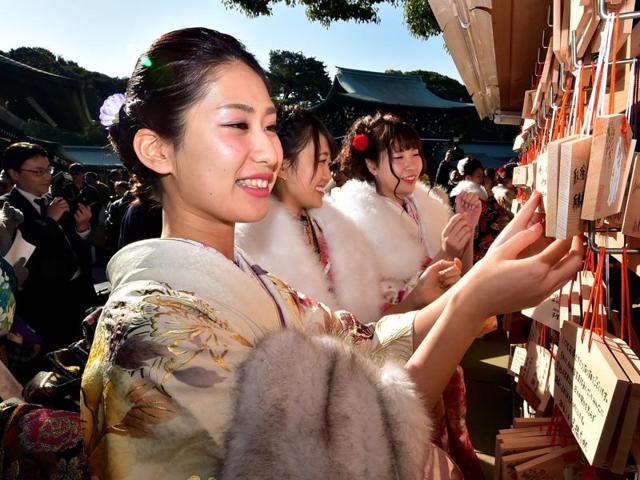
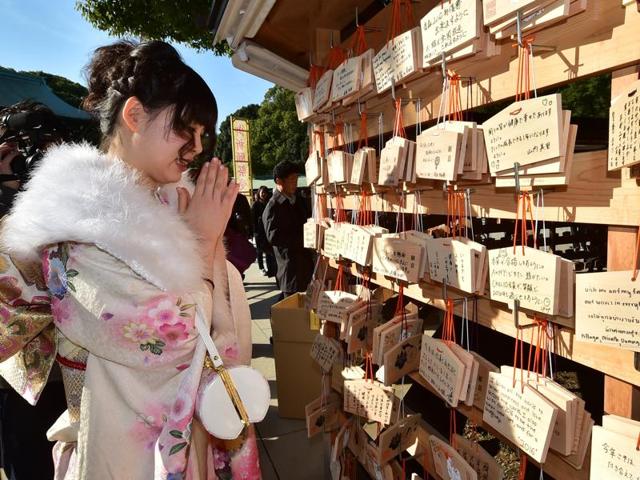
Female tour guides dressed in traditional kimonos hang 'ema', or votive tablets, with their written wishes at the Meiji shrine after attending a purification ceremony. (AFP)
10/13
 View Photos in a new improved layout
Updated on Jan 09, 2016 4:55 PM
Young people turning 20 are officially recognised as adults in Japan. (AFP)
11/13
 View Photos in a new improved layout
Updated on Jan 09, 2016 4:55 PM
A young tour guide in front of a wall of 'emas', or votive tablets. (AFP)
12/13
 View Photos in a new improved layout
Updated on Jan 09, 2016 4:55 PM
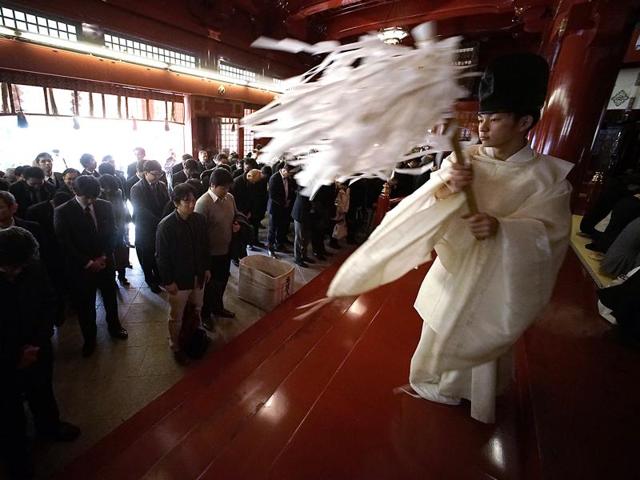
A Shinto priest blesses businessmen for the prosperity of their firms during a ceremony at Kanda Myojin Shrine in Tokyo, on the first business day of the year in Tokyo, Monday, January 4. (AP)
13/13
 View Photos in a new improved layout
Updated on Jan 09, 2016 4:55 PM


